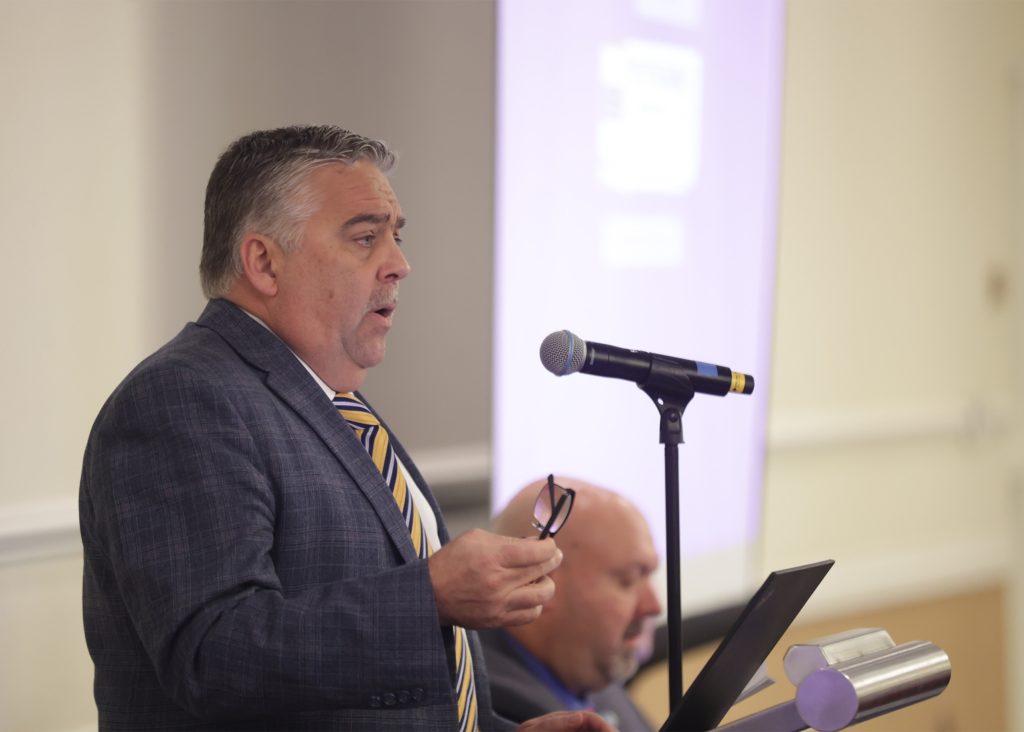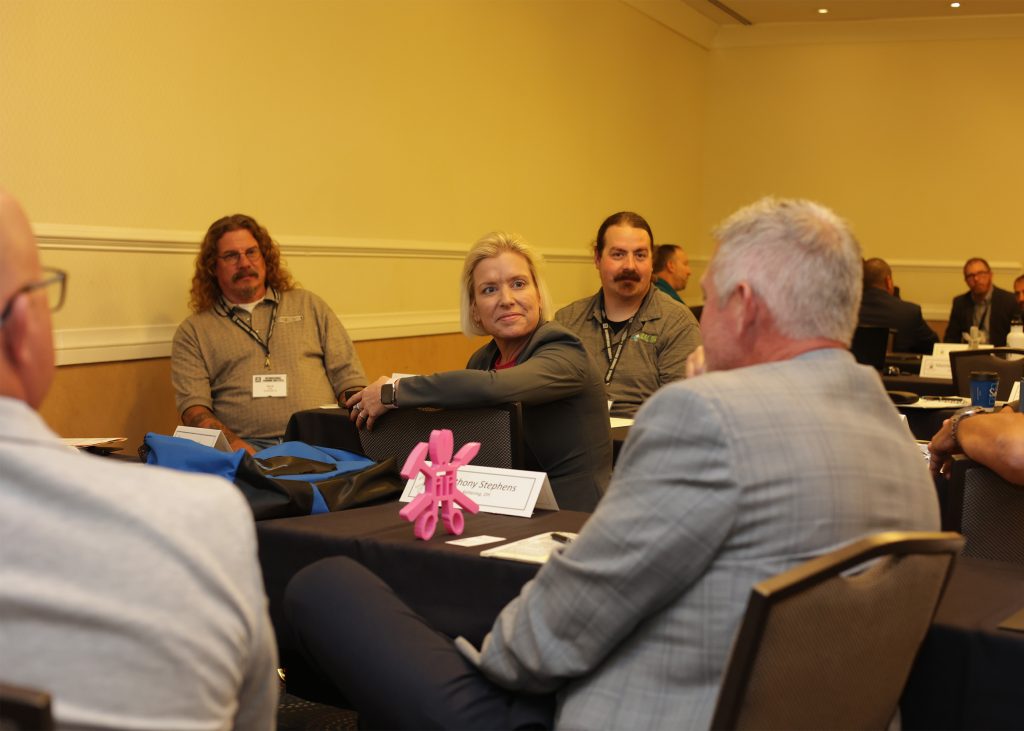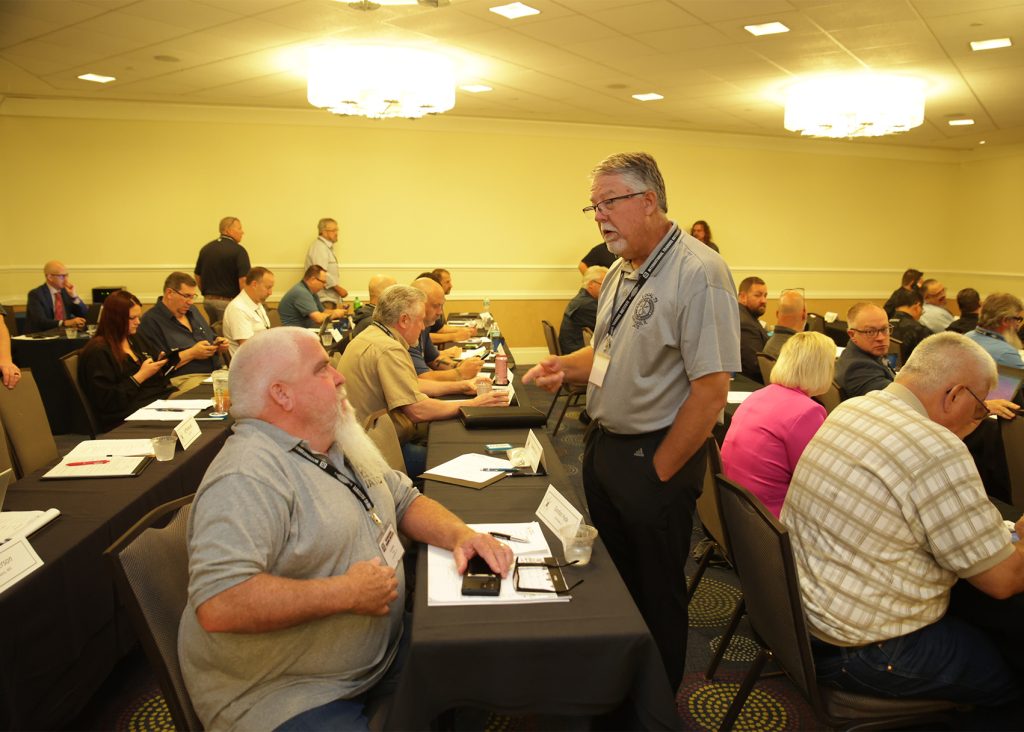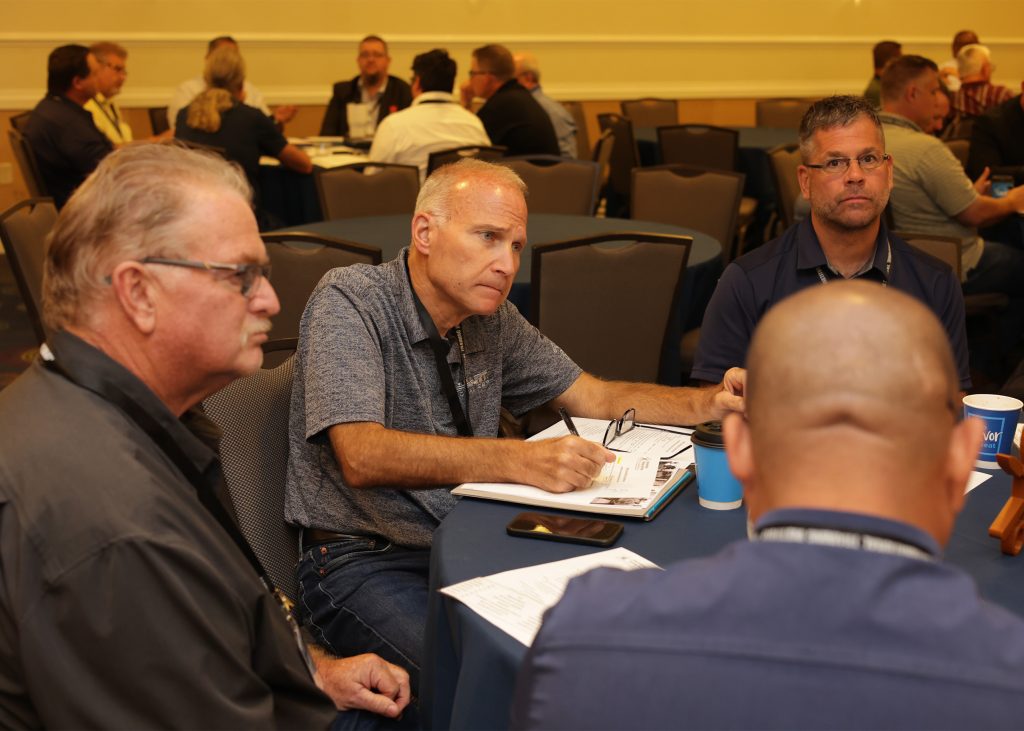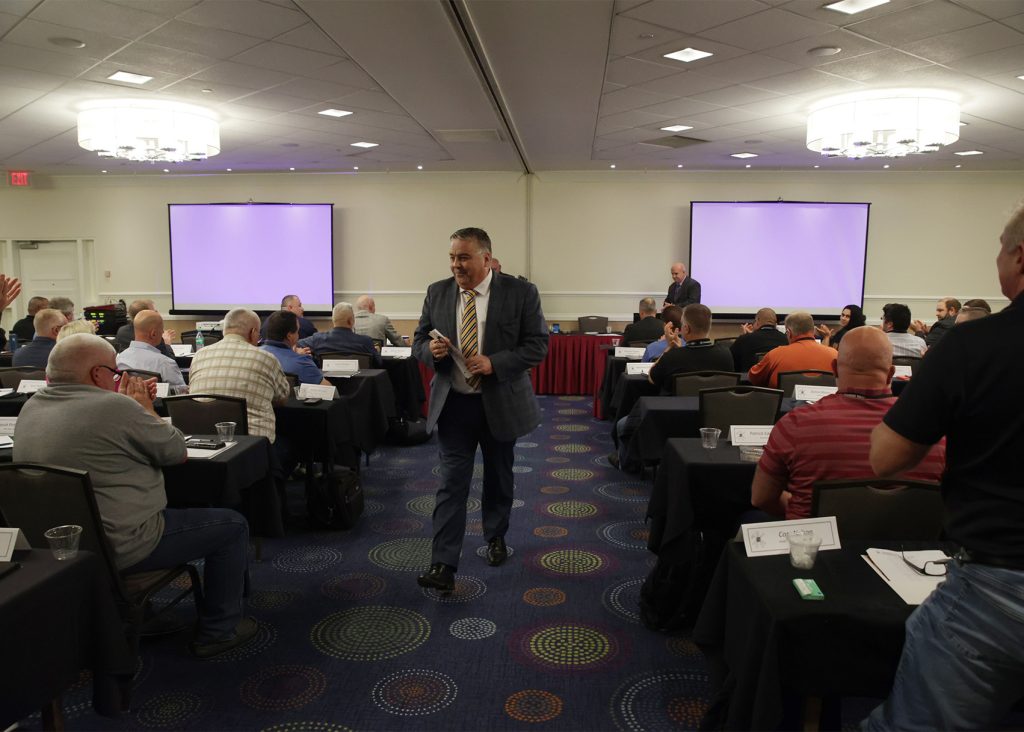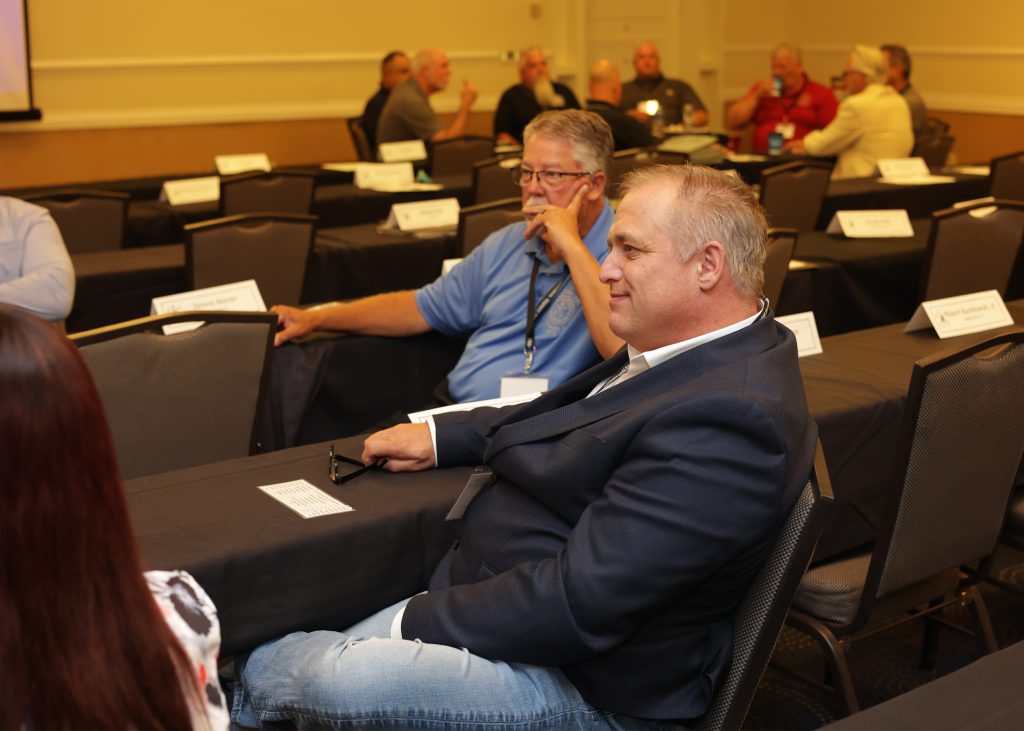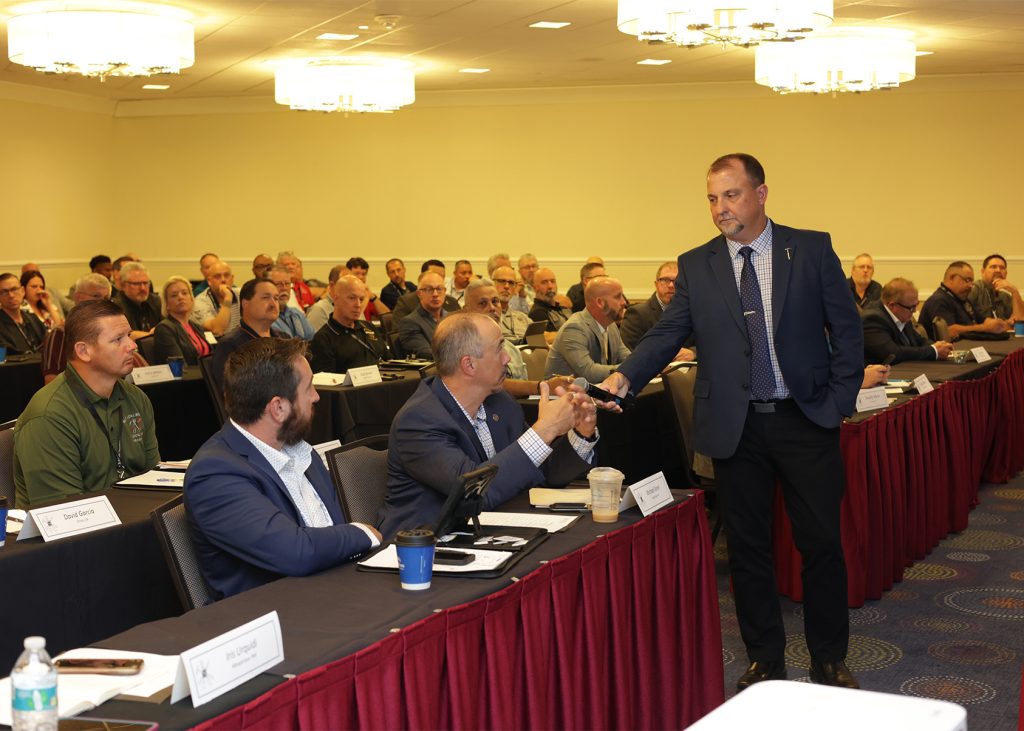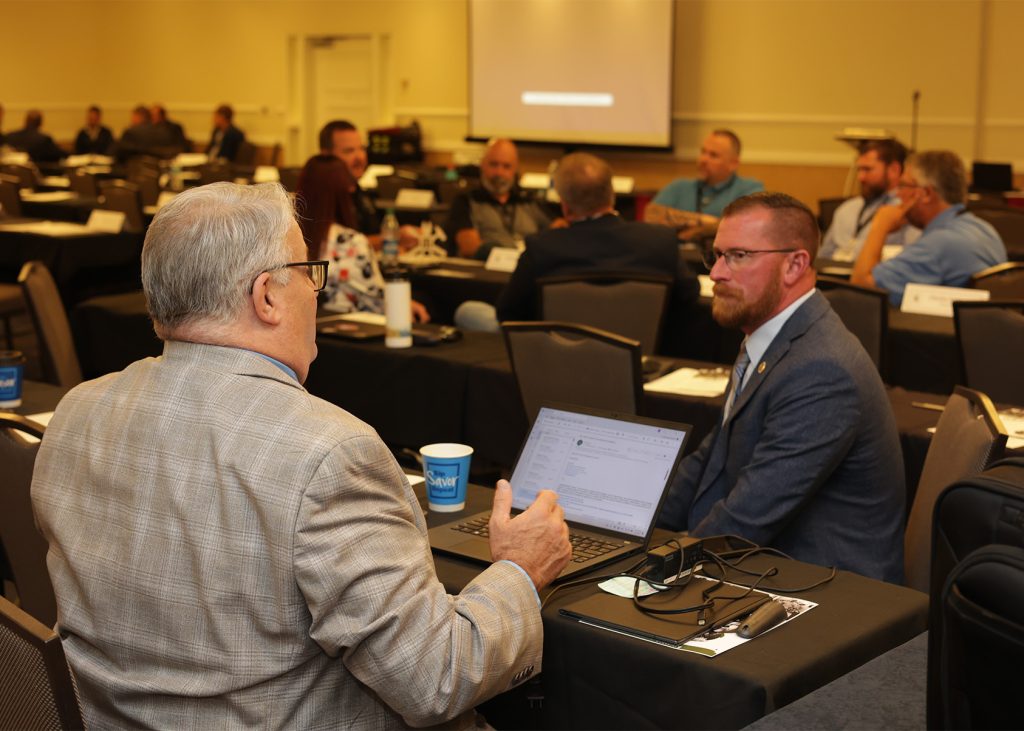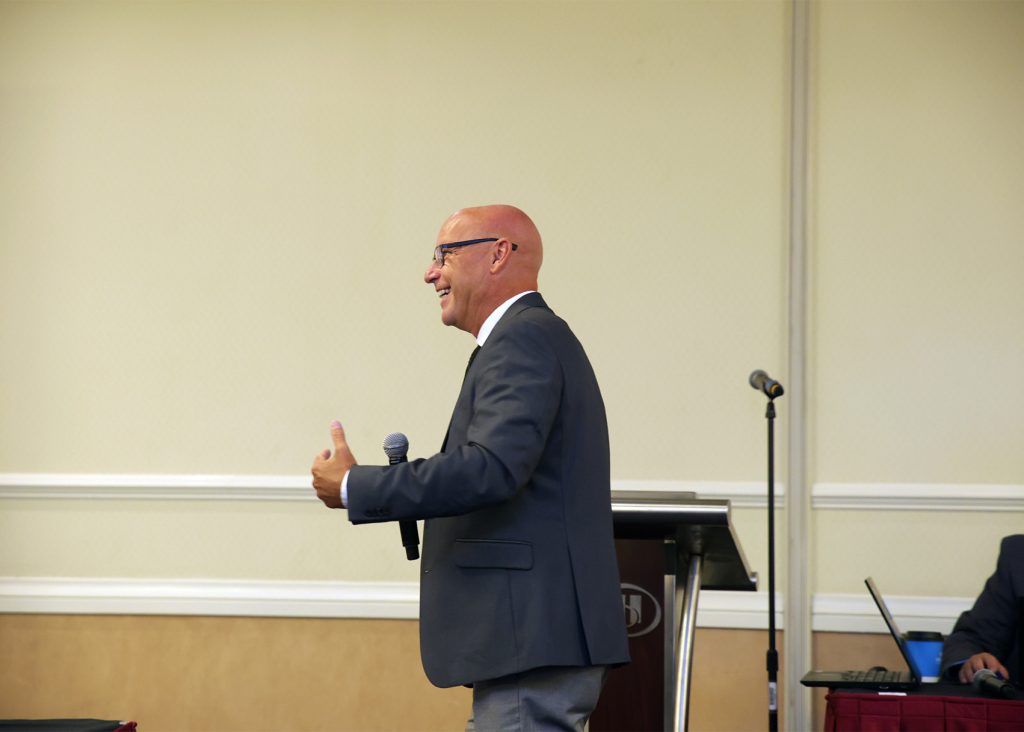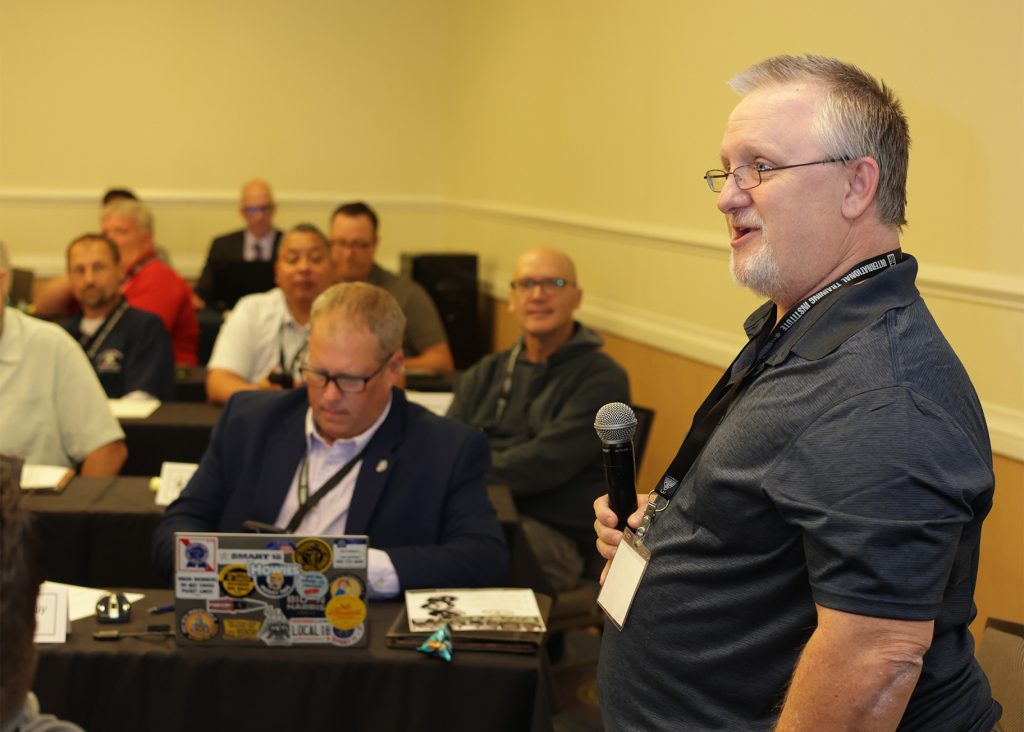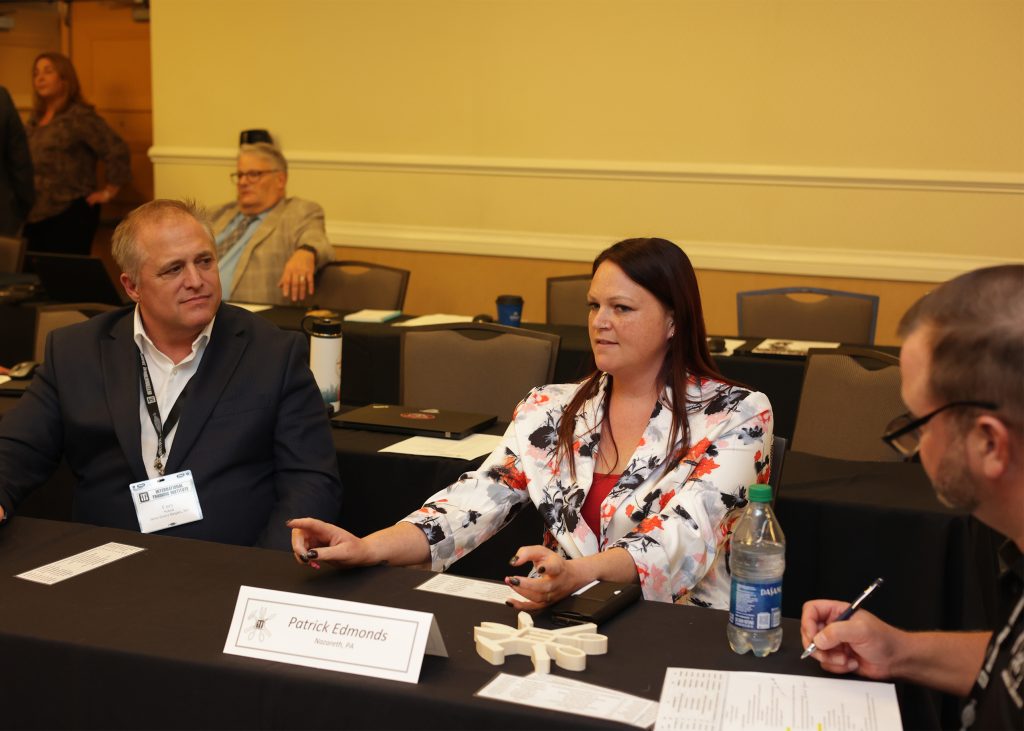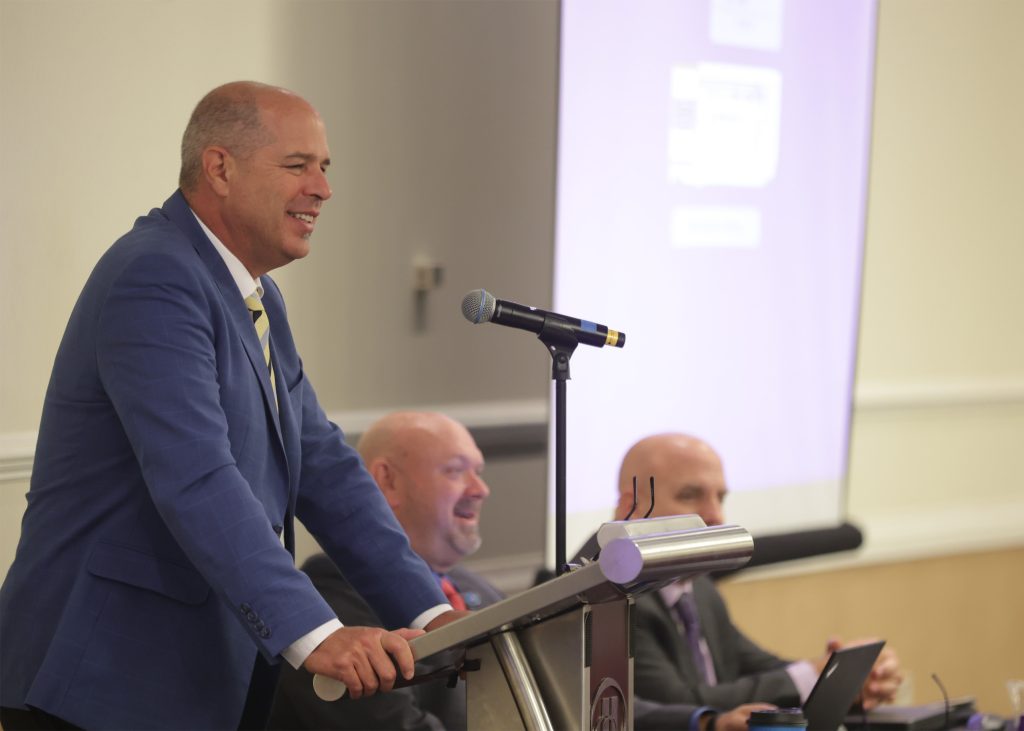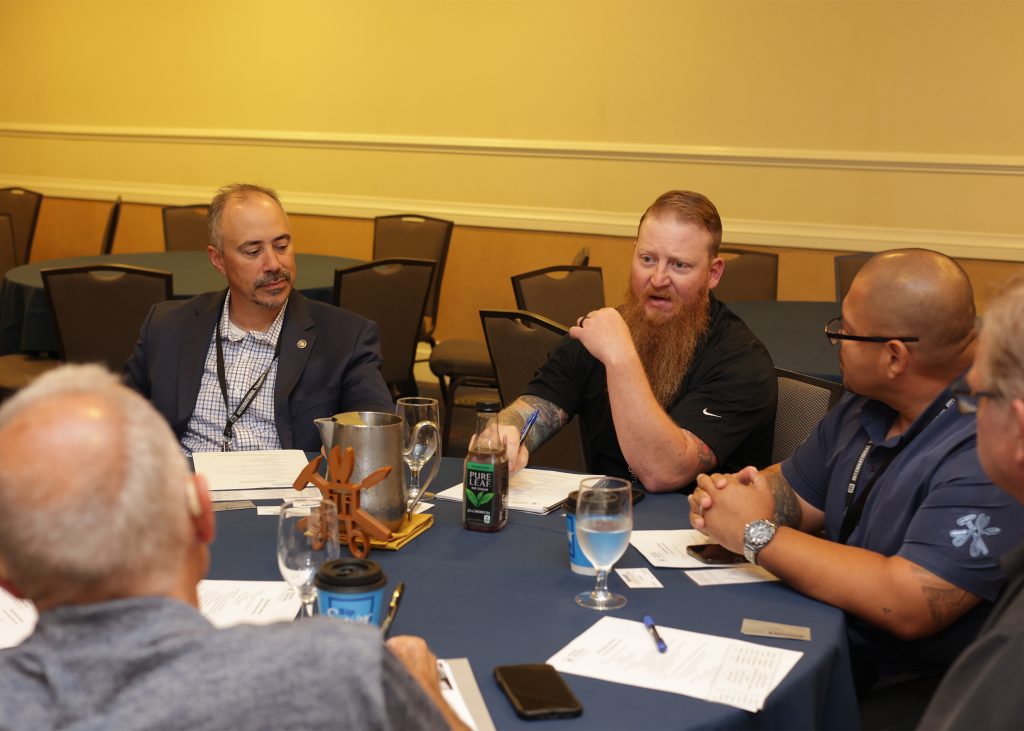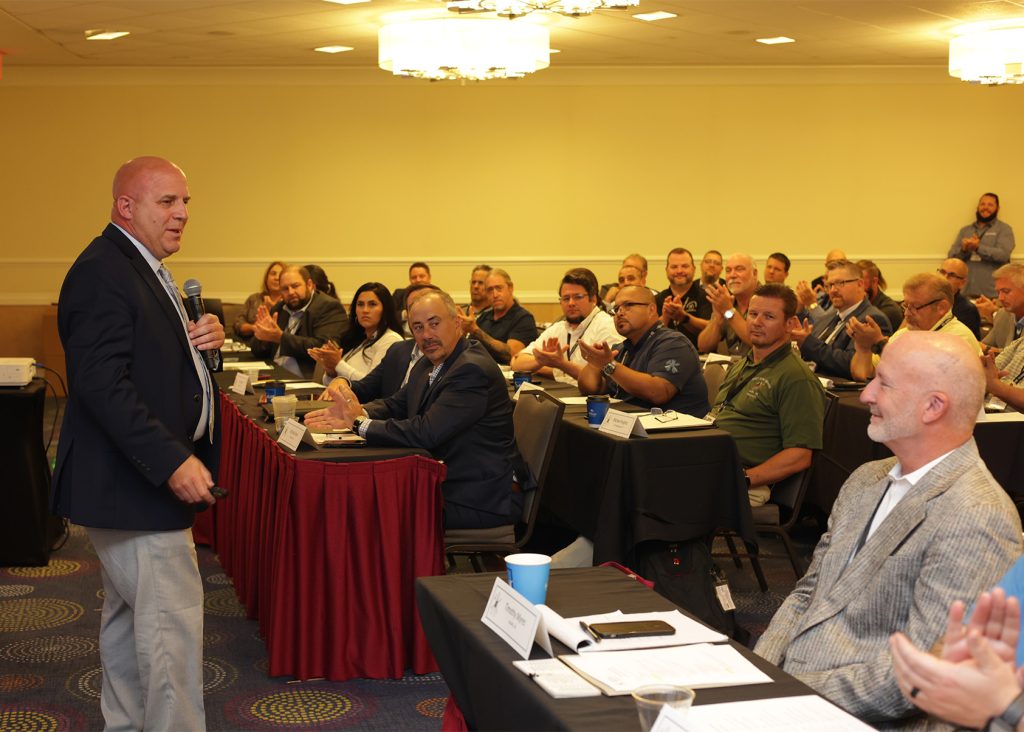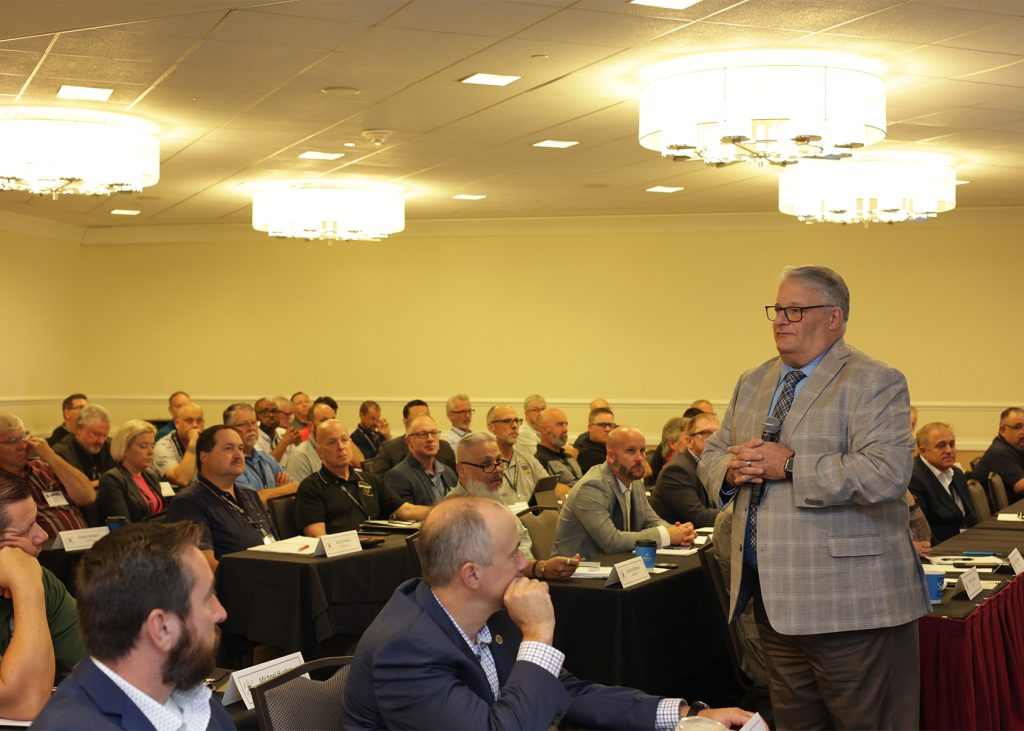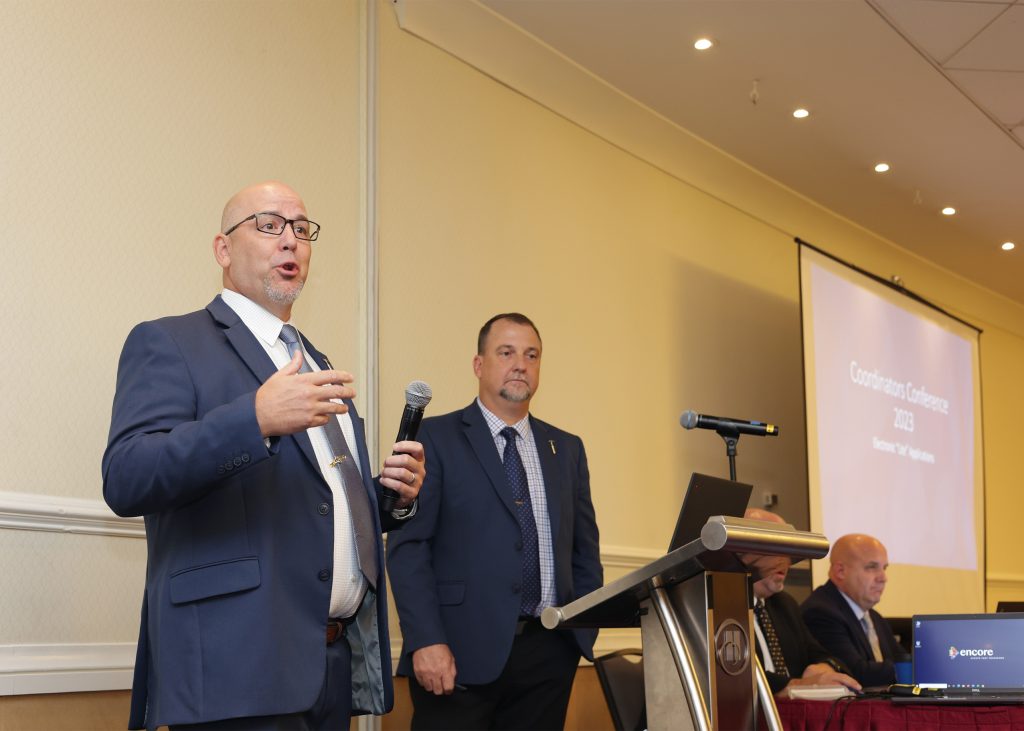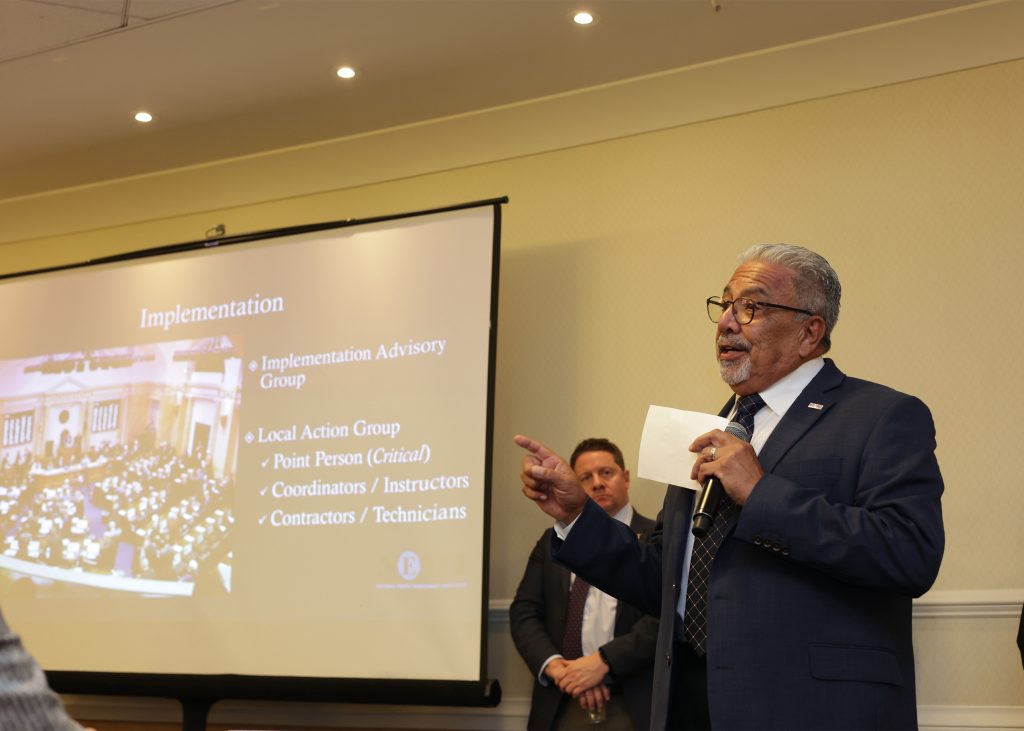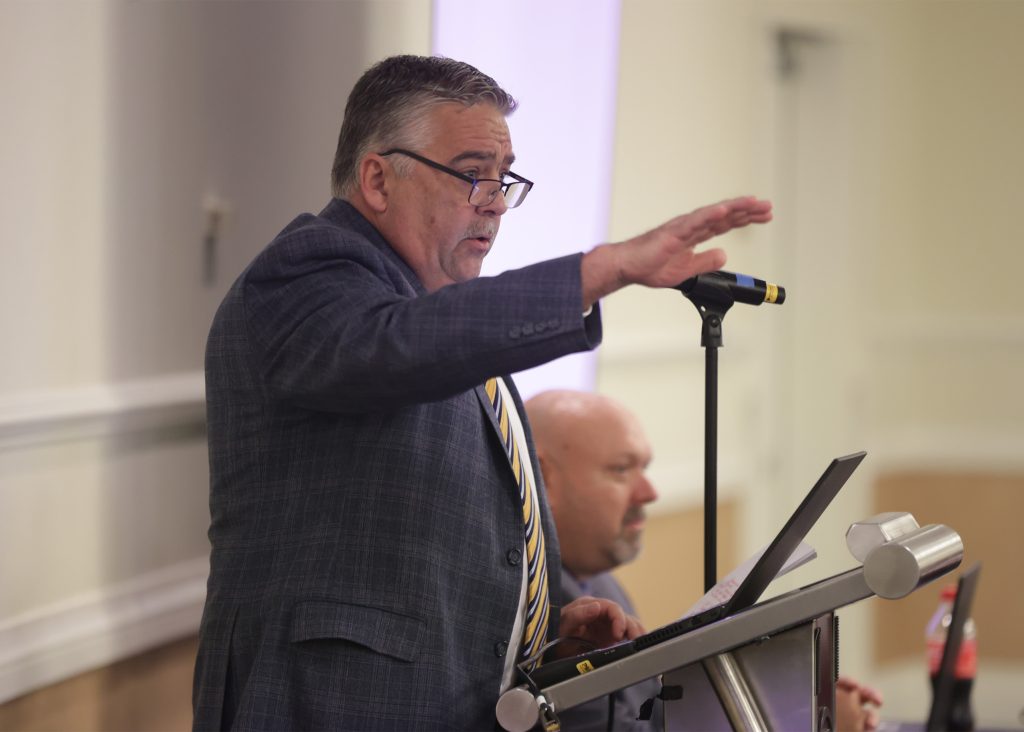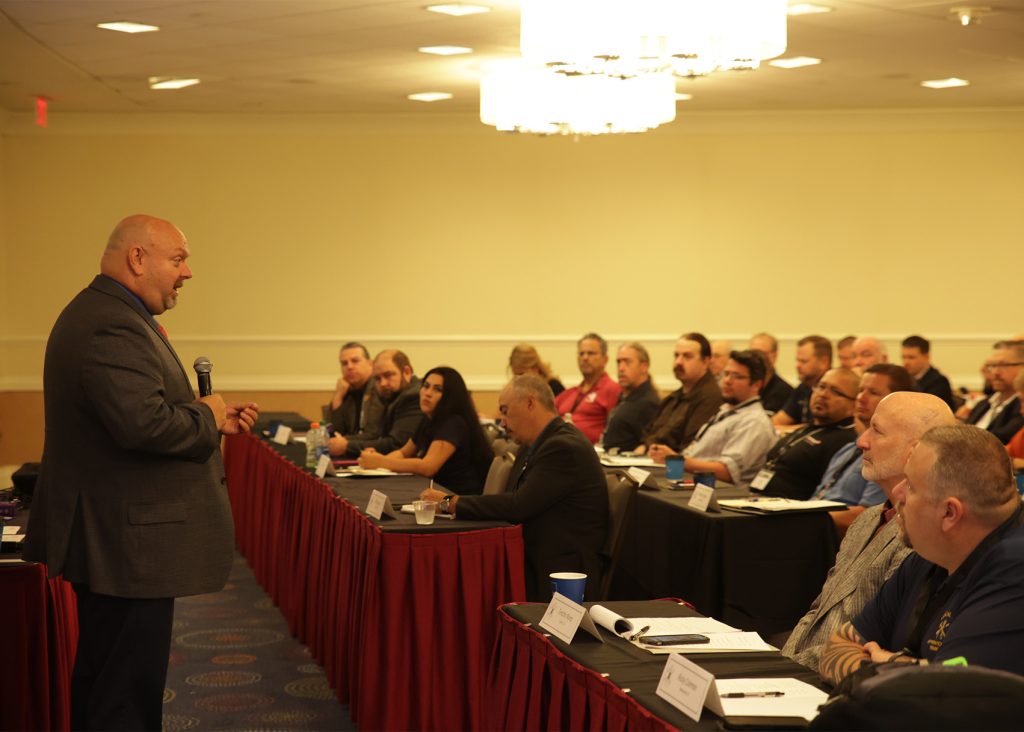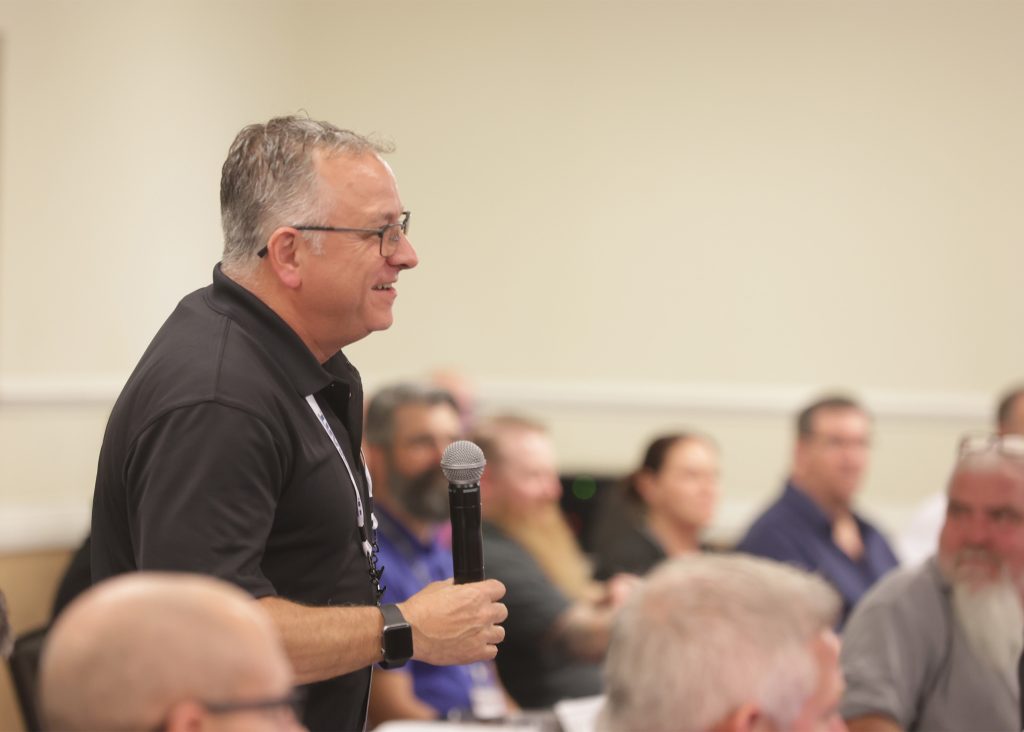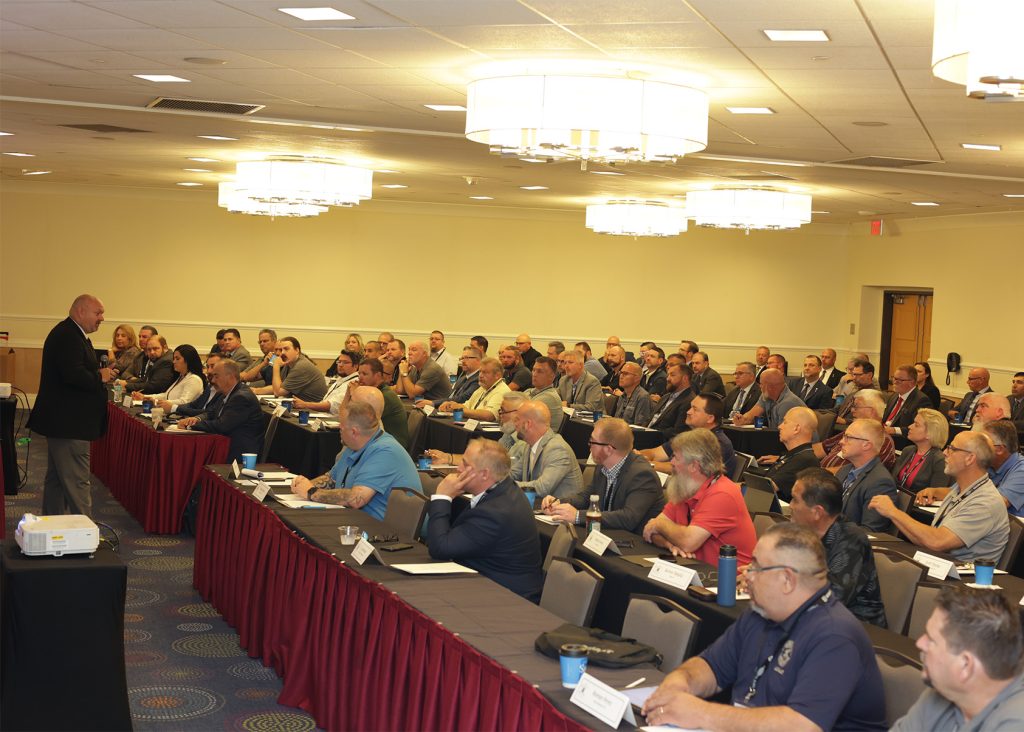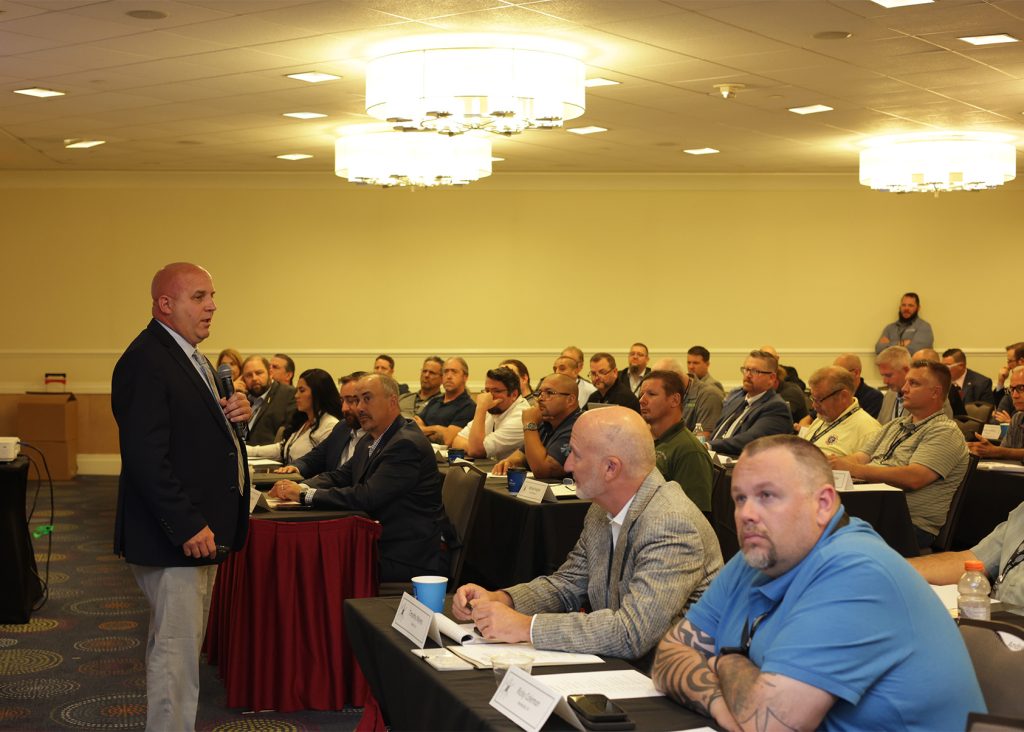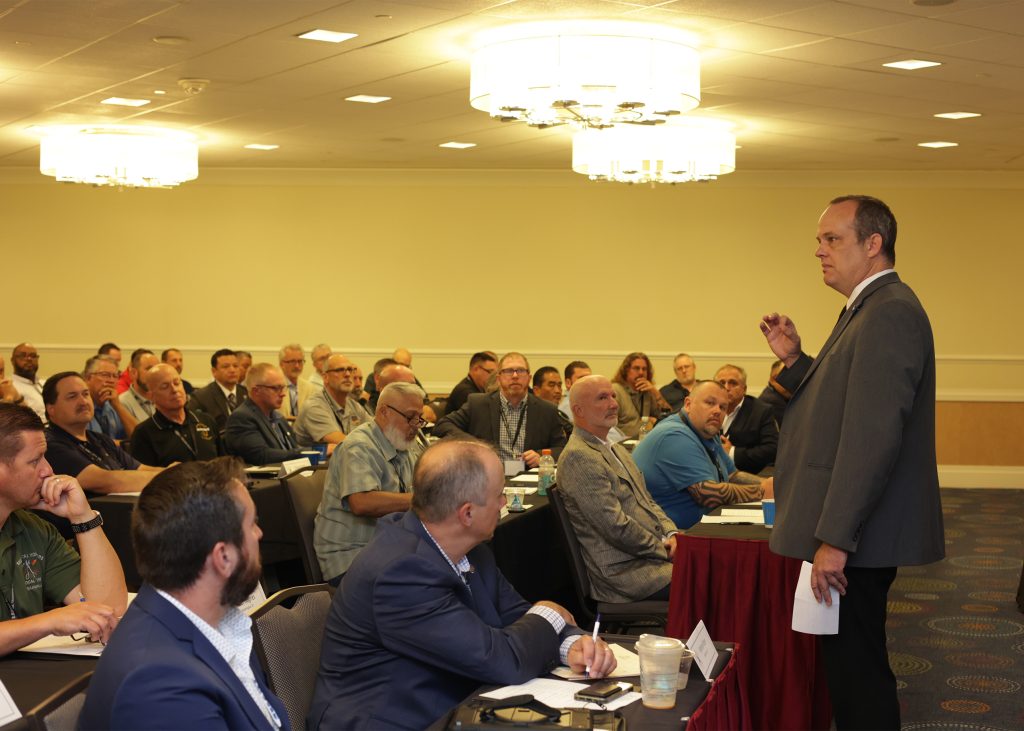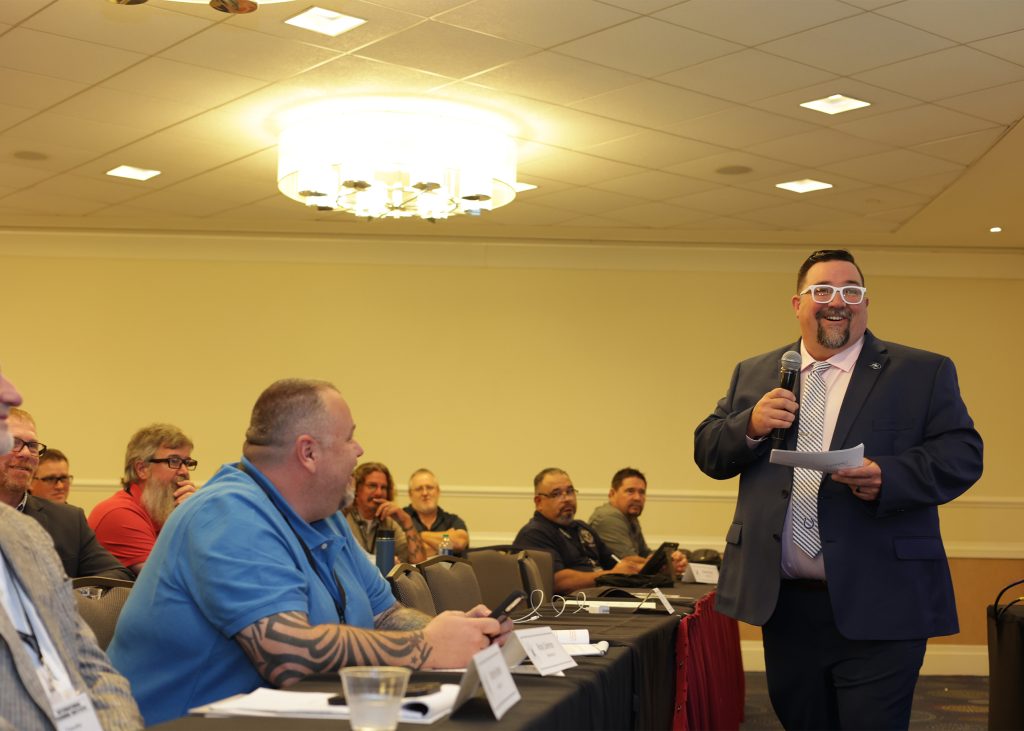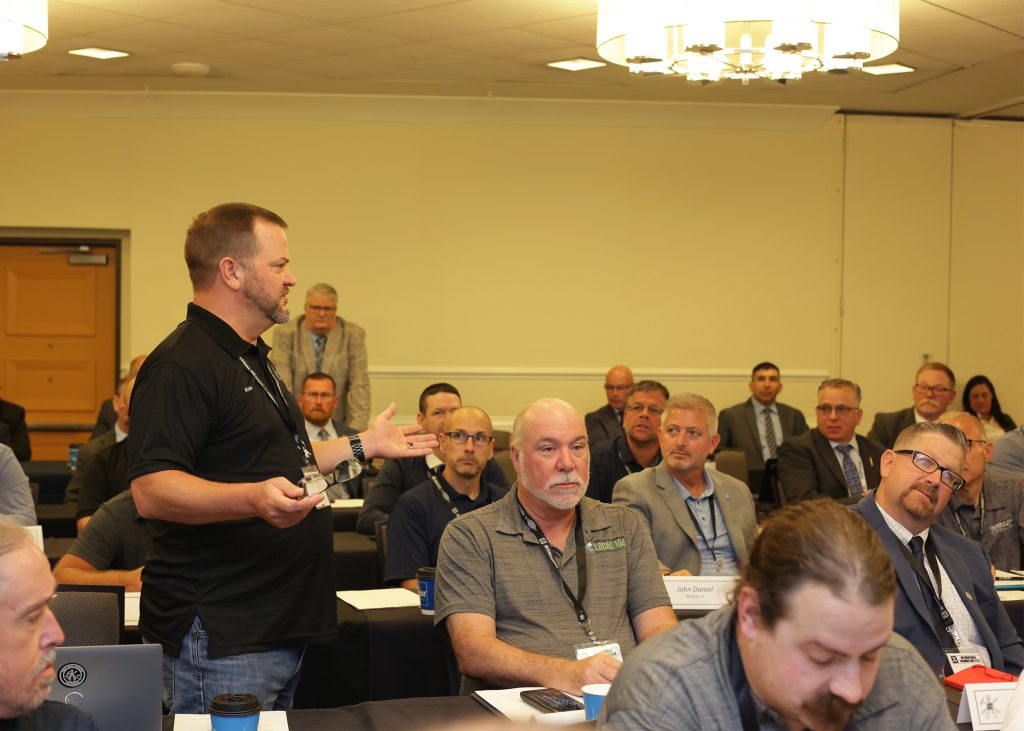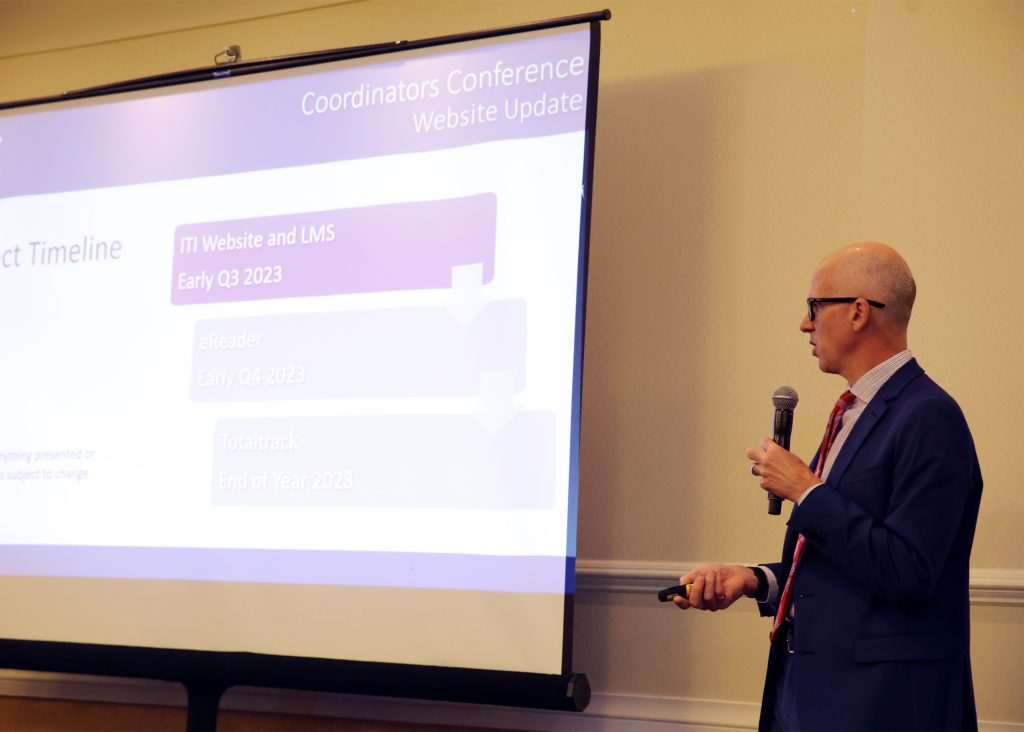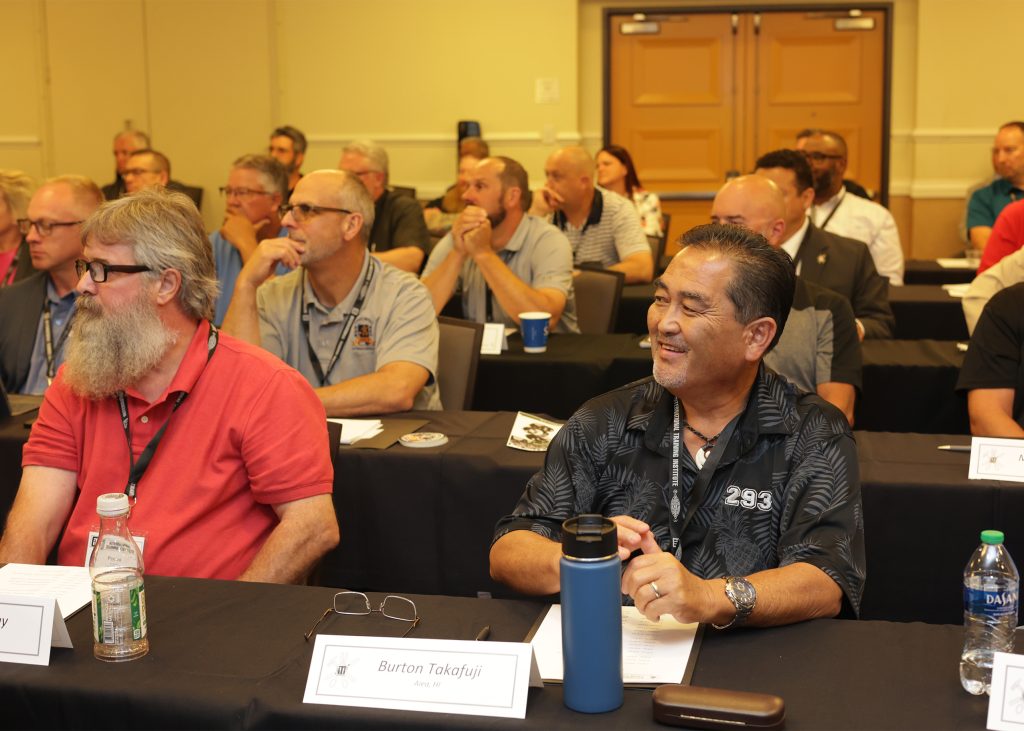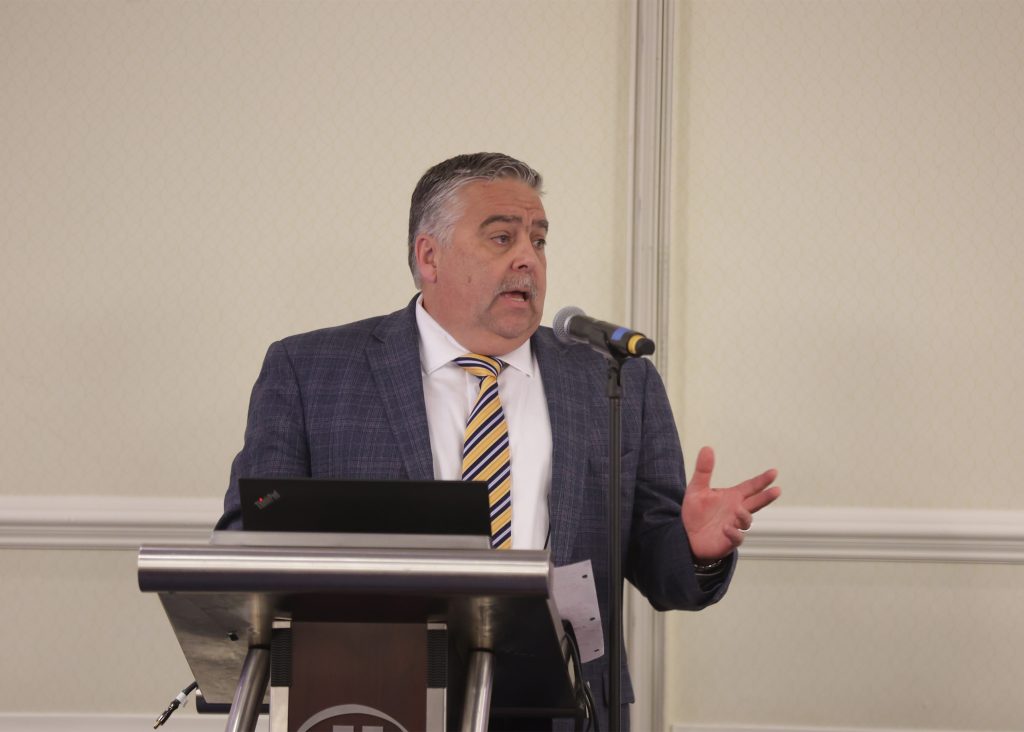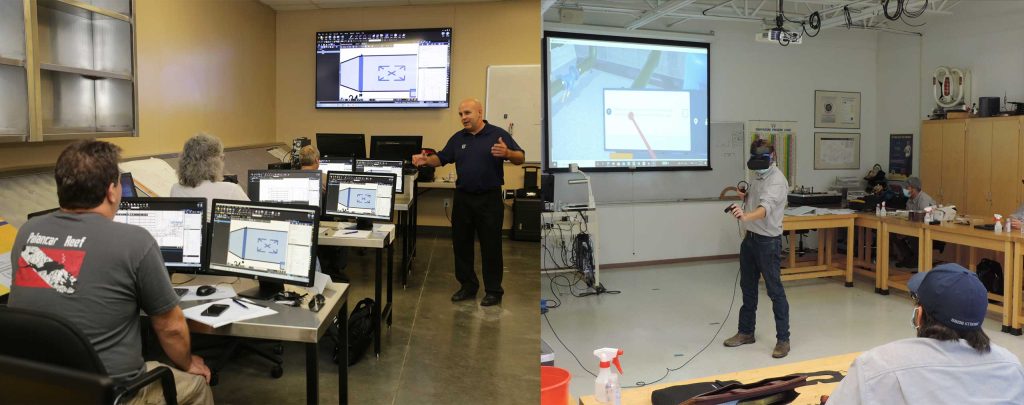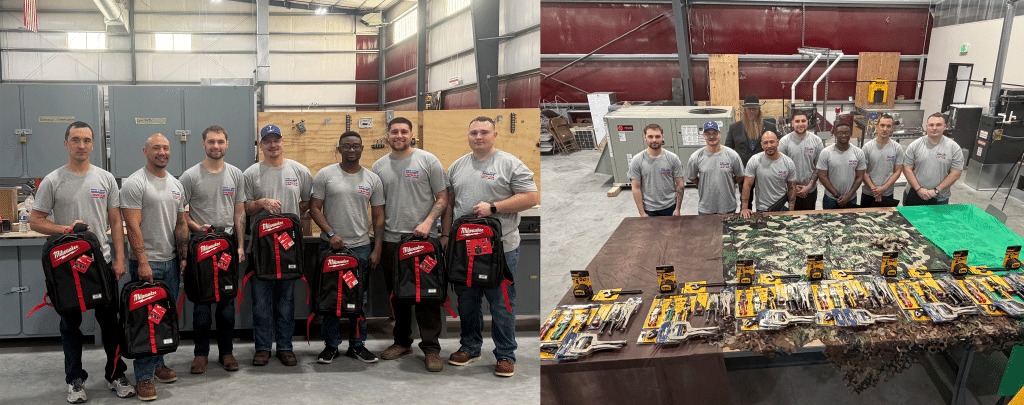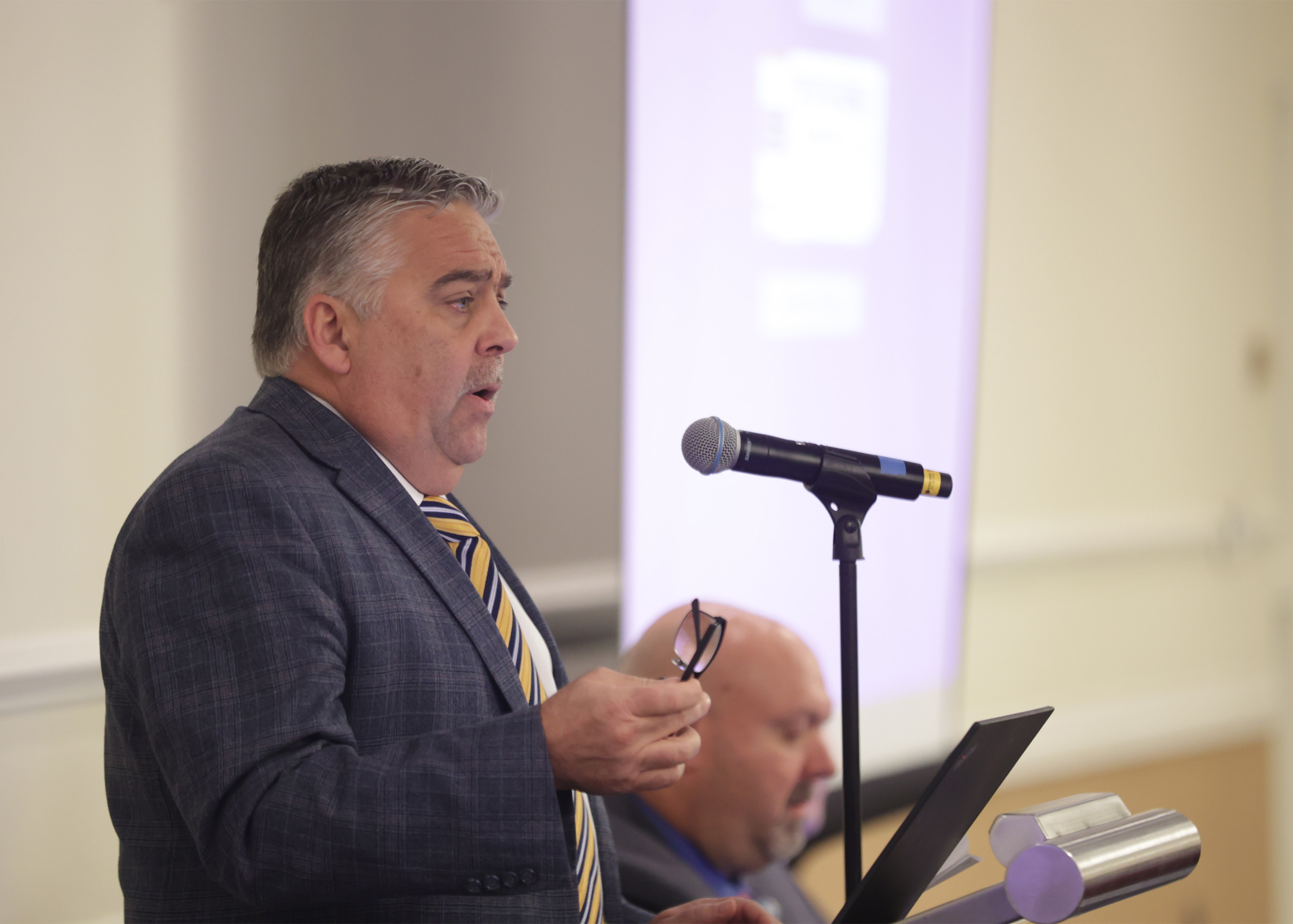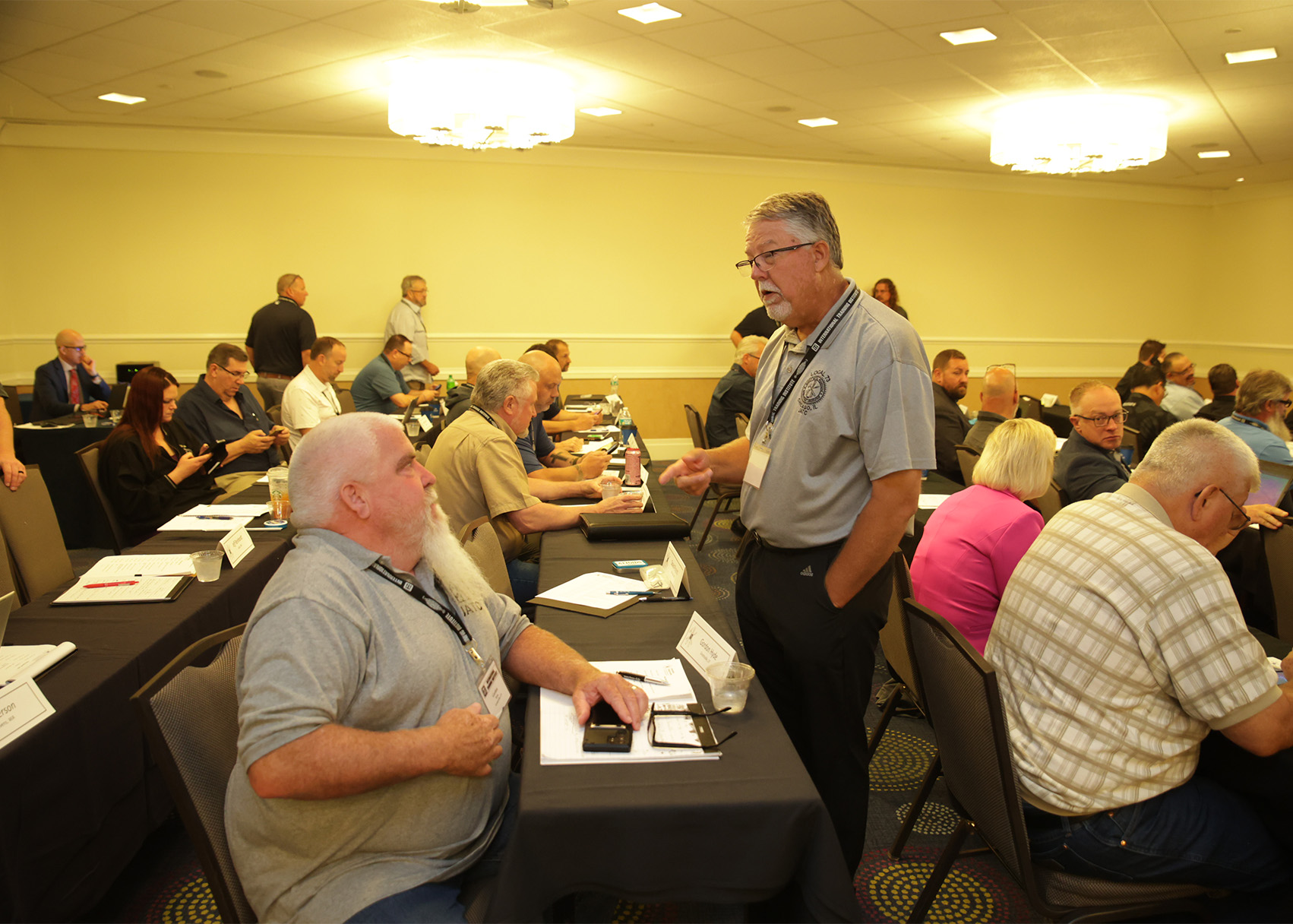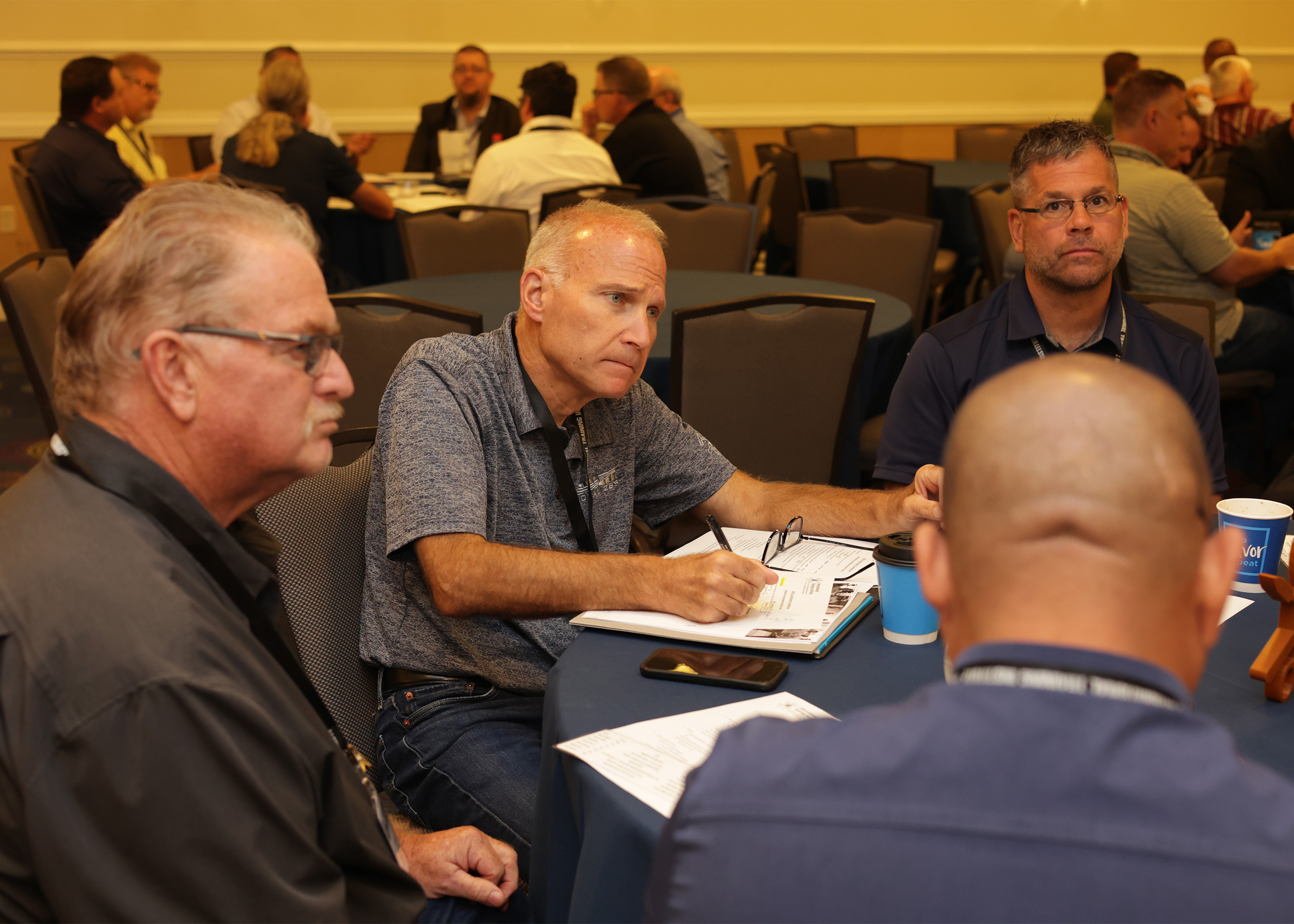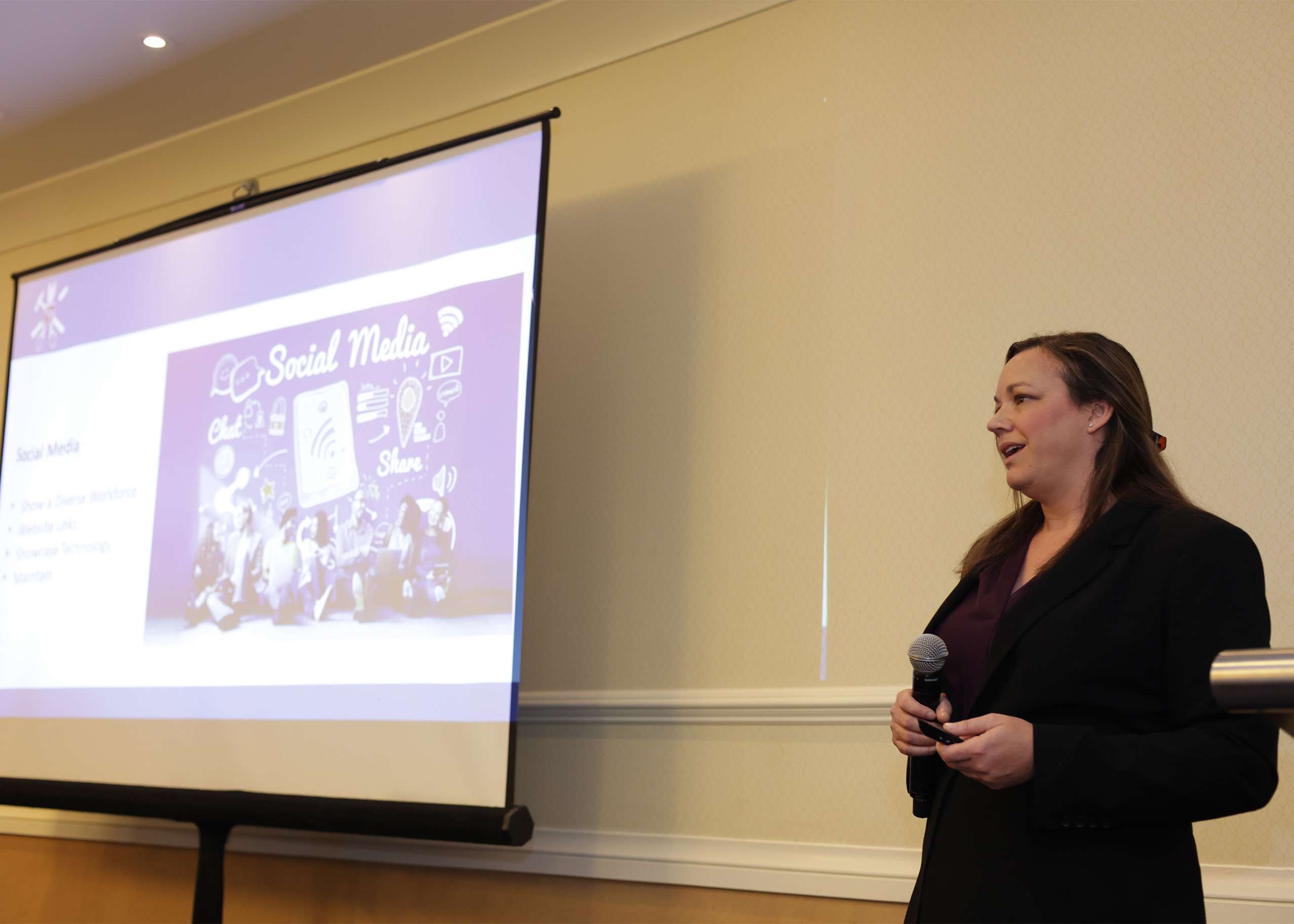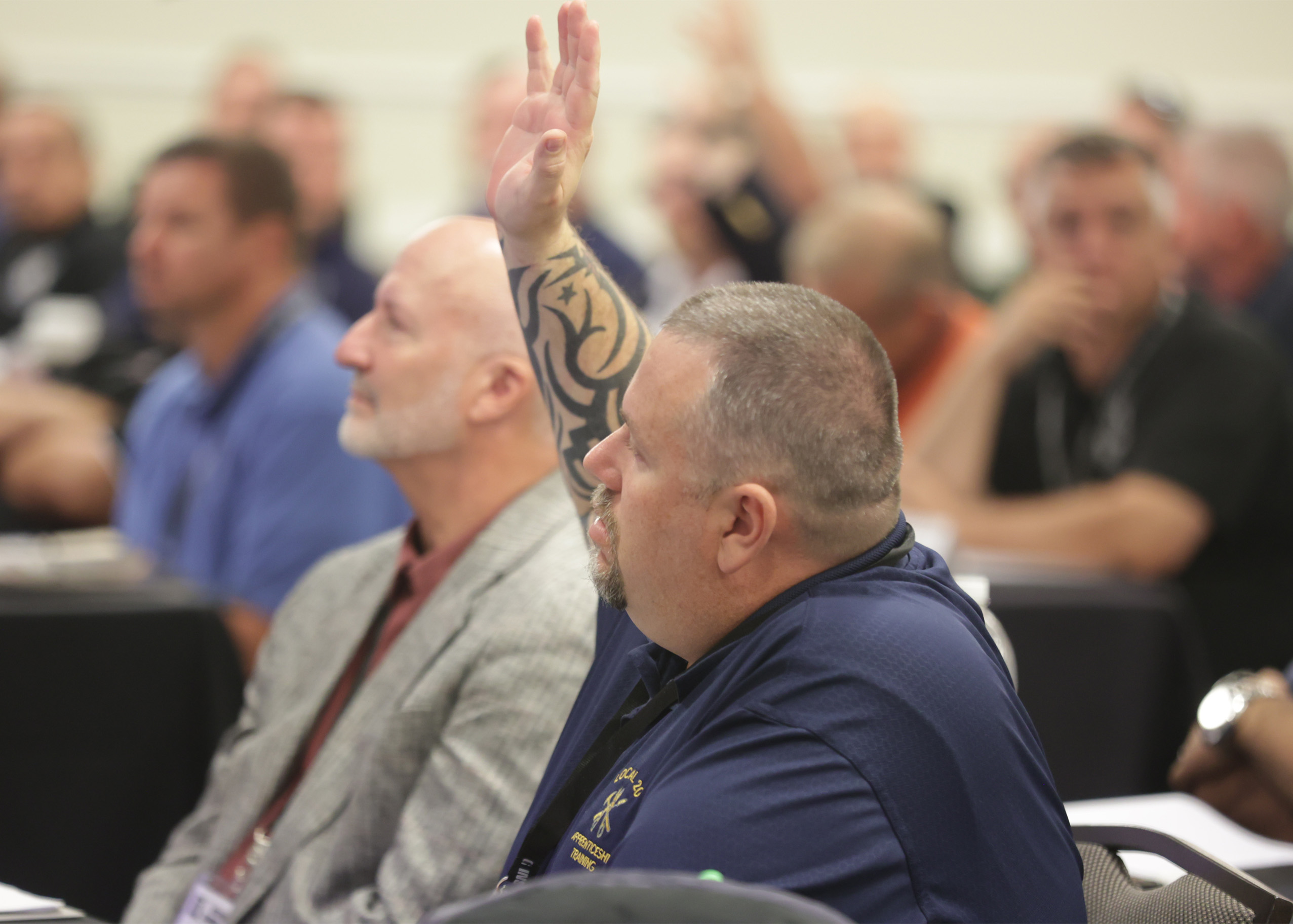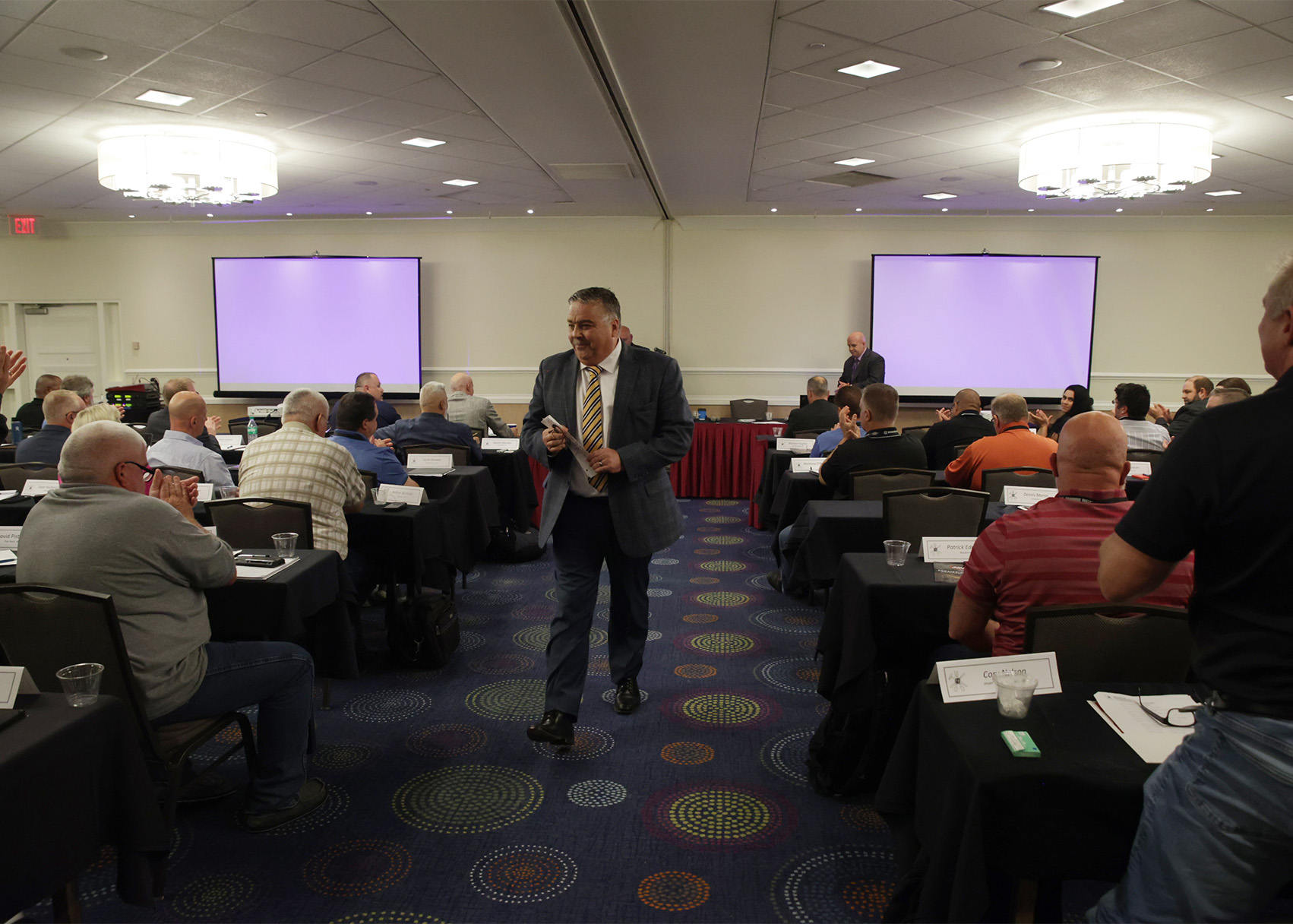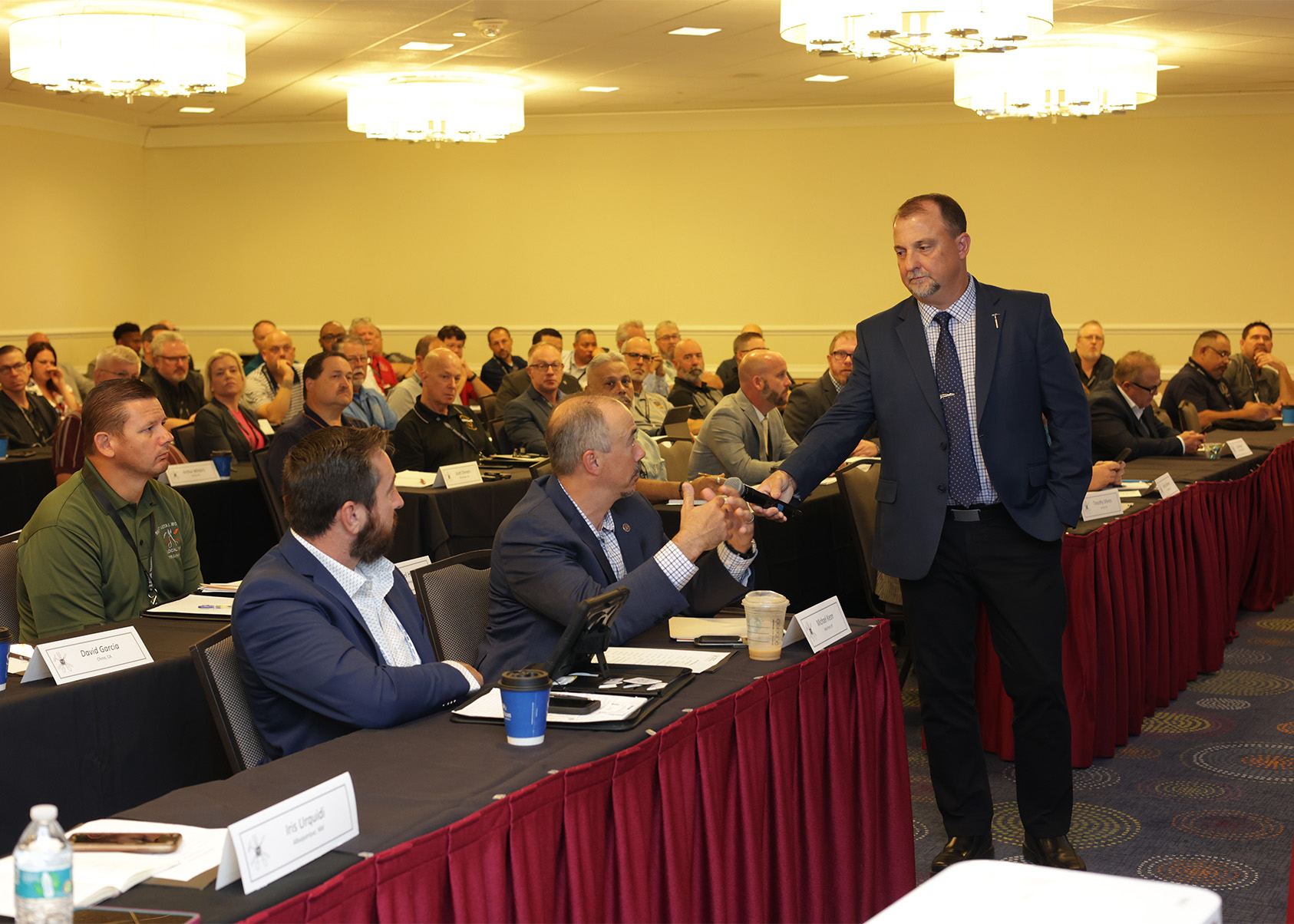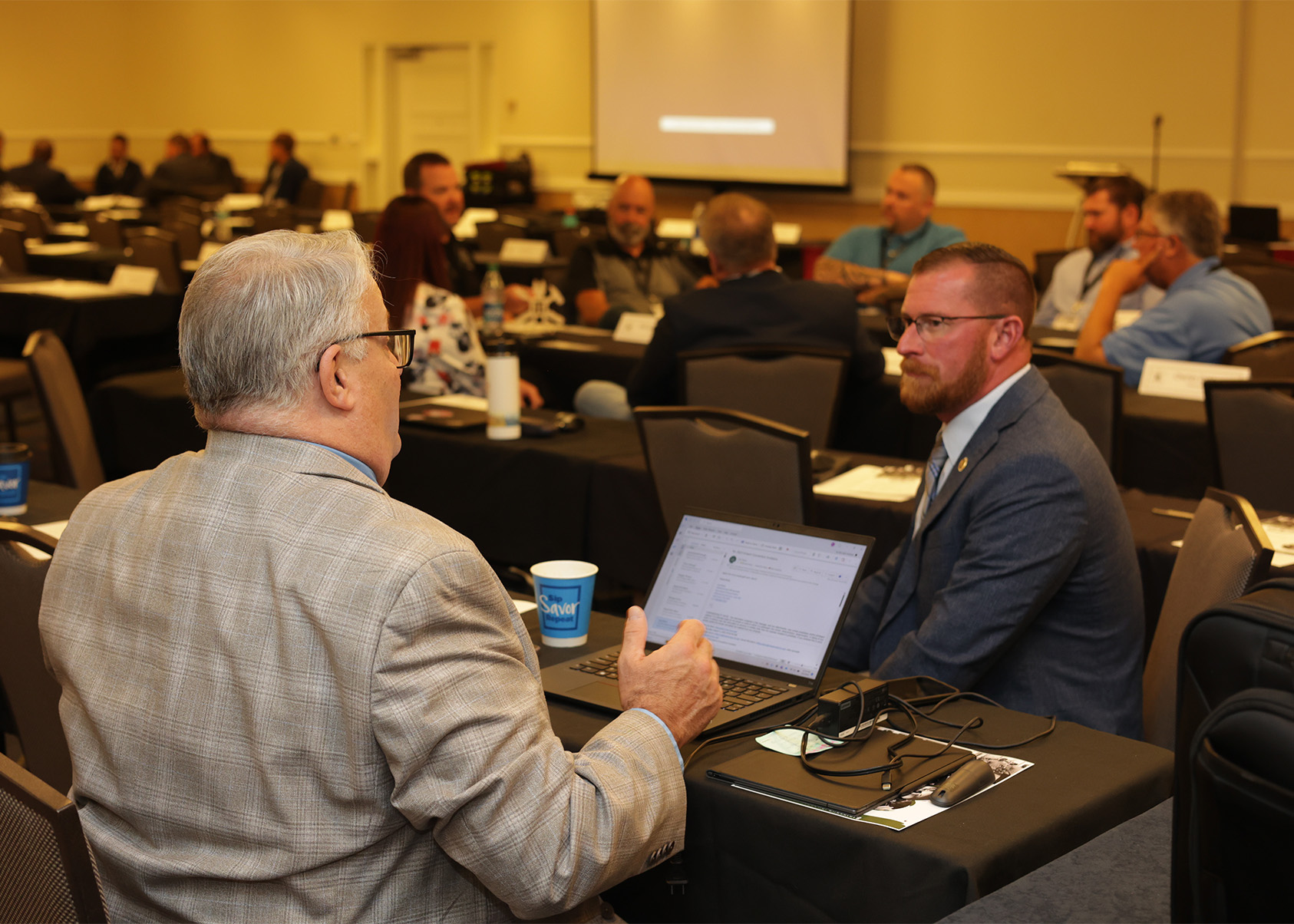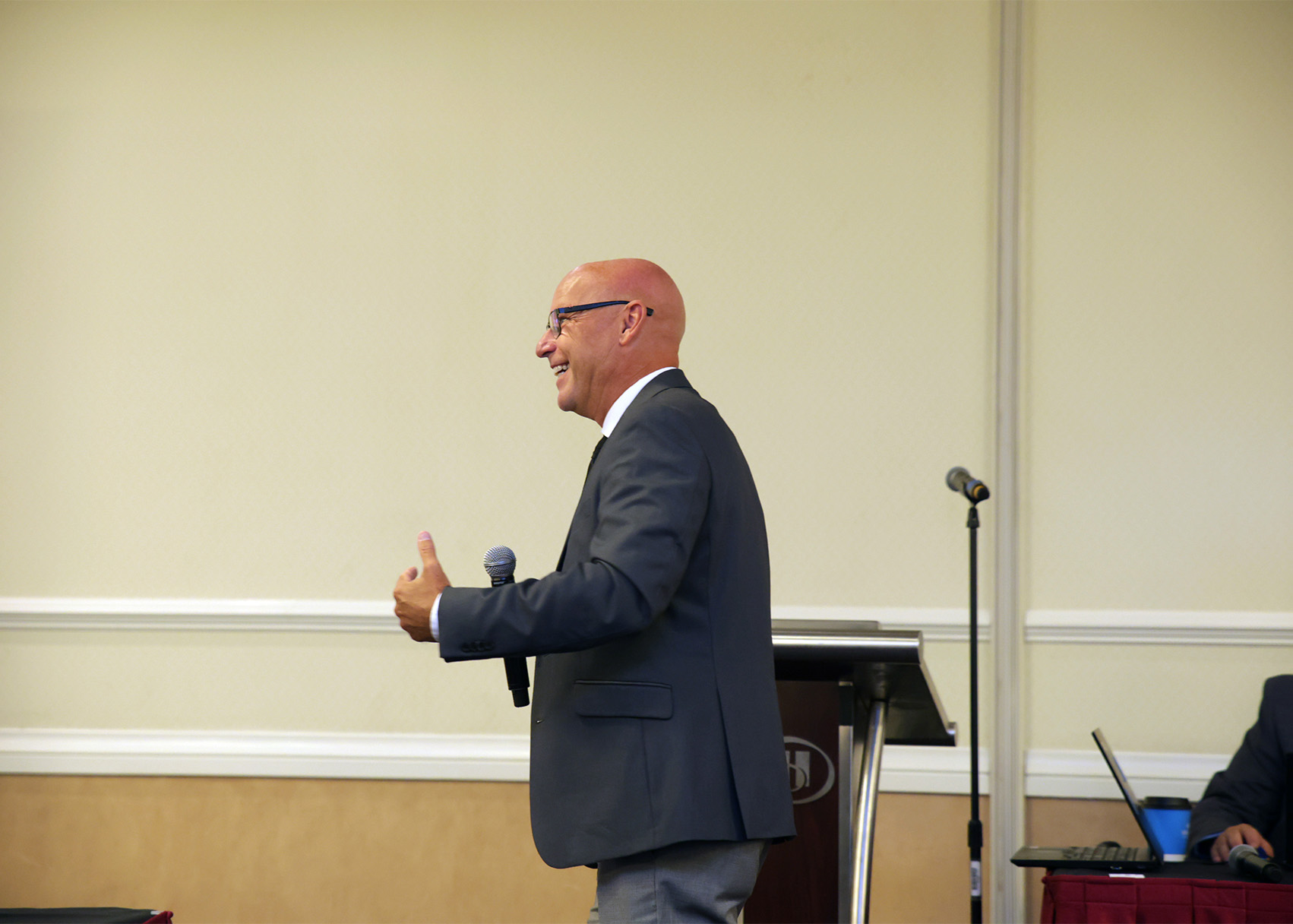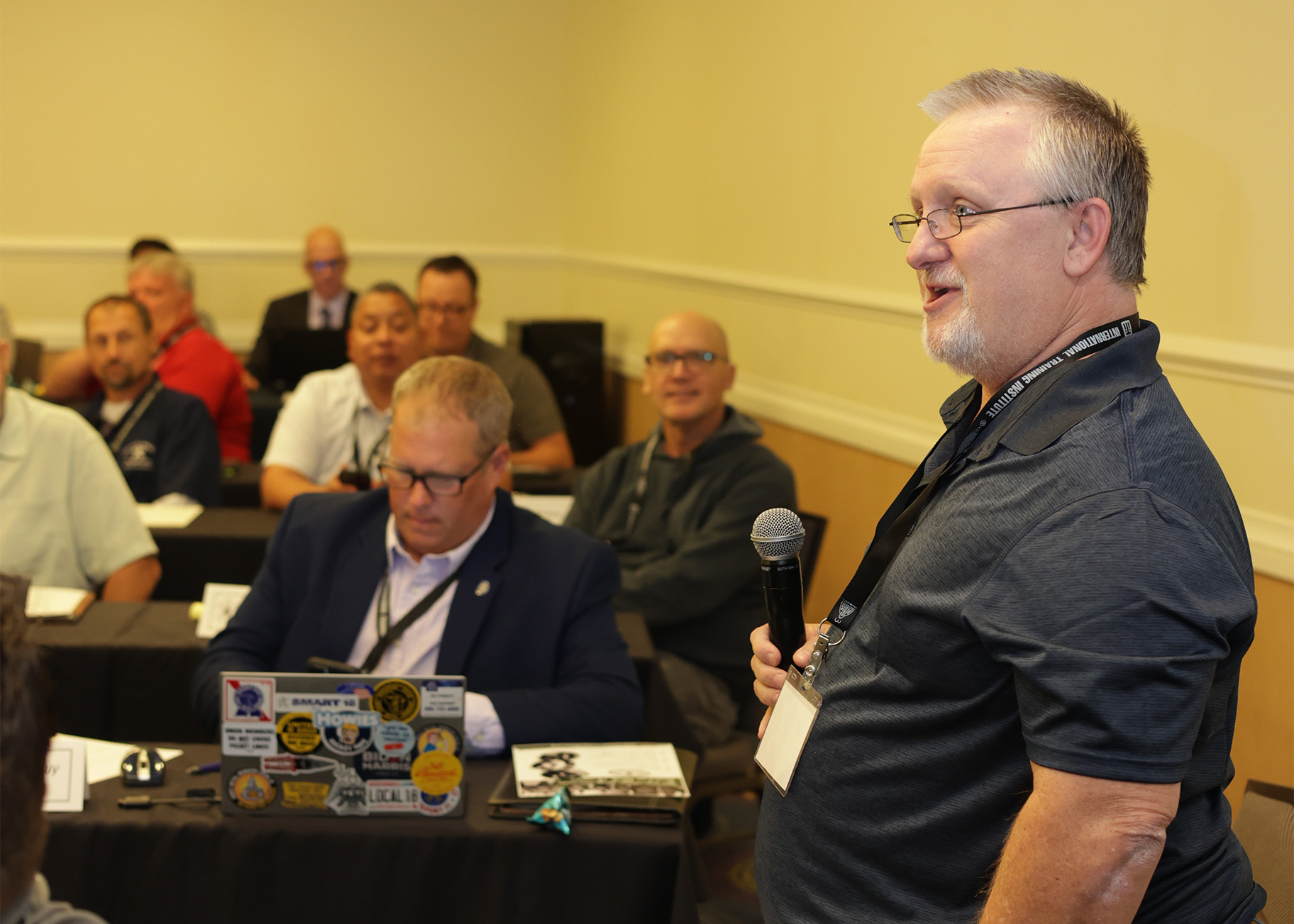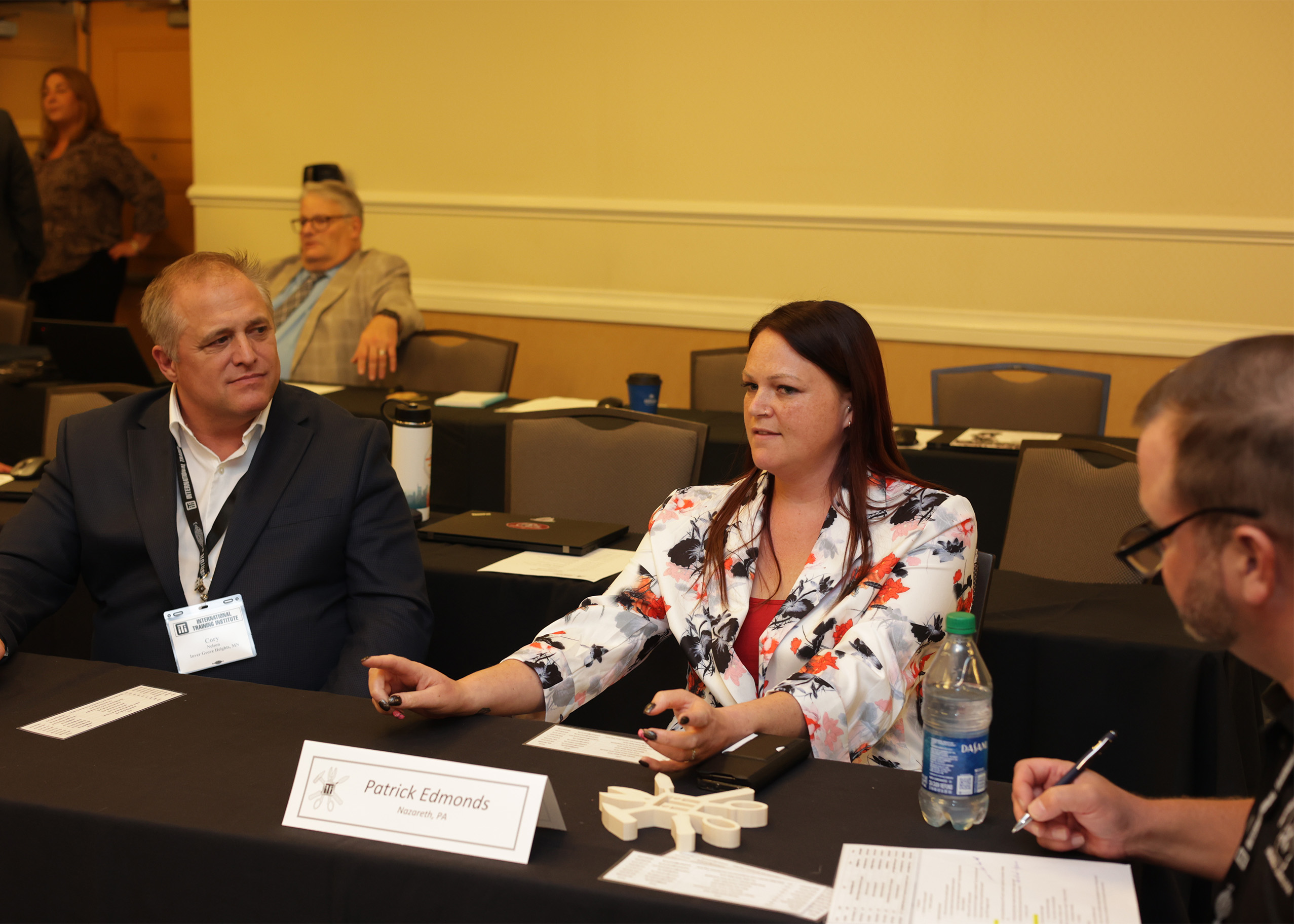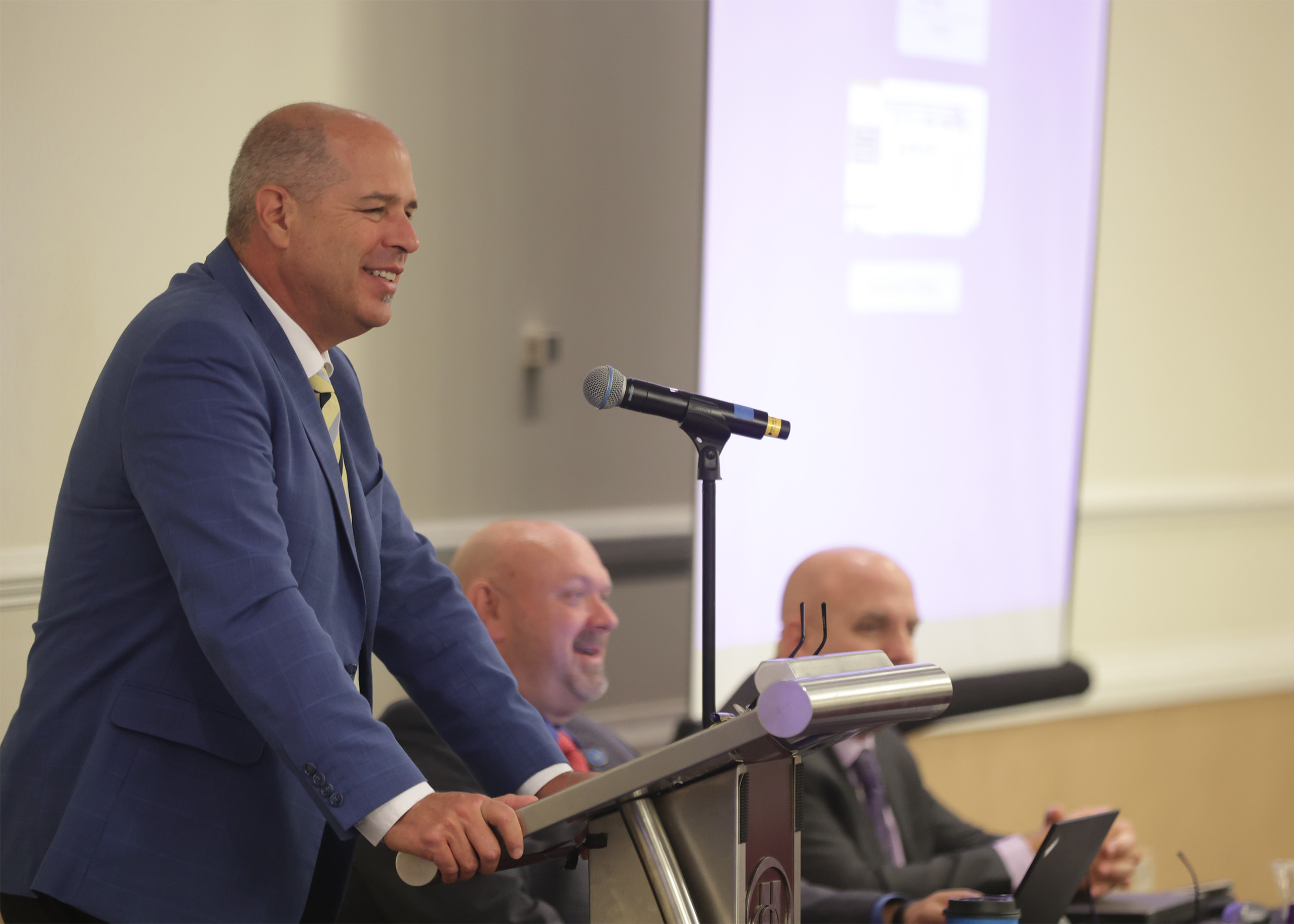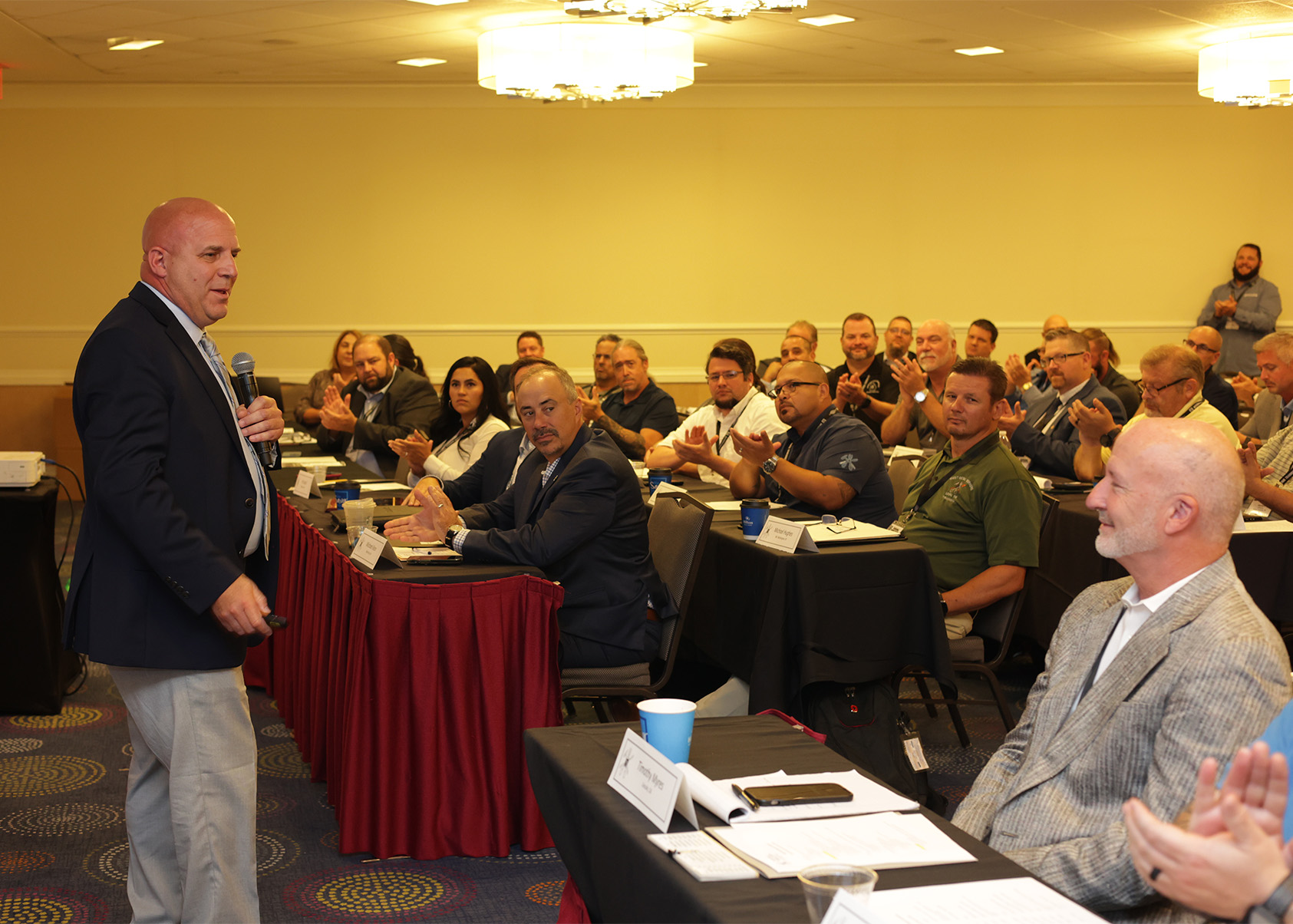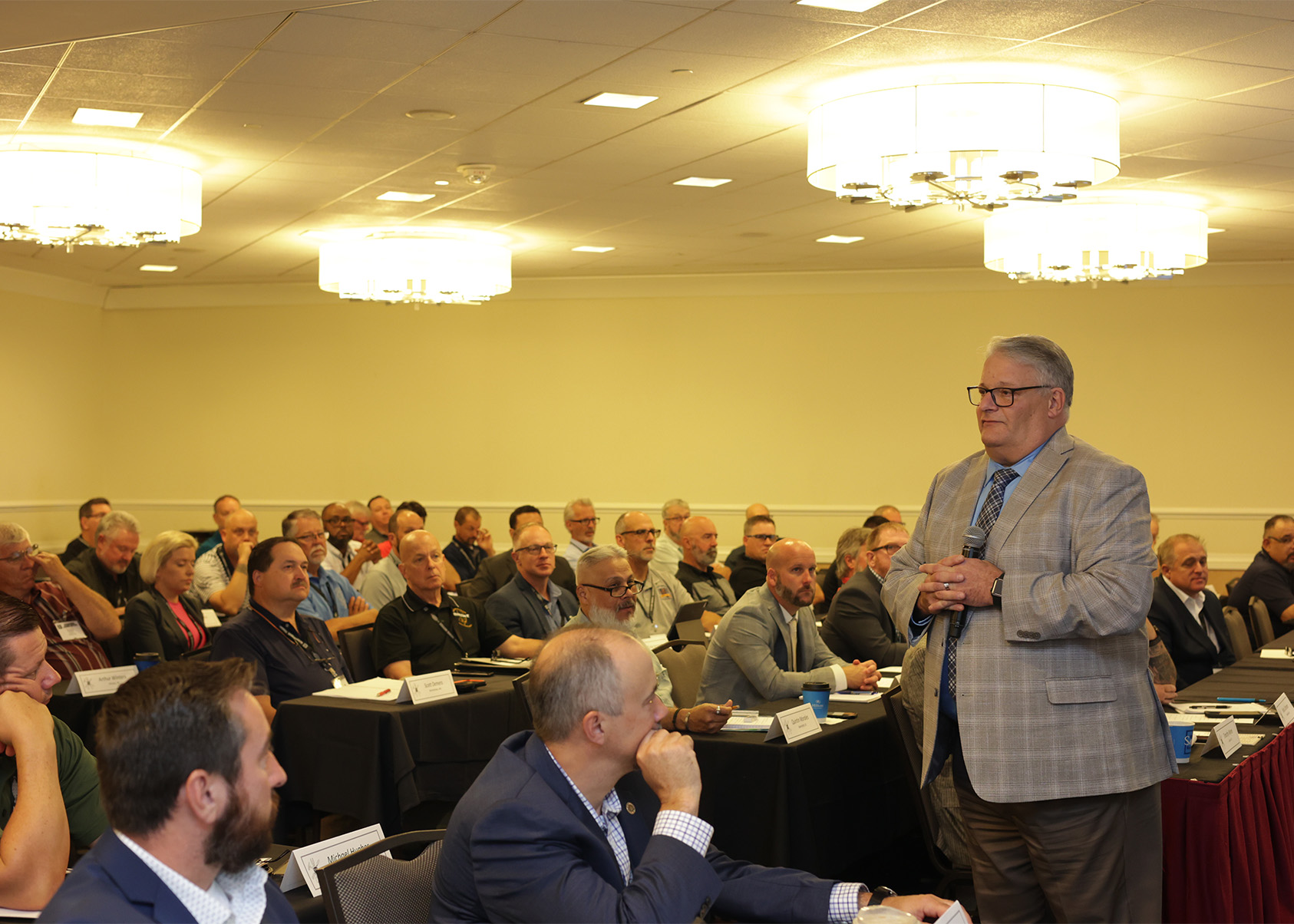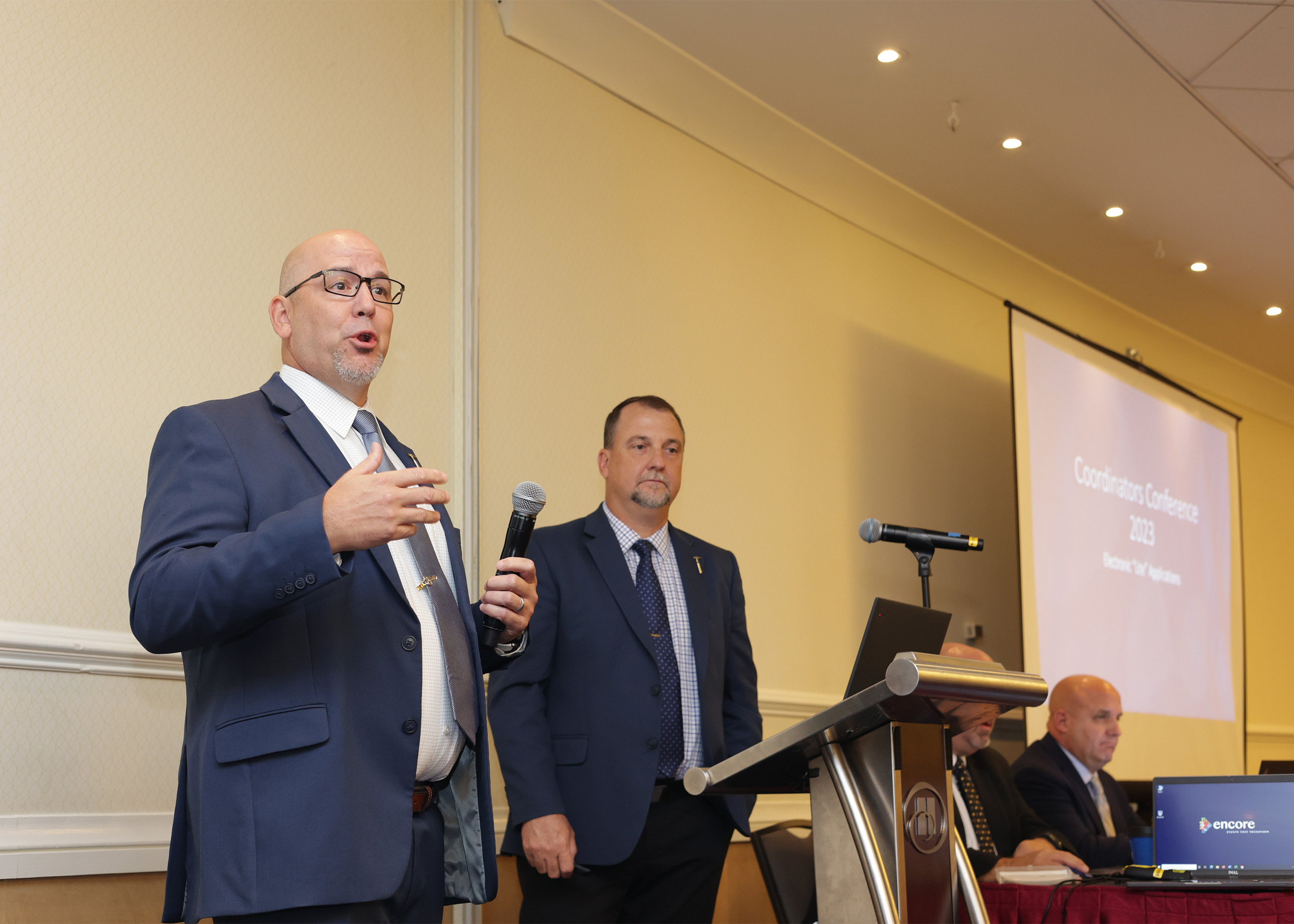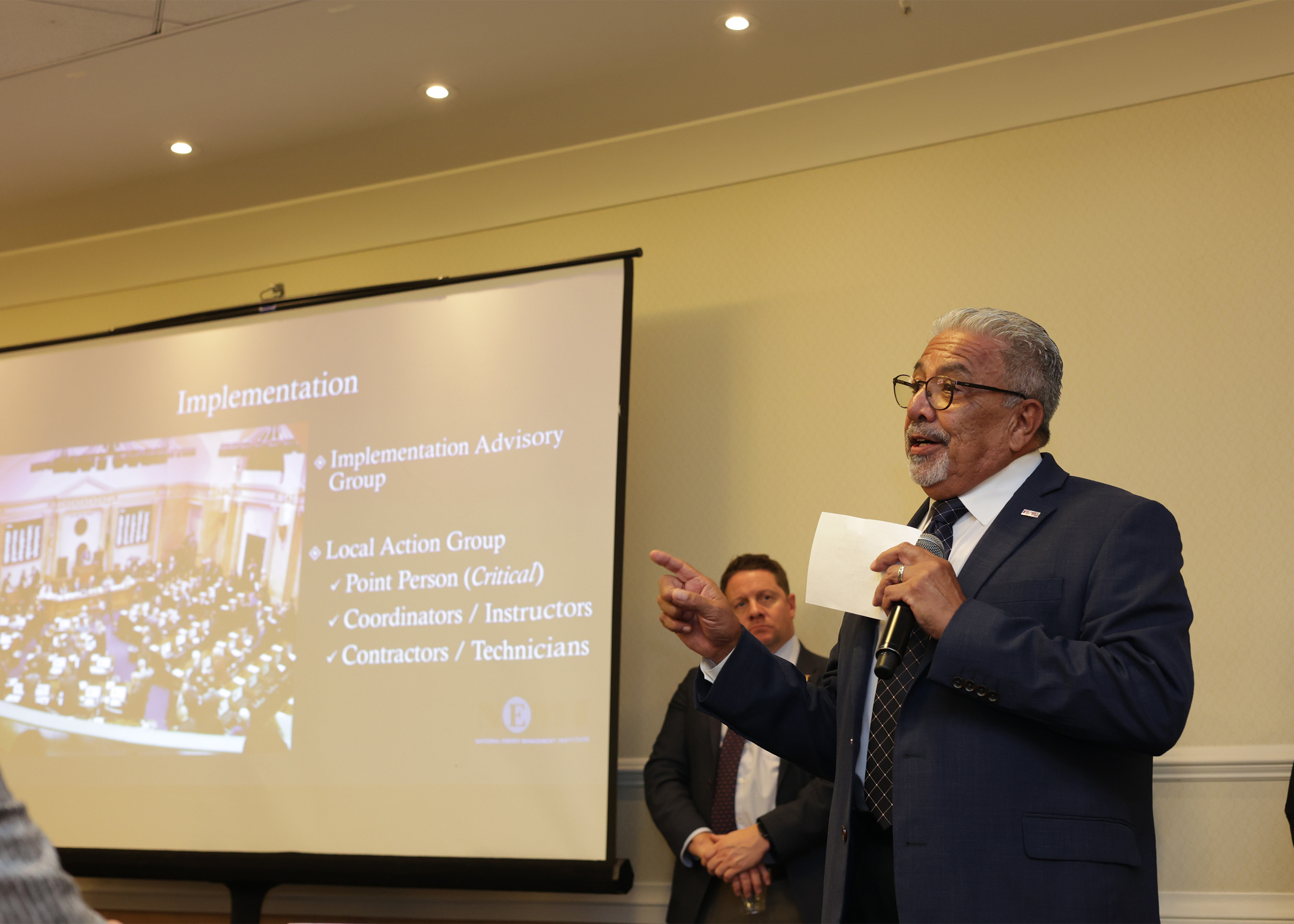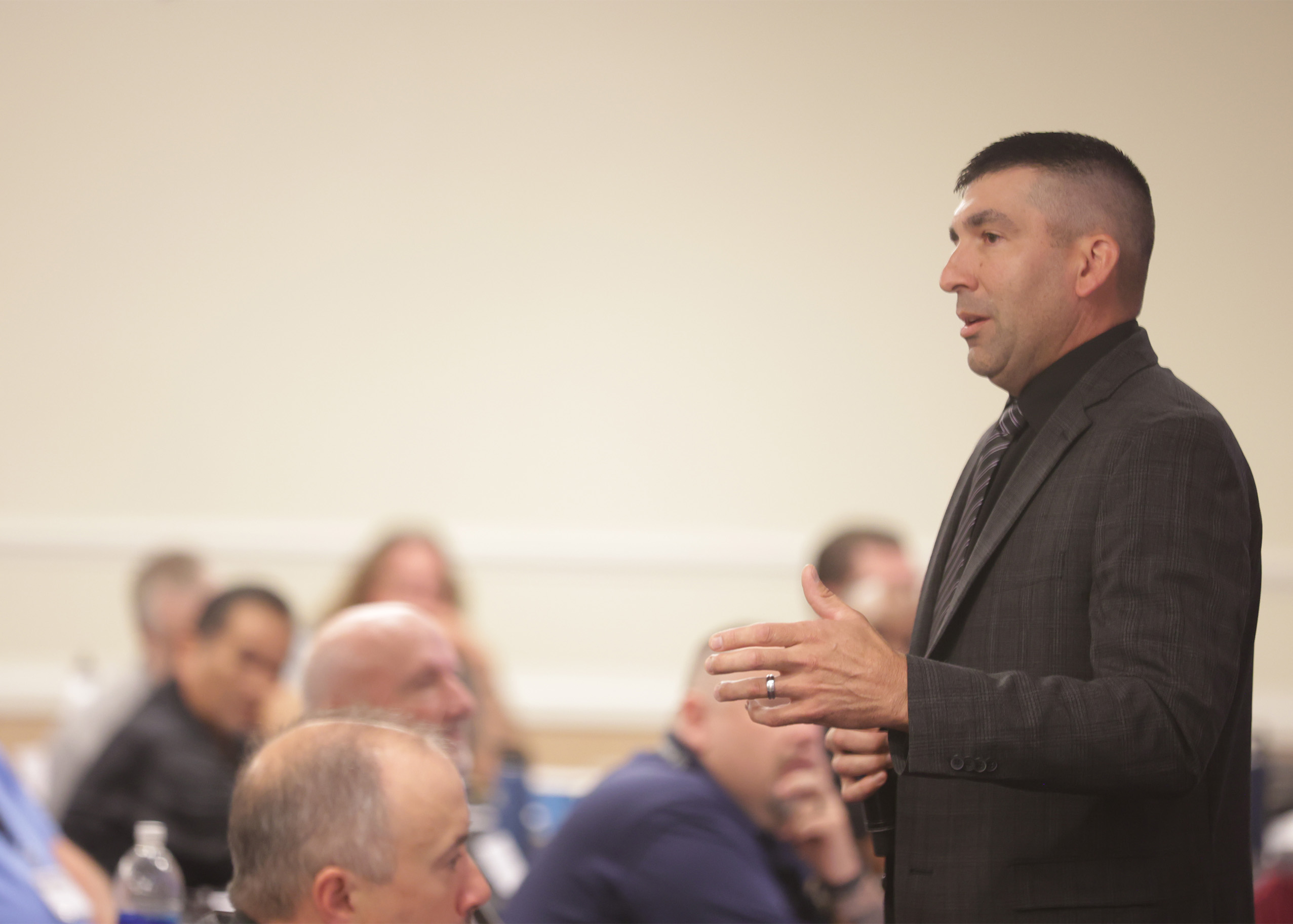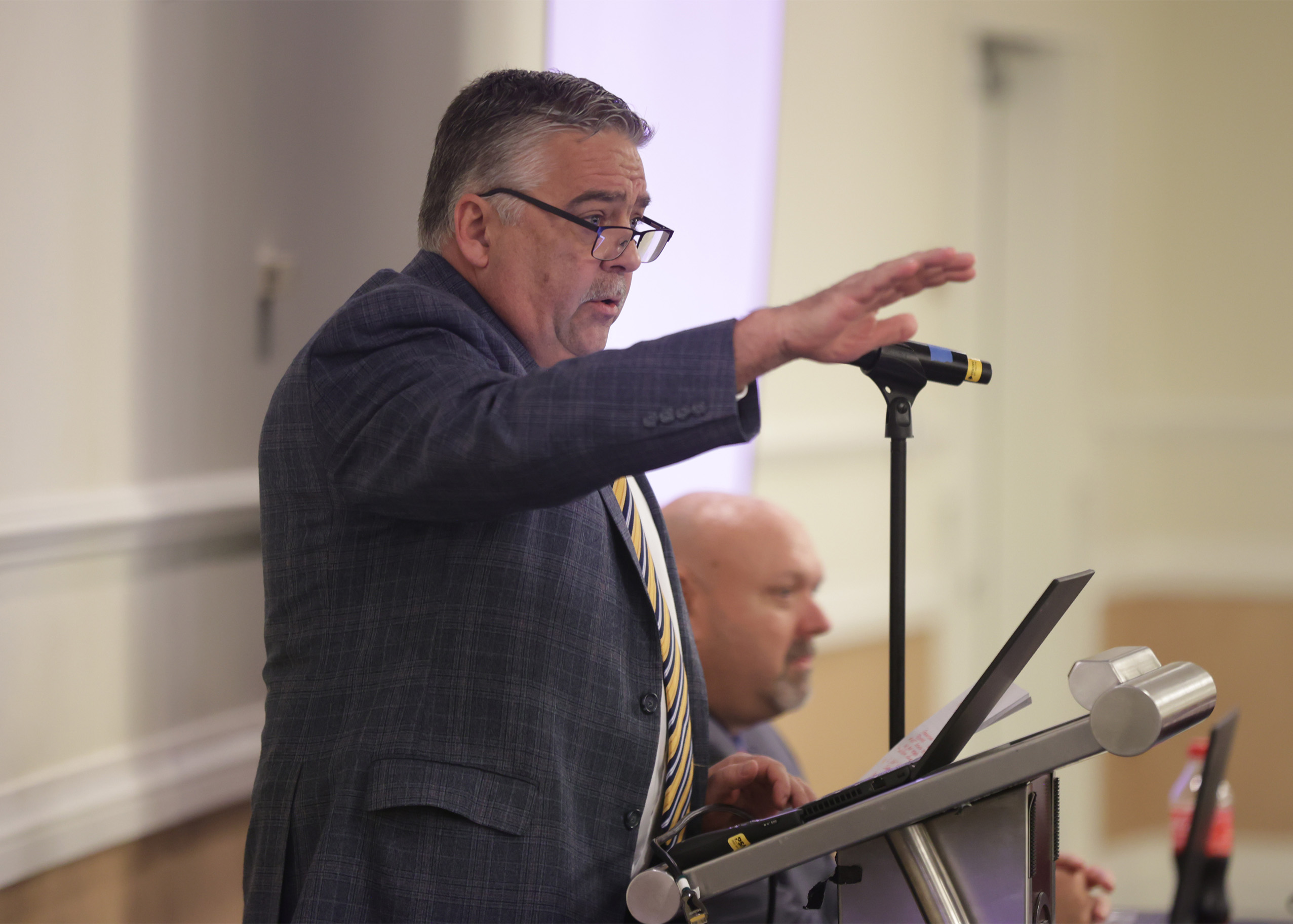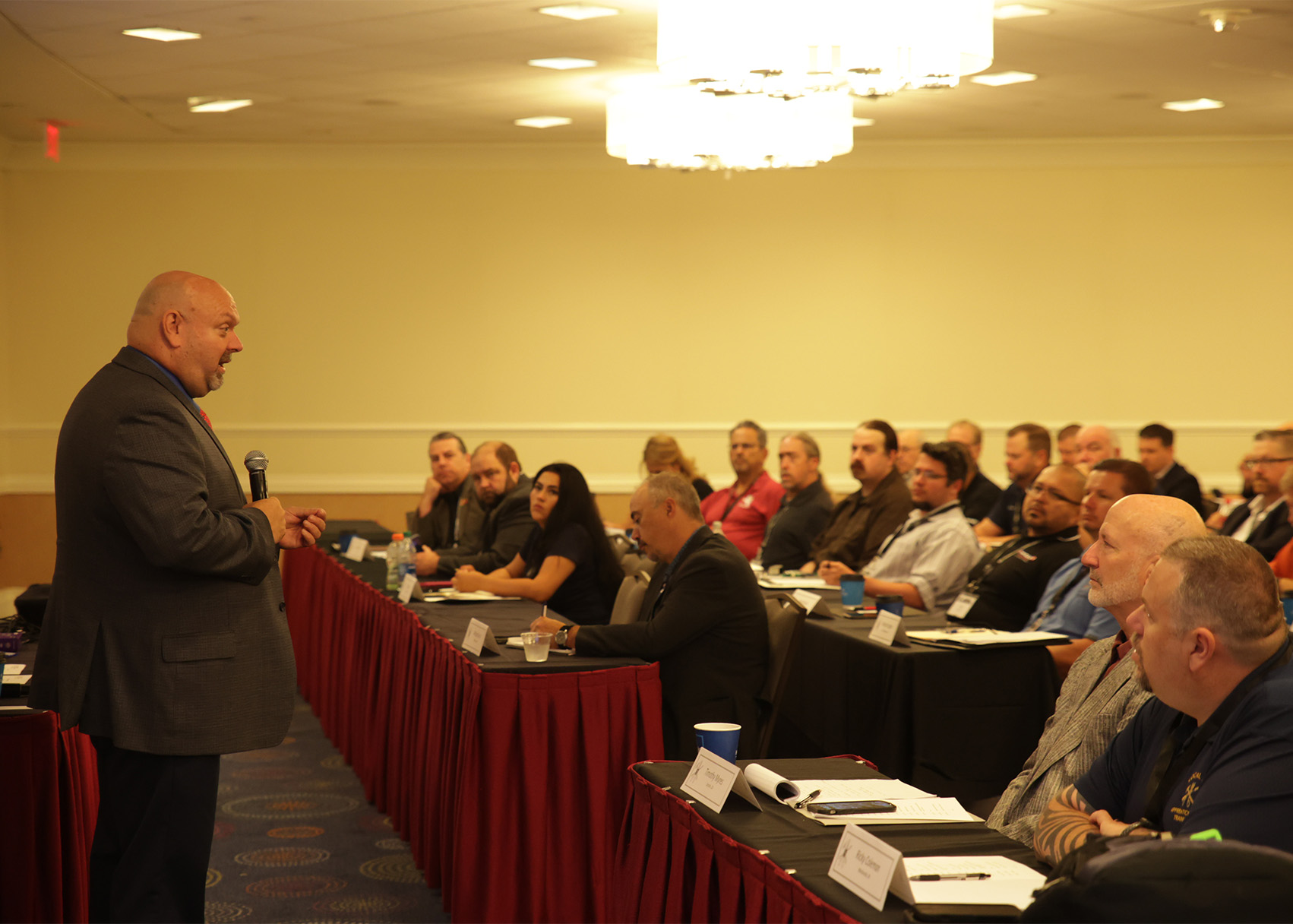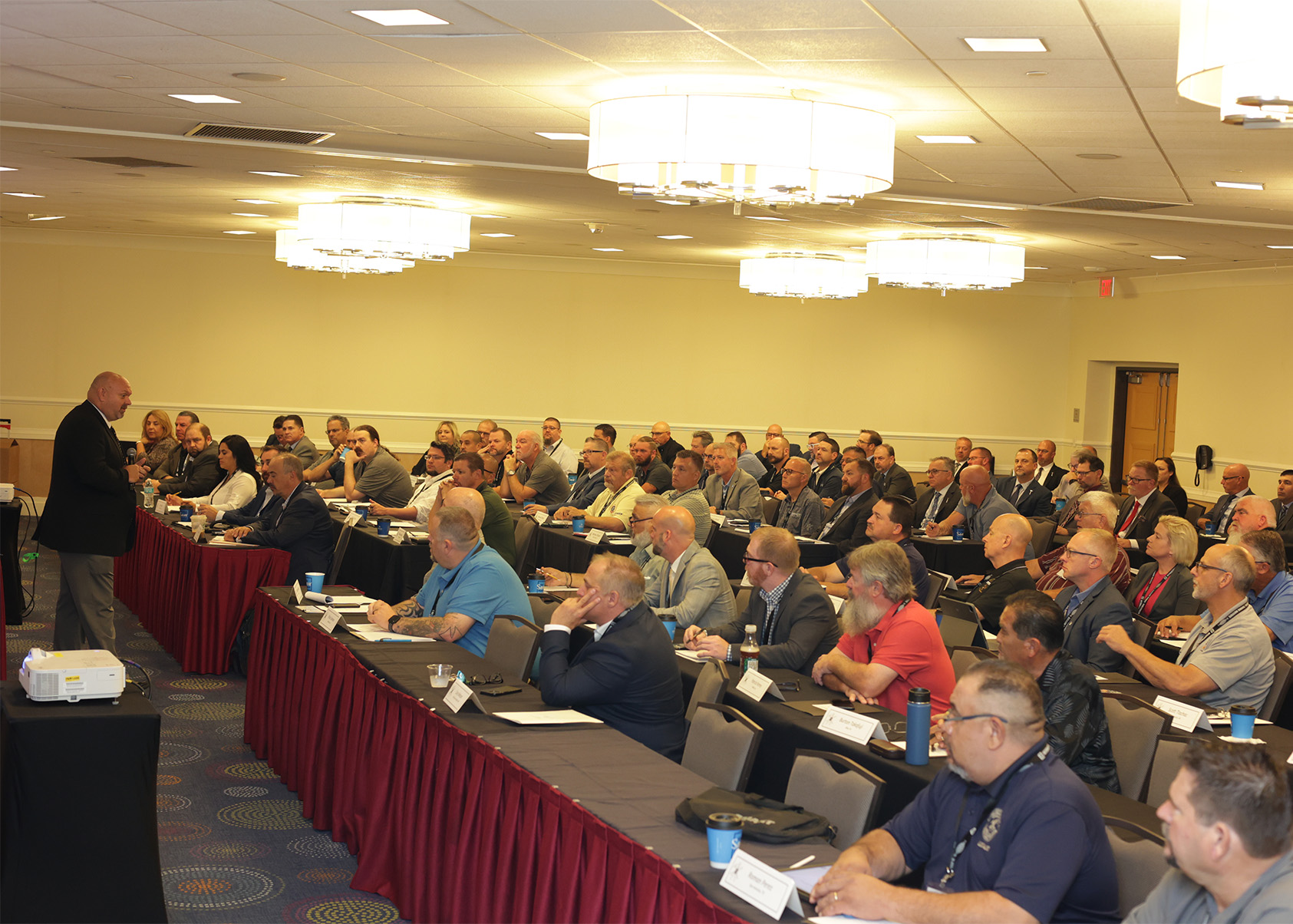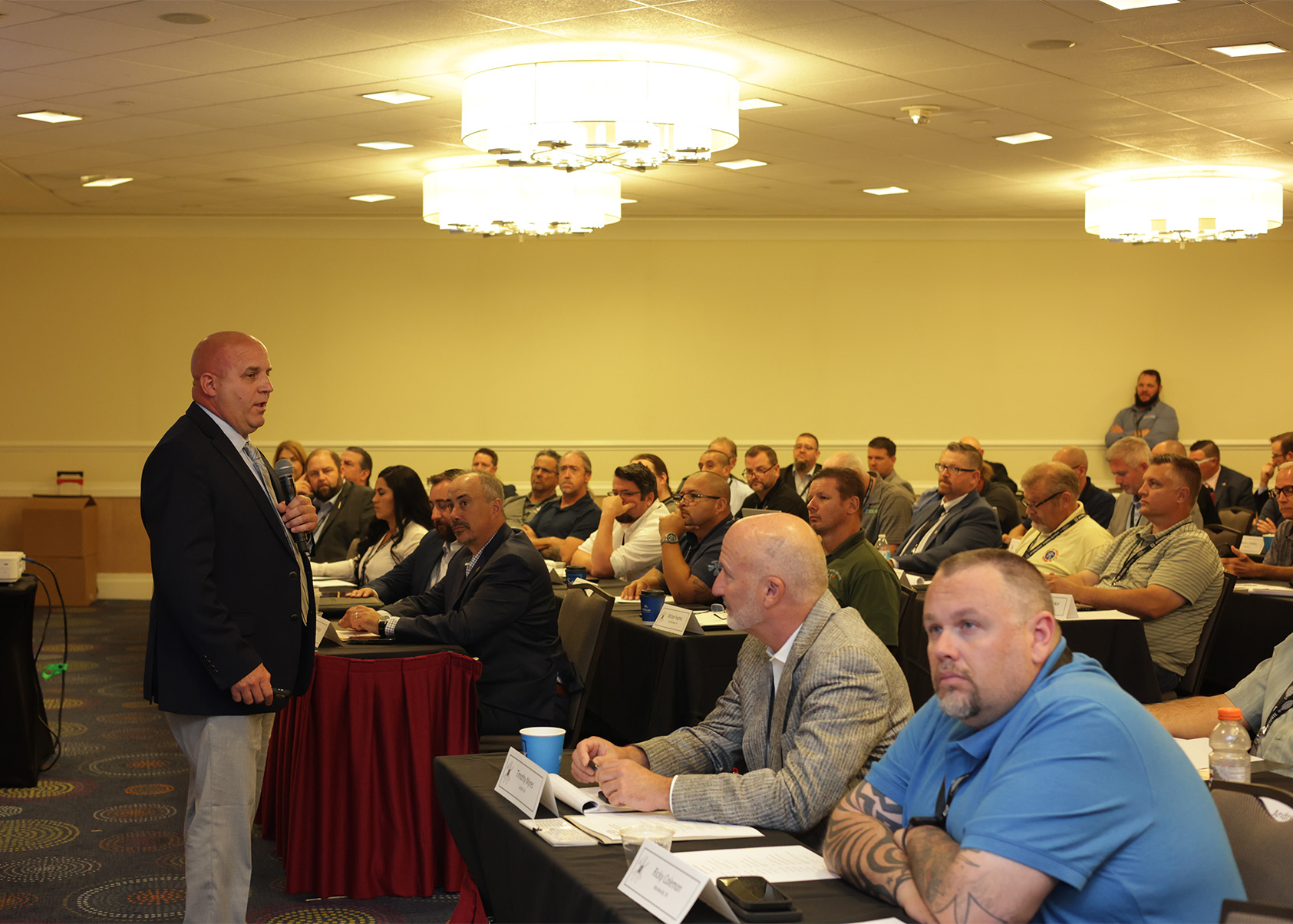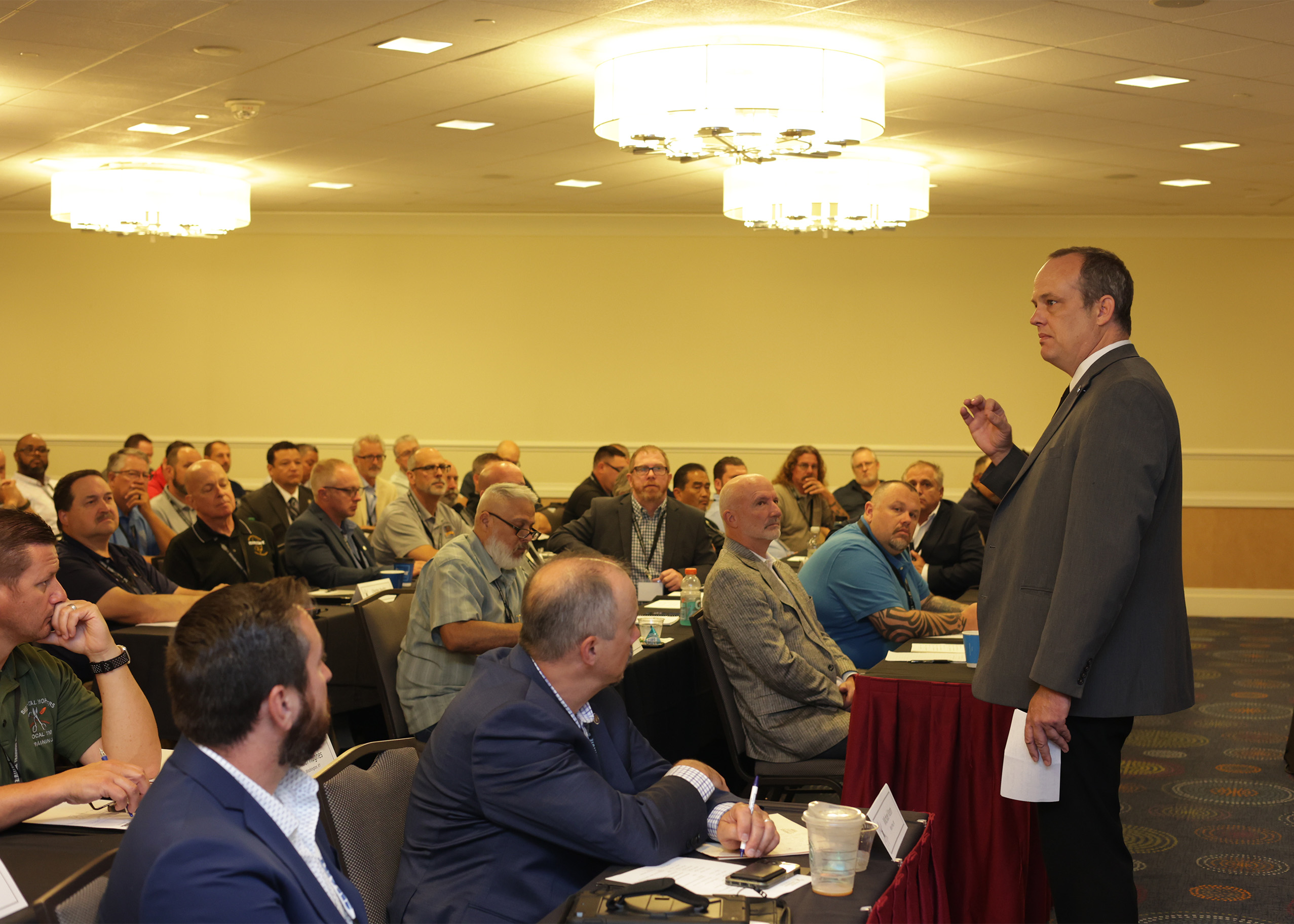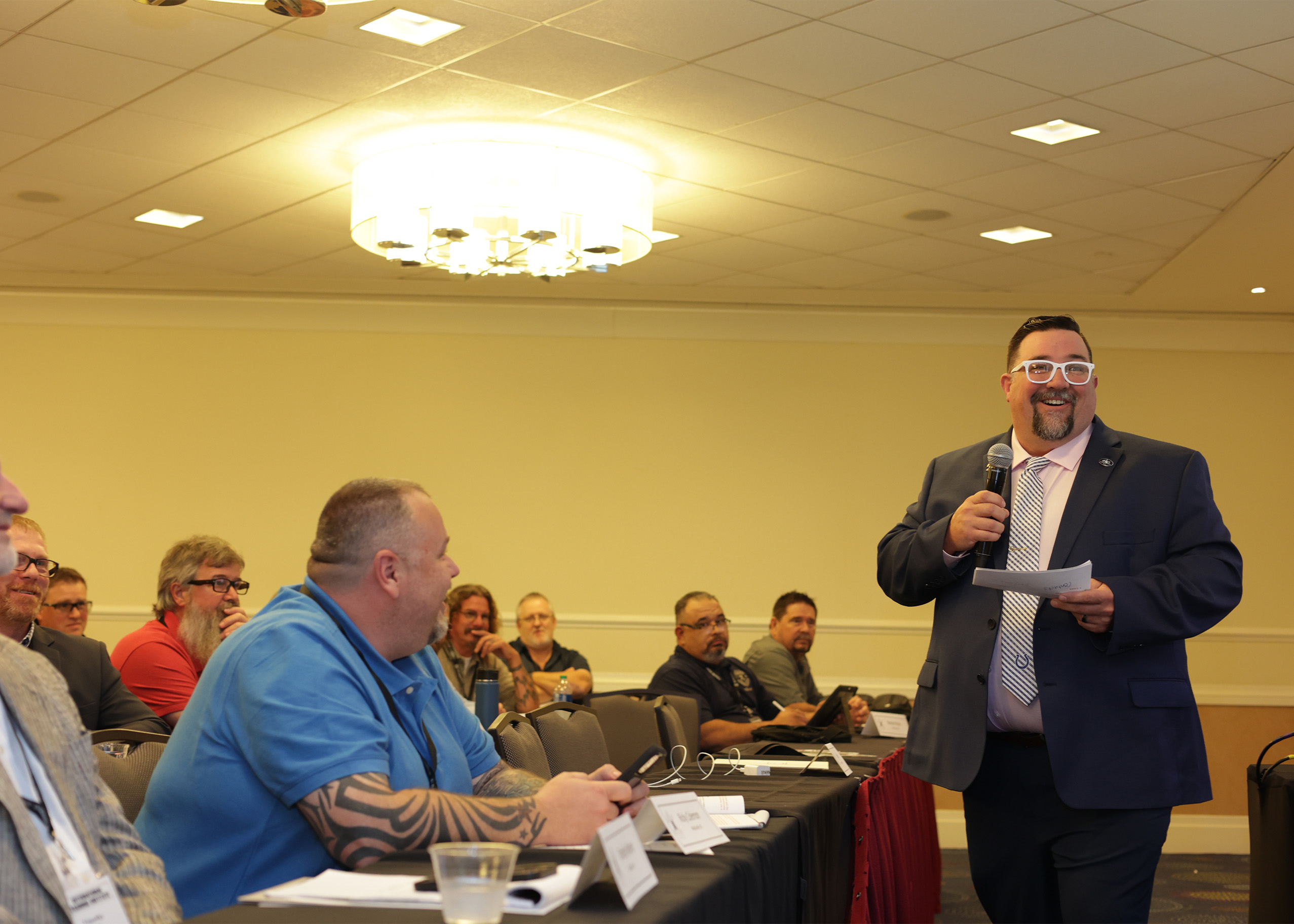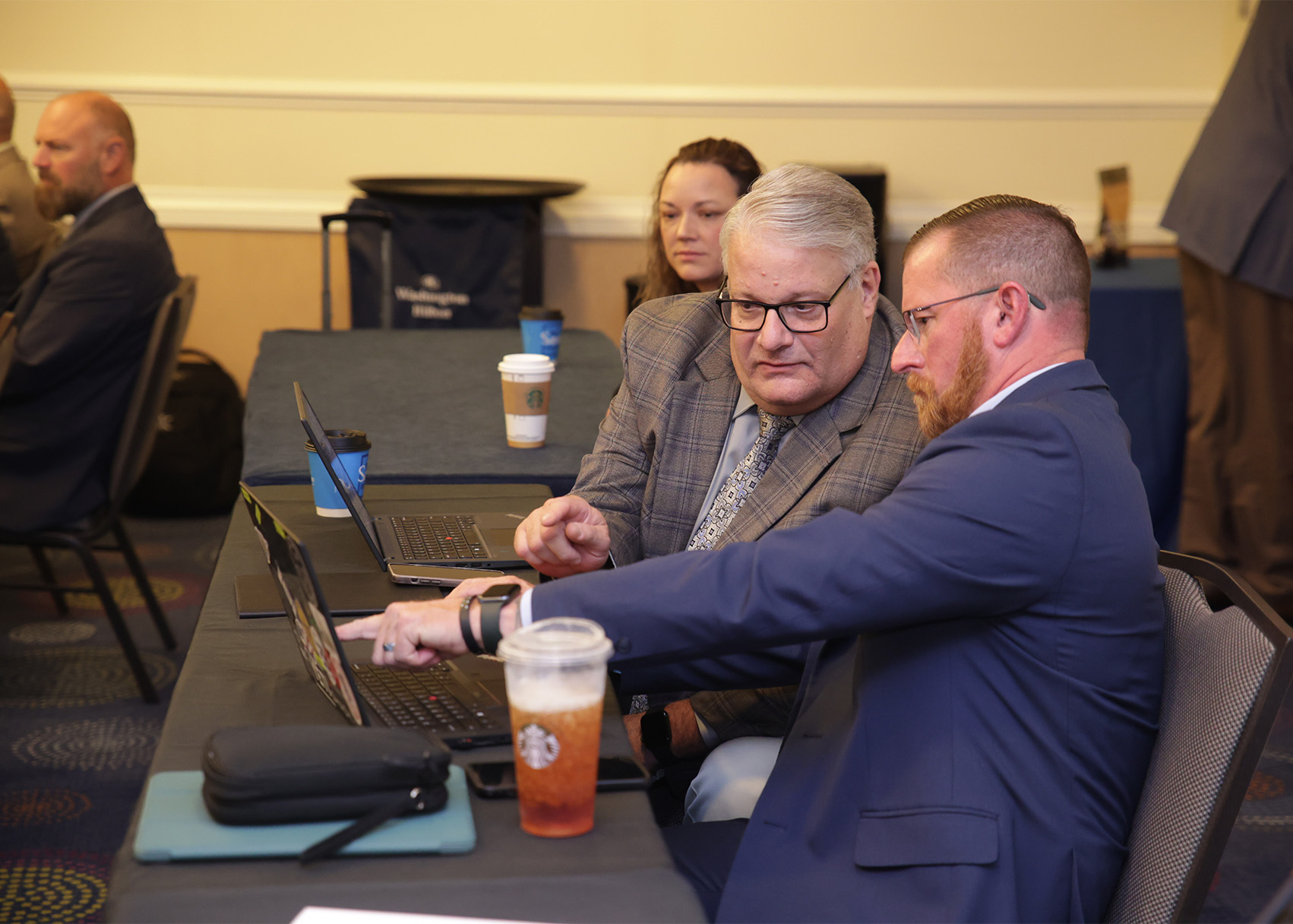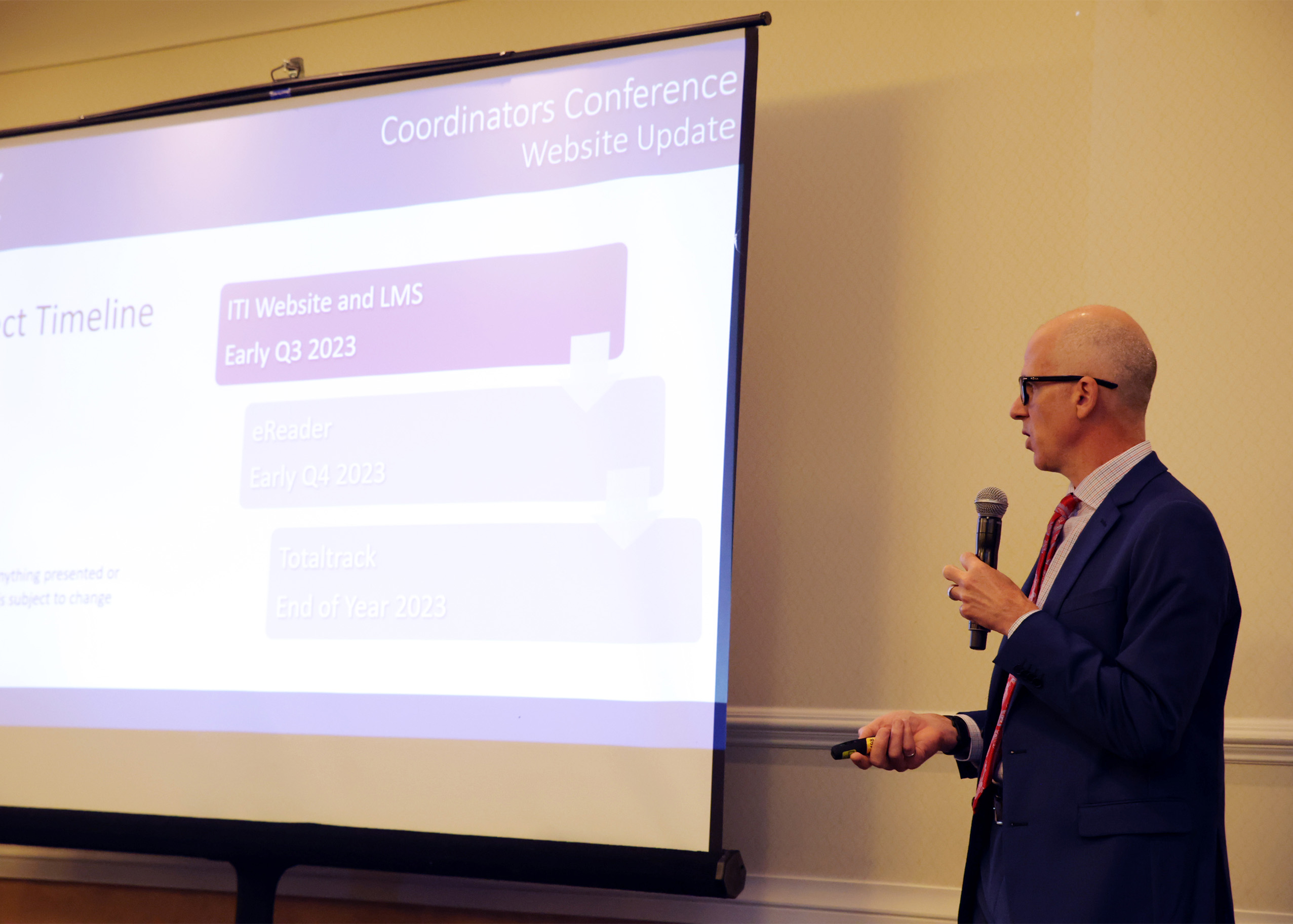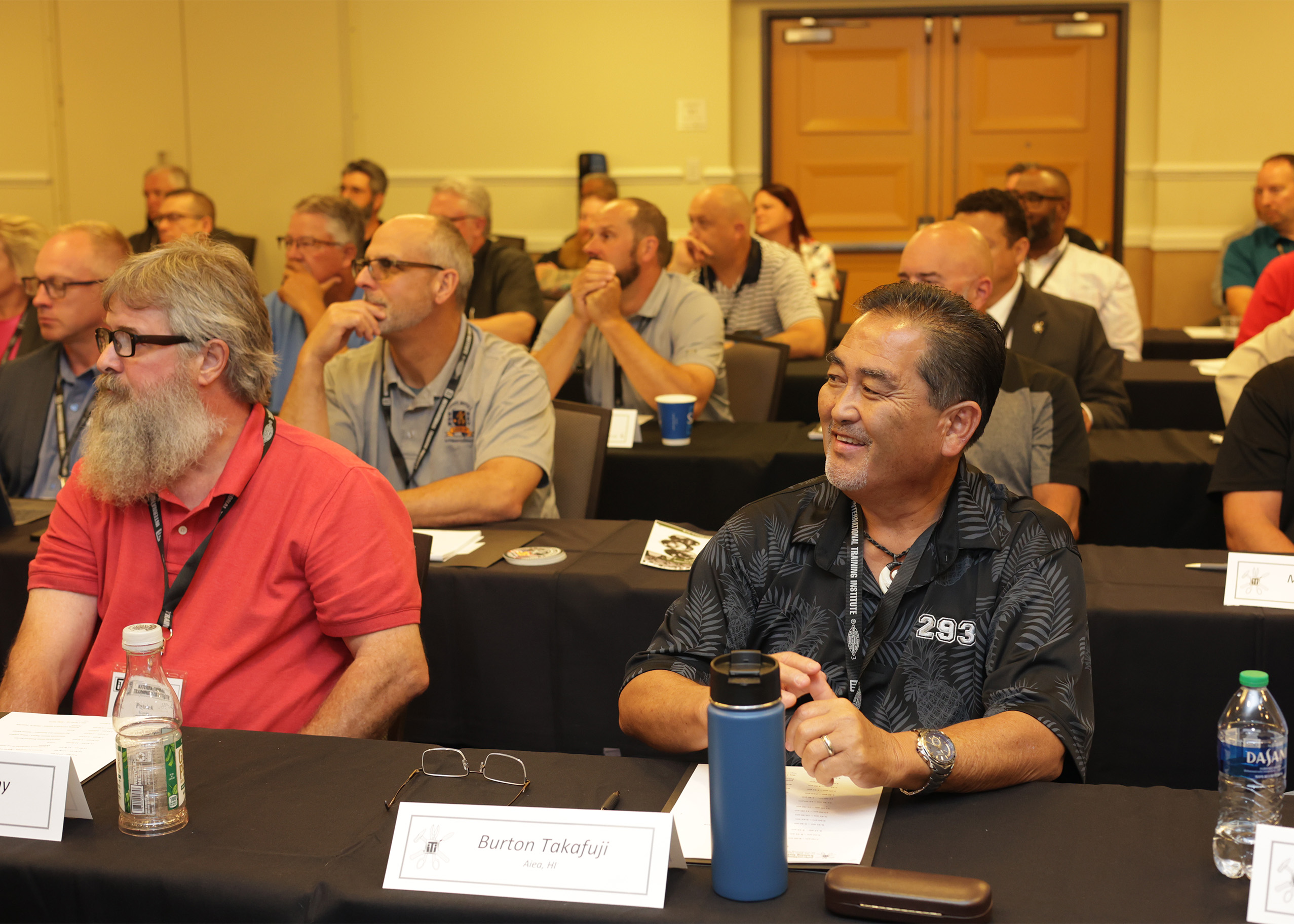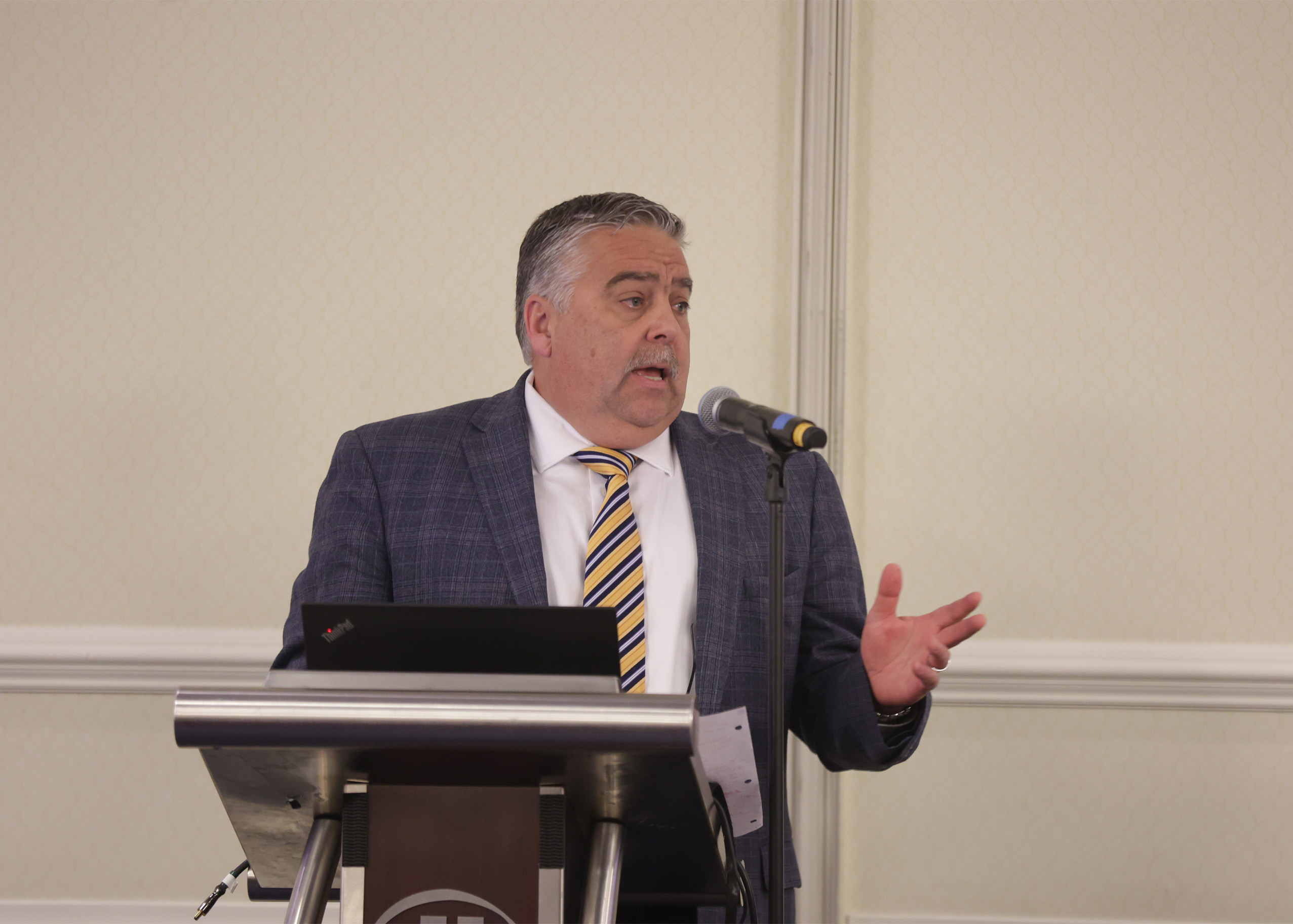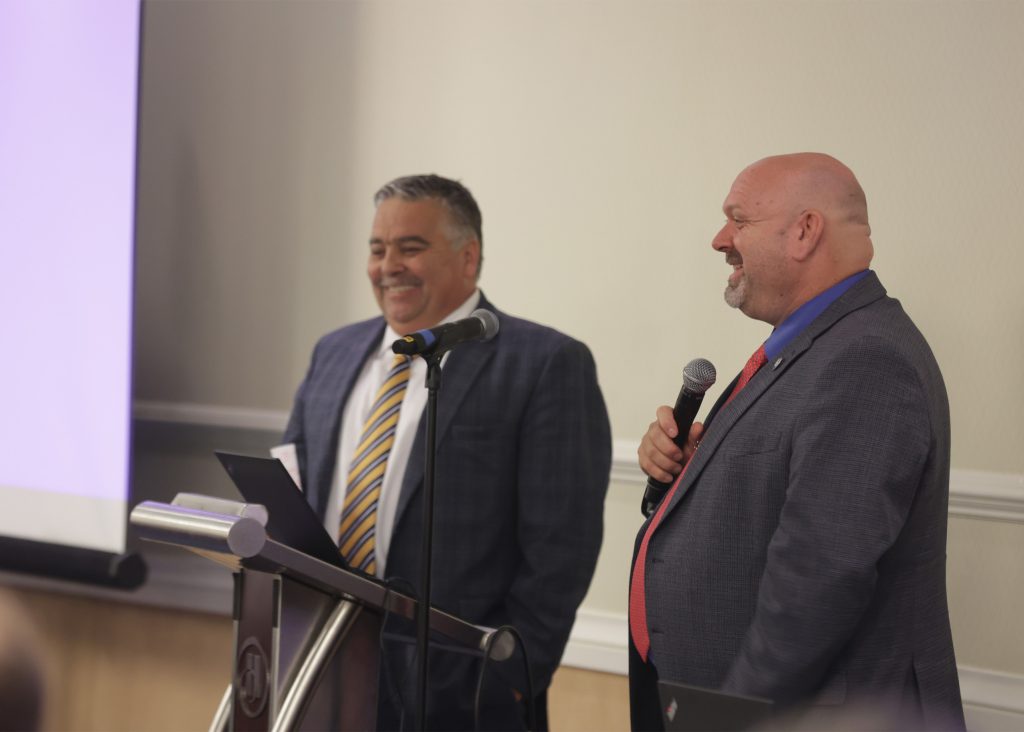
The 2023 Coordinators Conference focused on the future, with more than 75 training coordinators and directors gathering for the annual event Aug. 3 and 4 in Washington, D.C.
With the largest attendance in recent years, the ITI conference brought tomorrow’s outlook, technology and training information with a sense of hope and excitement.
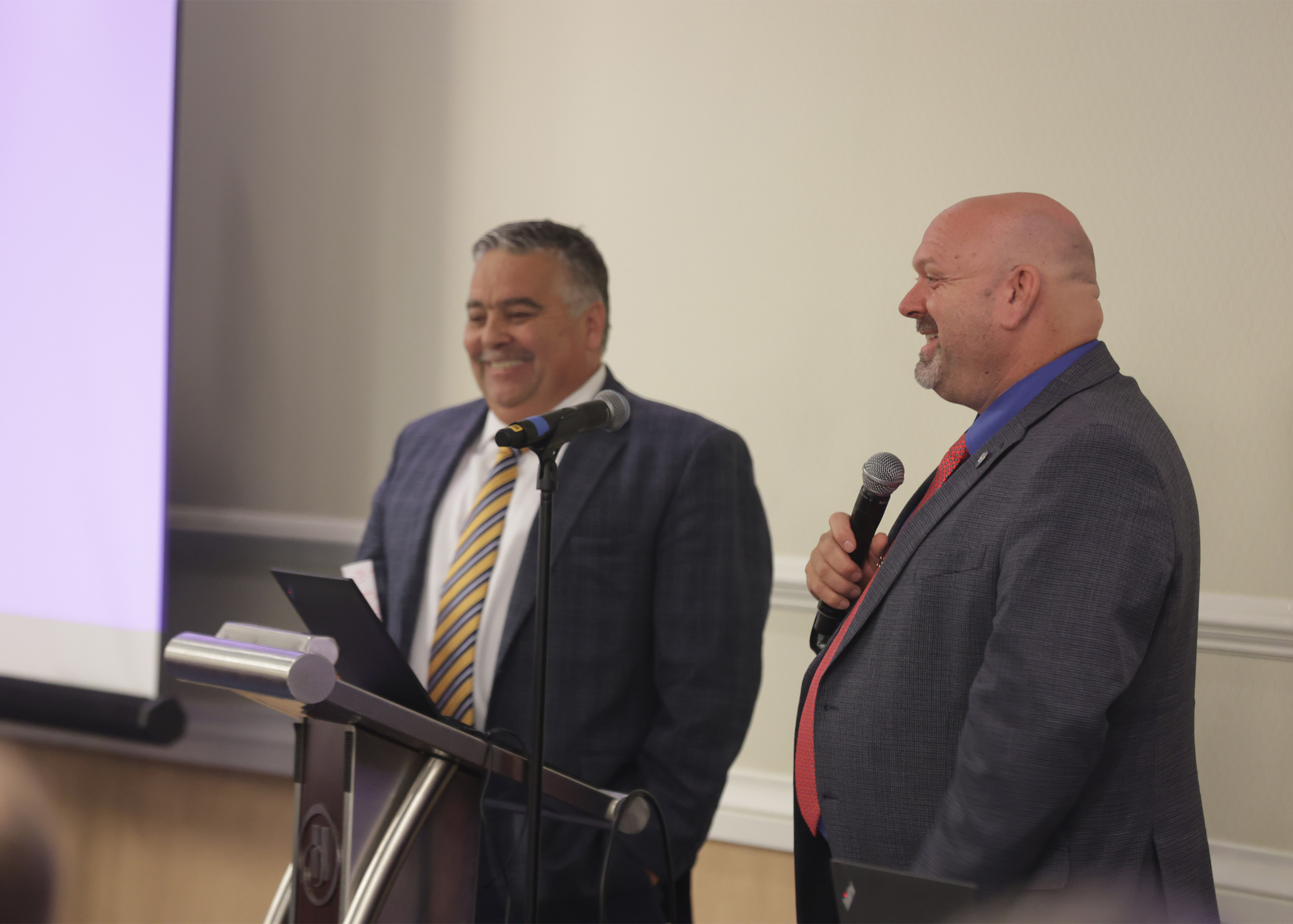
“We have never seen, in my lifetime, this much work on the horizon,” said Mike Harris, ITI administrator. “This really is our time to expand. If we can’t expand now, we never will.”
Apprentice recruitment and retention is high on the priority list, and coordinators must understand the way training programs recruited apprentices in the past won’t work the same today. Apprenticeship requirements that once made sense may need to become recommendations instead.
Nearly every aspect of the conference referenced back to how to recruit and better retain apprentices and members. Attend a Bias and Belonging Training. Reach out to the local apprenticeship readiness program.
“The world has changed. People have changed. Our industry has changed. You have to change,” Harris said. “It may be as simple as changing two or three words in your apprenticeship standards, and that could open the flood gates. For example, using the word ‘required’ instead of ‘recommended’ or ‘preferred’ can be the difference between having a pool of 100 or 1,000 applicants.”
Online applications
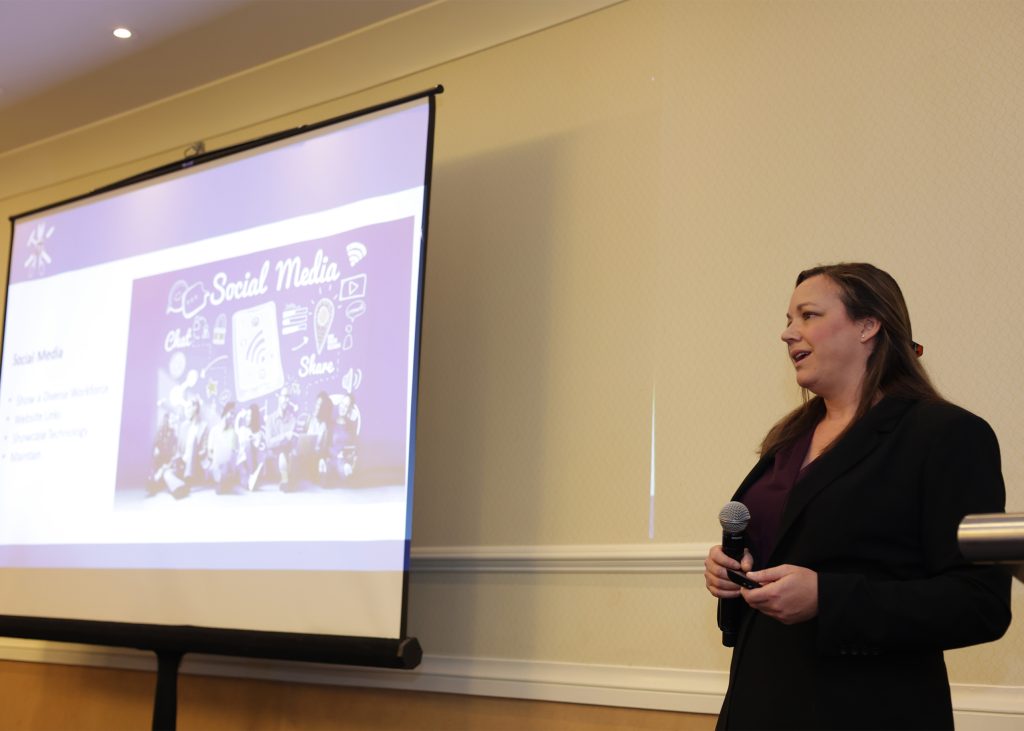
The ITI staff reminded coordinators there is an online apprentice application option that can be linked to TotalTrack and be used as another way to recruit apprentices. Coordinators have the ability to customize what information is required and can include recommendations and comments in addition to scoring applicants. Potential apprentices can upload screenshots of their documents if the training center’s website is set up to securely receive them.
Coordinators also can create a QR code of their website to have handy during recruitment events and on collateral inside their training facilities.
“If you are using paper applications, this is a game-changer,” said Craig Reehten, ITI field representative. “You can put [the QR code] on the back of your business card. It’s an automatic influx of new recruits, new applicants.”
All that time you spend inputting applications? This will save all that time, added Carl Simons, ITI field staff.
Bias, belonging and mental health
Another important link in recruitment and retention is taking care of the physical and mental health and safety of apprentices, members and contractor members. Aldo Zambetti, SMOHIT administrator, reminded the audience they are all “first responders.”
Attending training with the SMART Member Assistance Program (MAP) and refreshing that training every few years is essential in being able to help an apprentice, co-worker or member through a mental health crisis. Other training available to apprentice programs includes Toolbox Talks and on-site visits from the SMART MAP team to address whatever needs arise.
“They’re going to come to you. You’re going to build relationships no one in your business is going to. All you have to do is get to the training. We’ll take care of the rest,” Zambetti said.
Tammy Meyen, ITI’s recruitment and retention specialist, took the idea of “doing better” to encourage and explain the idea behind the Bias and Belonging training. Beginning in 2024, taking the course will be part of the accreditation process — that’s how important it is, she said.
The Bias and Belonging training isn’t there to shame or make anyone feel bad about how they feel or think. The training is there to help people empathize with others, understand their situations and approach challenges with compassion.
“It gives you the tools to slow down and make the decision,” Meyen said. “How are you going to react? It allows you to stop and think about that decision.”
Military veterans
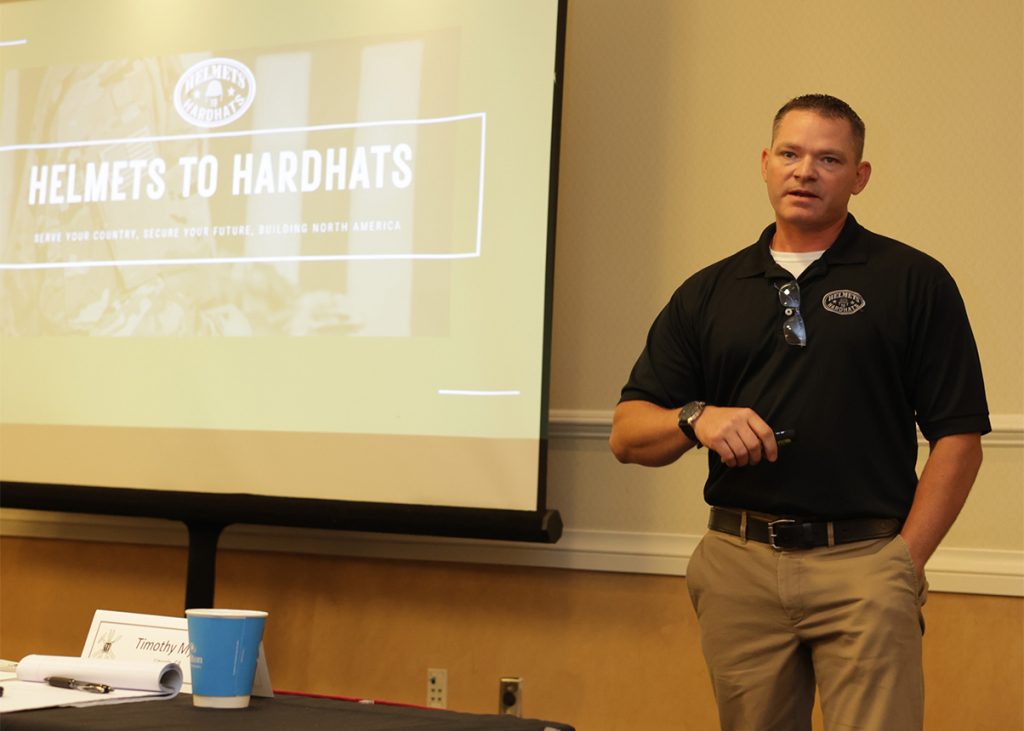
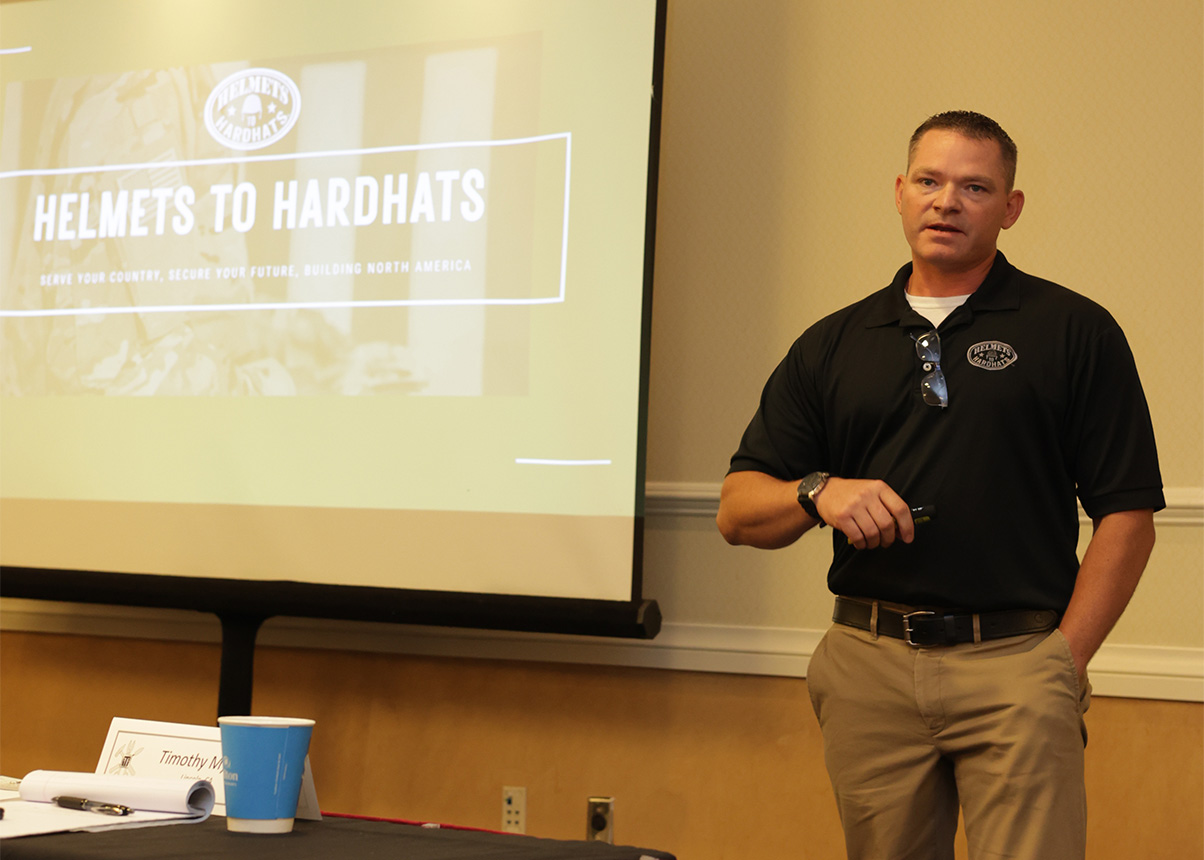
Part of the recruitment and retention effort is making it easier for military veterans to find apprenticeships in their area. During a conference presentation, Martin Helms, executive director of Helmets to Hardhats, showed the training coordinators and directors tools they can use to make sure military veterans seeking a career in the trades can find opportunities in the unionized sheet metal industry.
The audience was encouraged to register for an account on the Helmets to Hardhats website, search for potential candidates and respond to alerts from those interested in the program. The Helmets to Hardhats team also can help with target marketing when apprenticeship needs are high.
“We are giving a service member gainful employment,” Helms said. “You guys are doing great, but I know we can do better.”
Apprentice readiness programs
Apprentice readiness programs (ARPs) provide a gateway to gain access to building trades’ registered apprenticeships. Created in 2007, ARPs consist of more than 200 programs nearly 13,000 people have completed. Of those, 80% were from communities of color and 20% were women.
ARPs are reaching demographics long underrepresented in union sheet metal membership.
Tradesfutures, created by the North America’s Building Trades Unions (NABTU) in 2022, has a cooperative agreement with the Department of Labor and the National Urban League to advance ARPs in four states, Pennsylvania, Ohio, Missouri and Tennessee, and it’s seeking additional funding for 10 ARPs in other states. Tradesfutures provides professional skills training and exposure to the crafts and helps participants select the craft best suited for them.
“This is training for people who can go to work today — not a train and pray situation,” said Nicole Schwartz, Tradesfutures executive director. “This is directly lined up with demand. We are really focused in on getting people a job in short order. This is matching demand with supply as best as we can do. Understanding the local community is important to make sure the programs are doing what they were intended to do. People are able to change the trajectory of their families’ lives.”
Tradesfutures is only one program that can feed trained workers into registered apprentice programs. With more than 200 programs across the country, one is likely near any given sheet metal training facility.
For more information on how your training center can get involved, visit the website at https://tradesfutures.org/.
Networking, advising the next generation
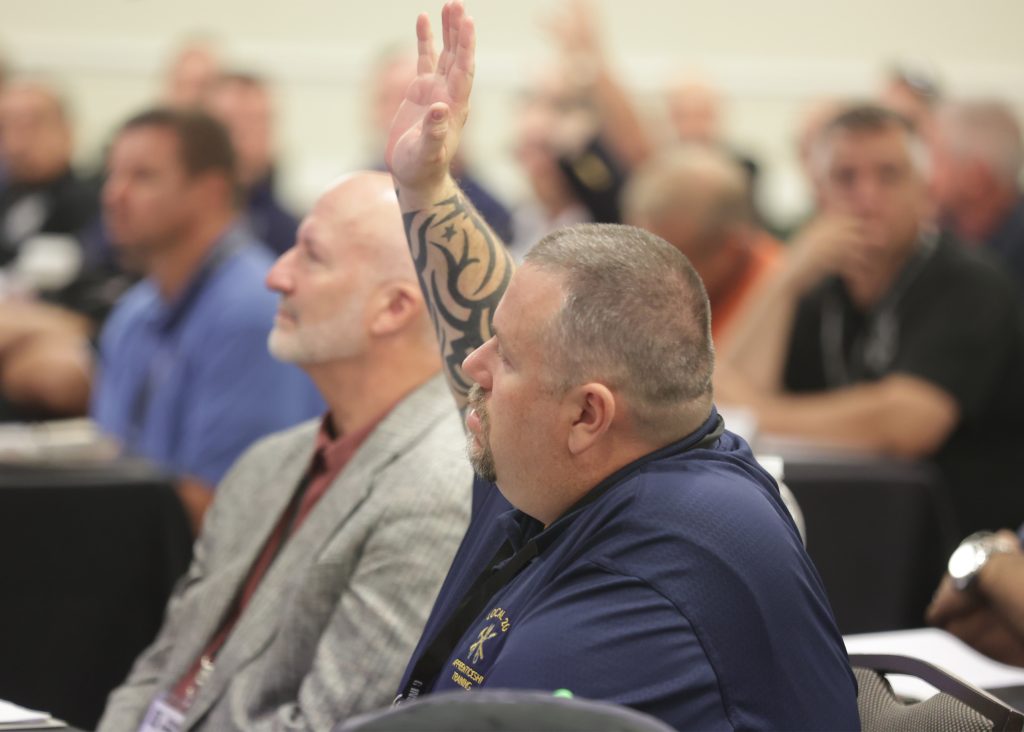
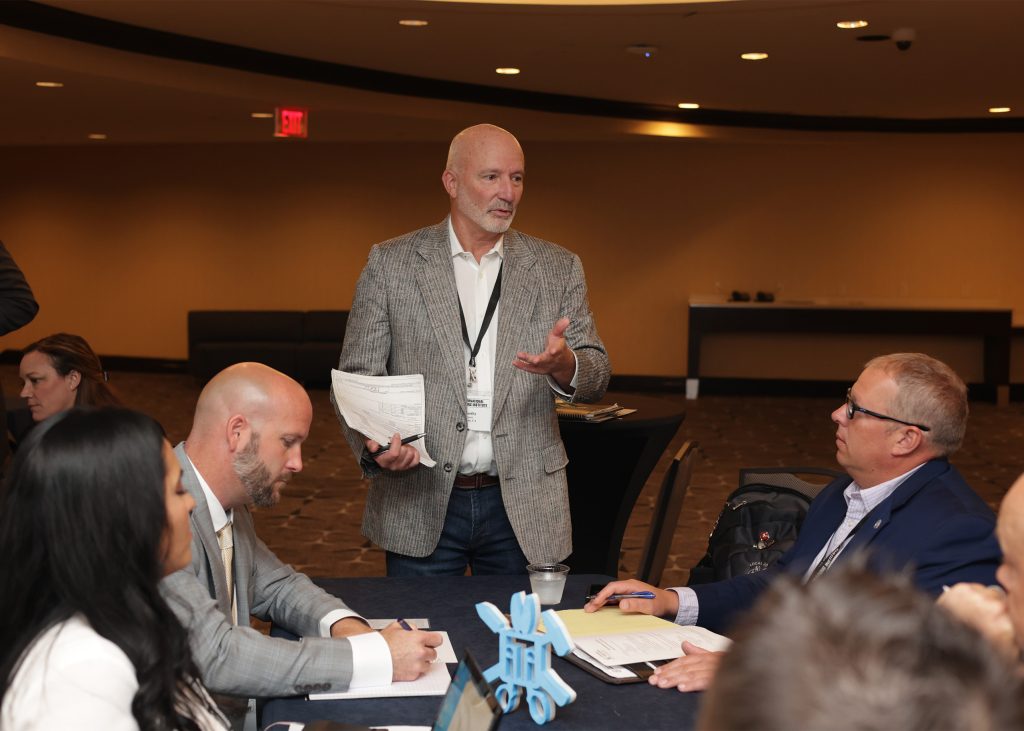
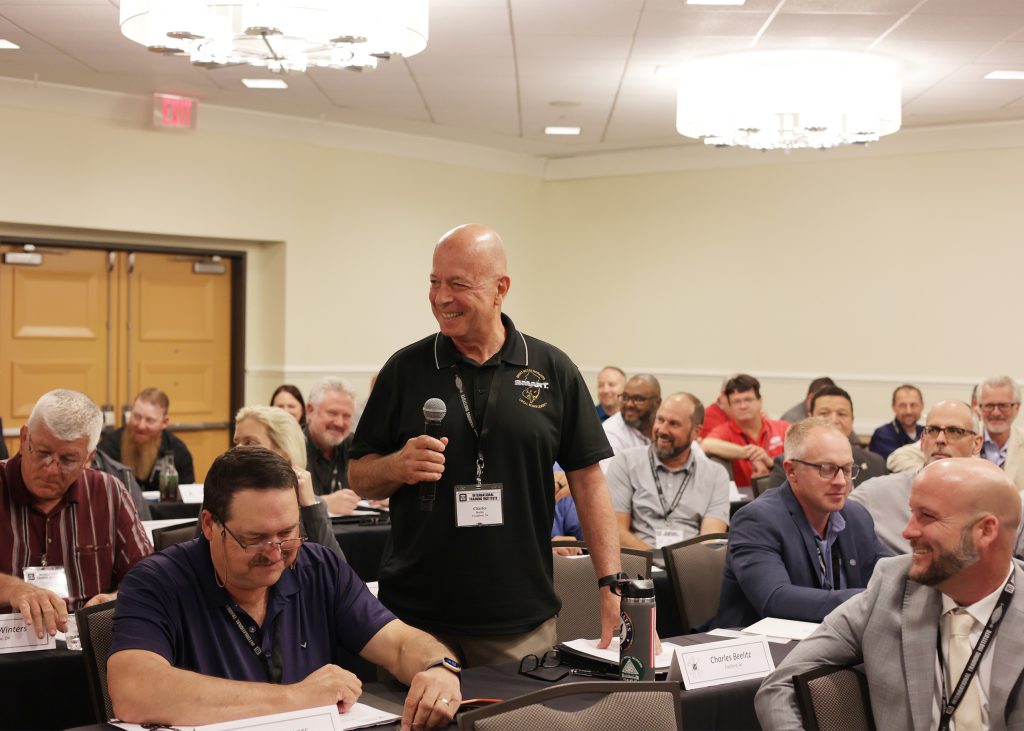
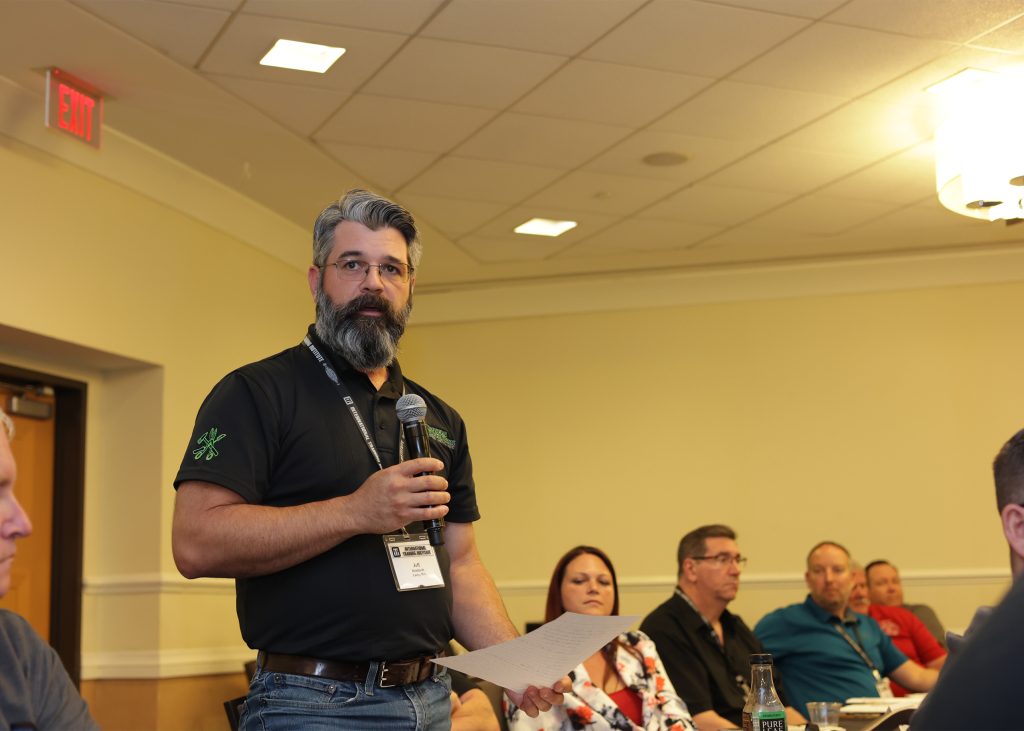
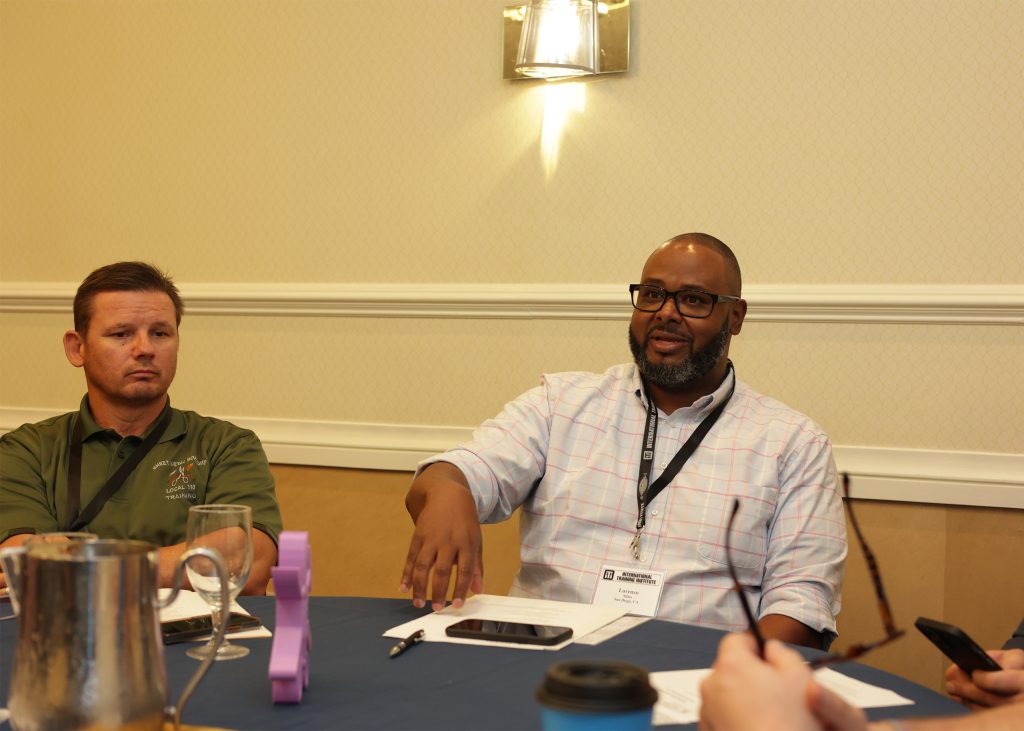
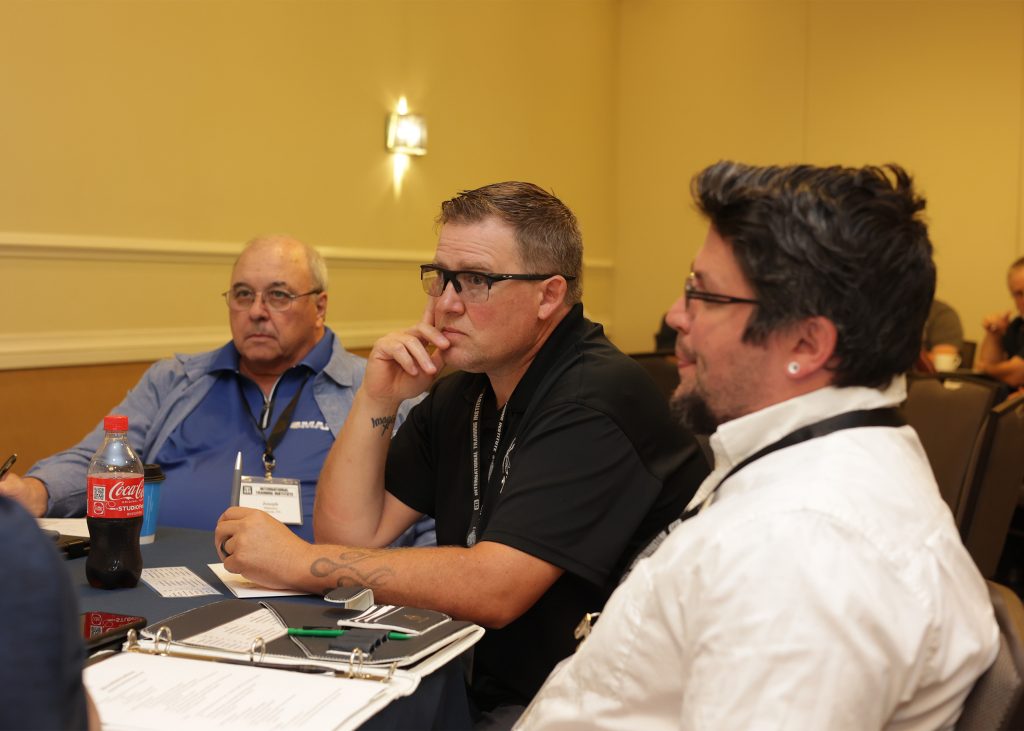
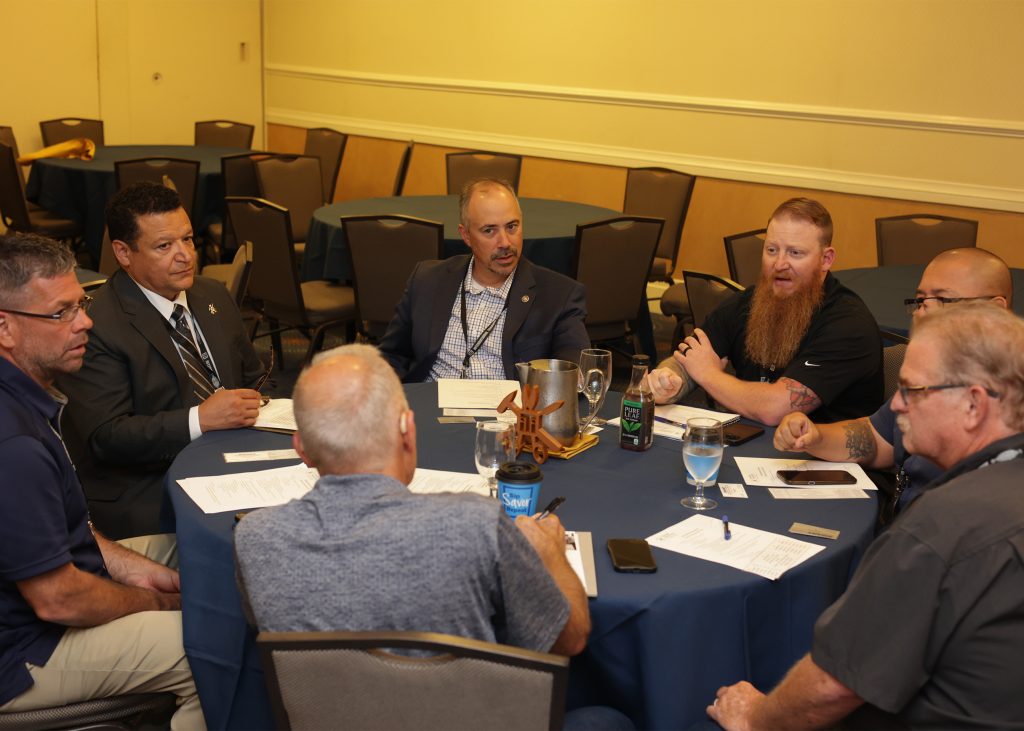
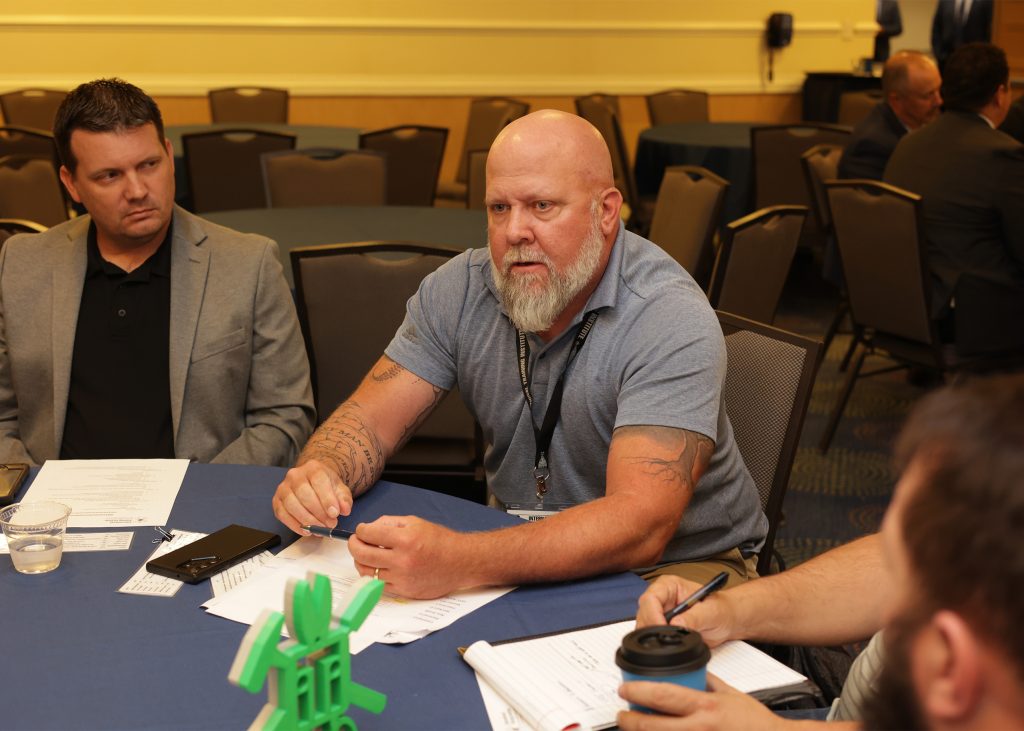
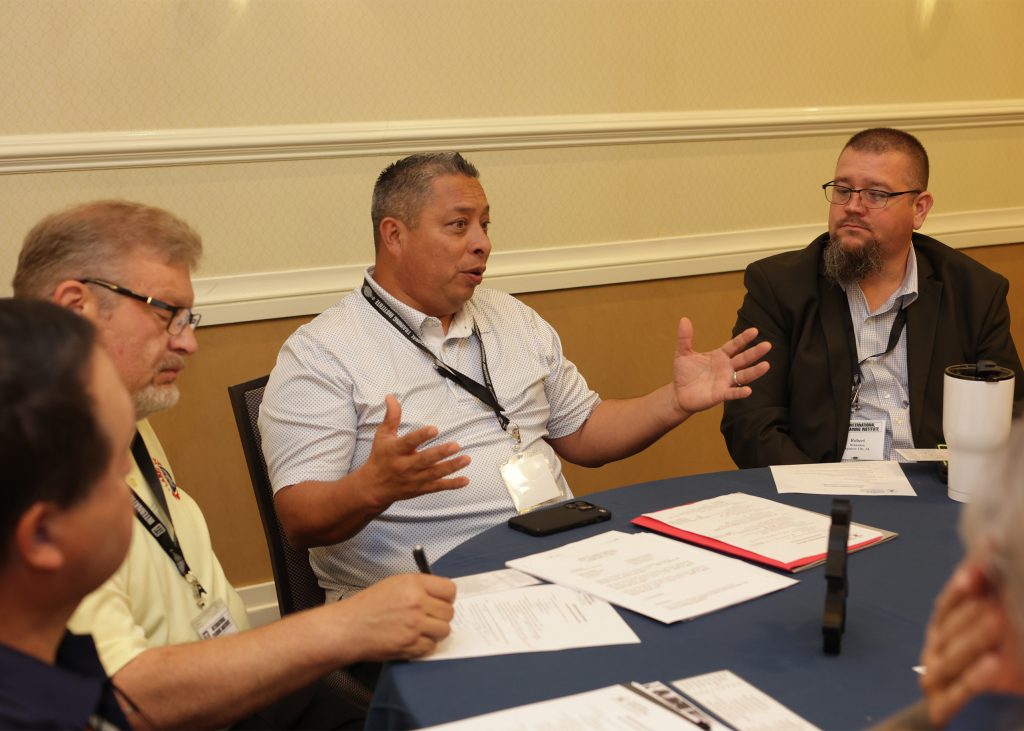
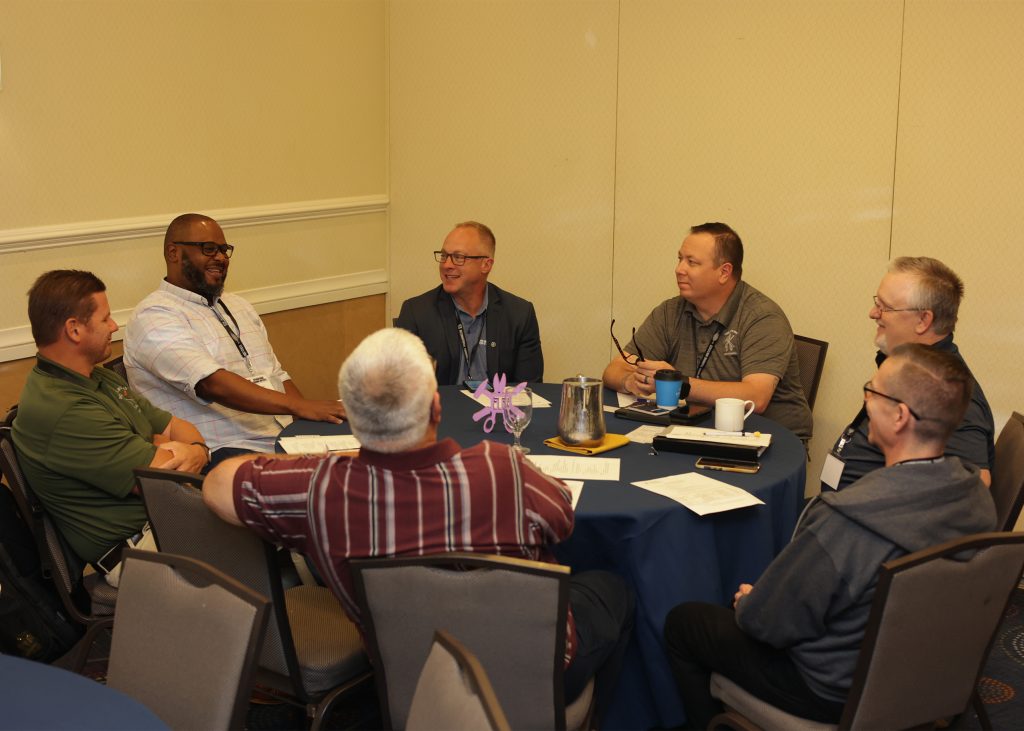
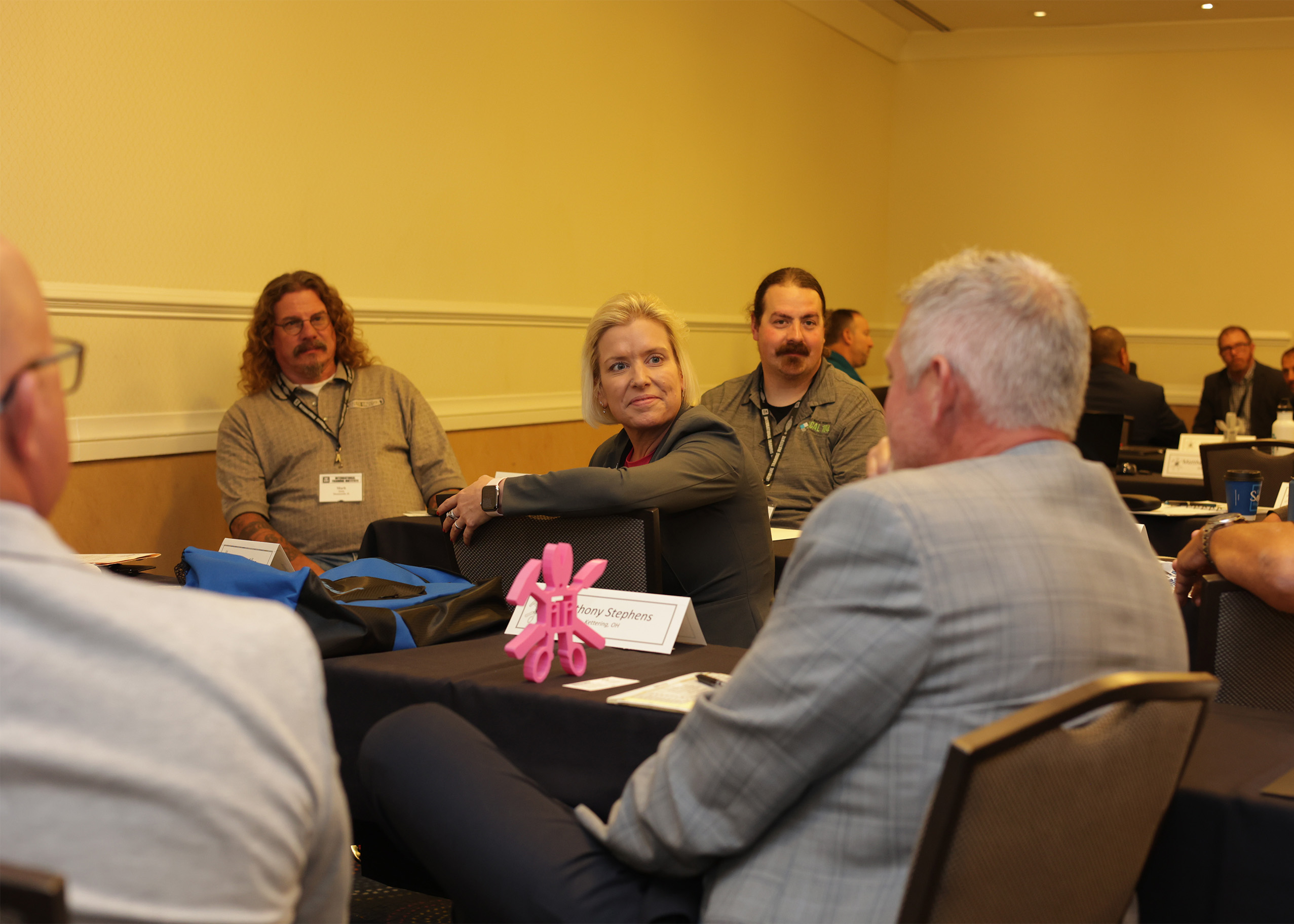
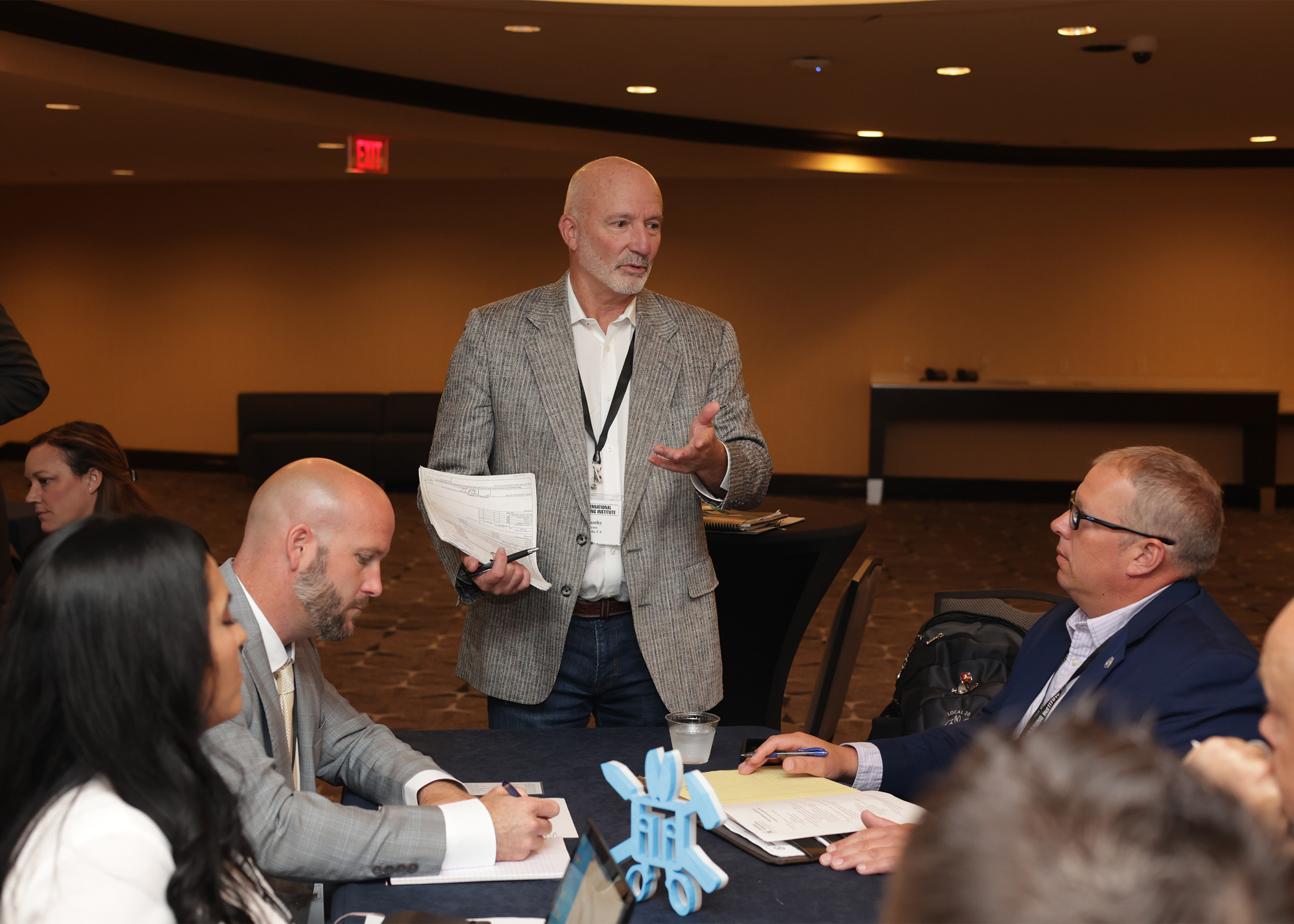
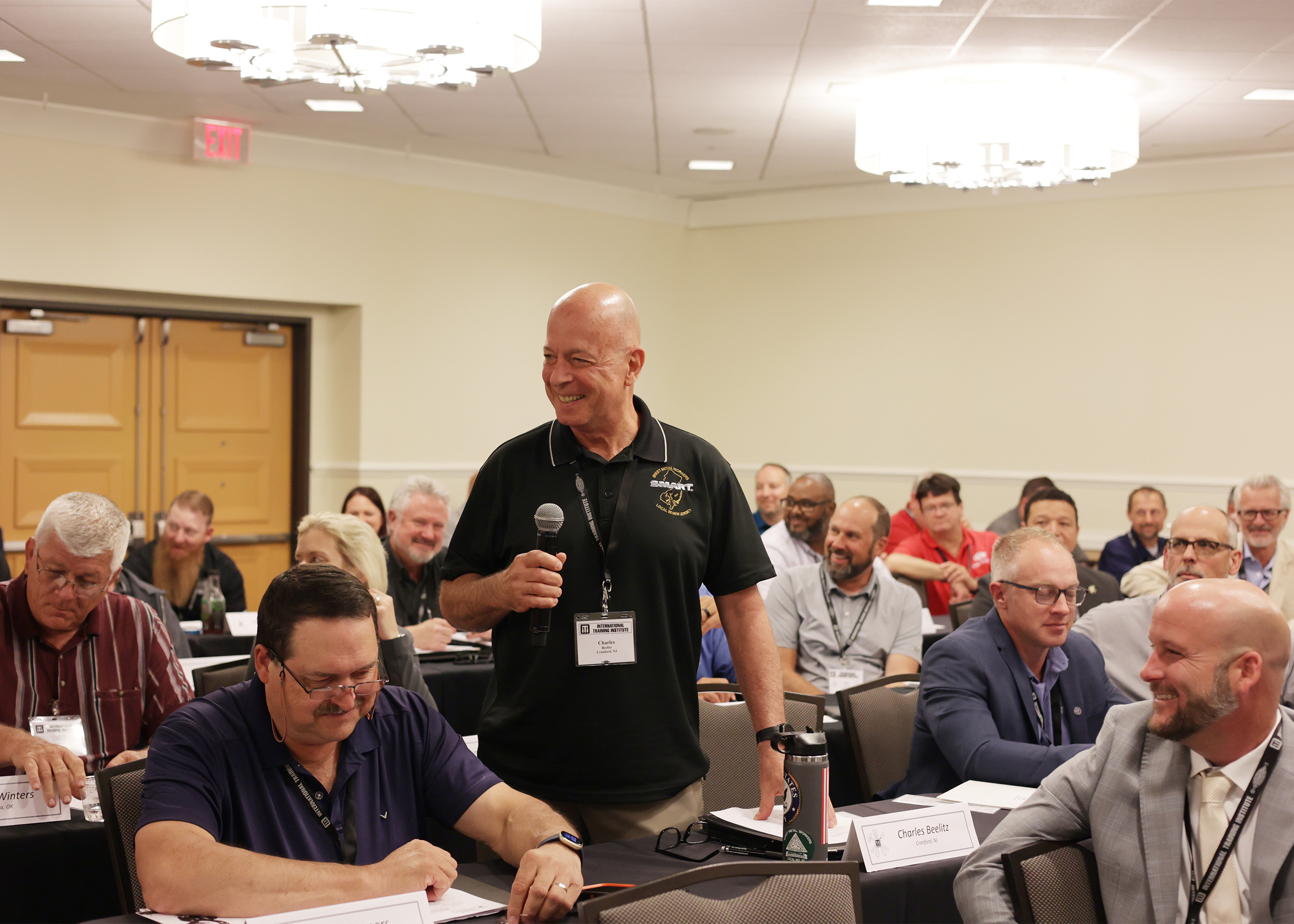
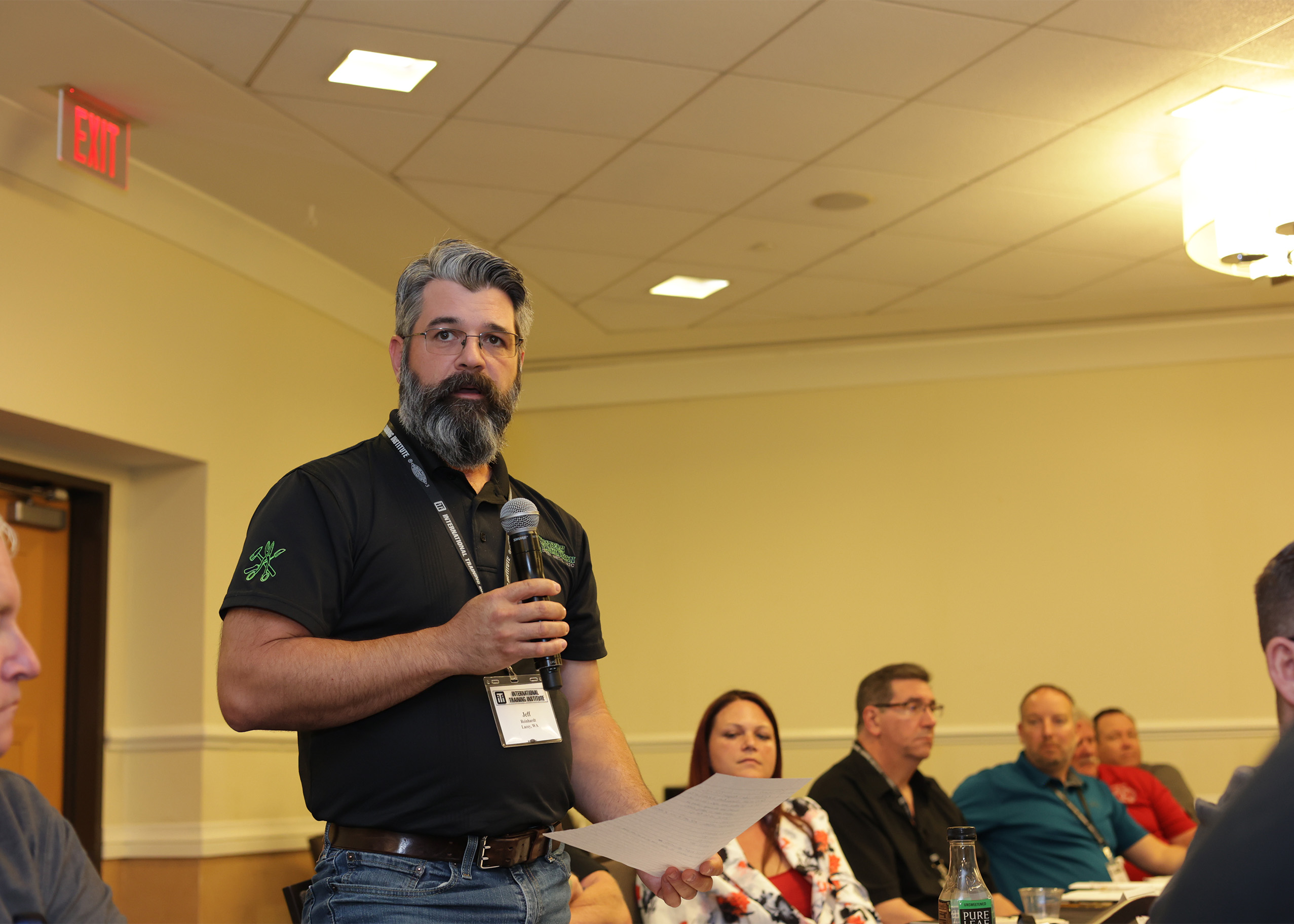
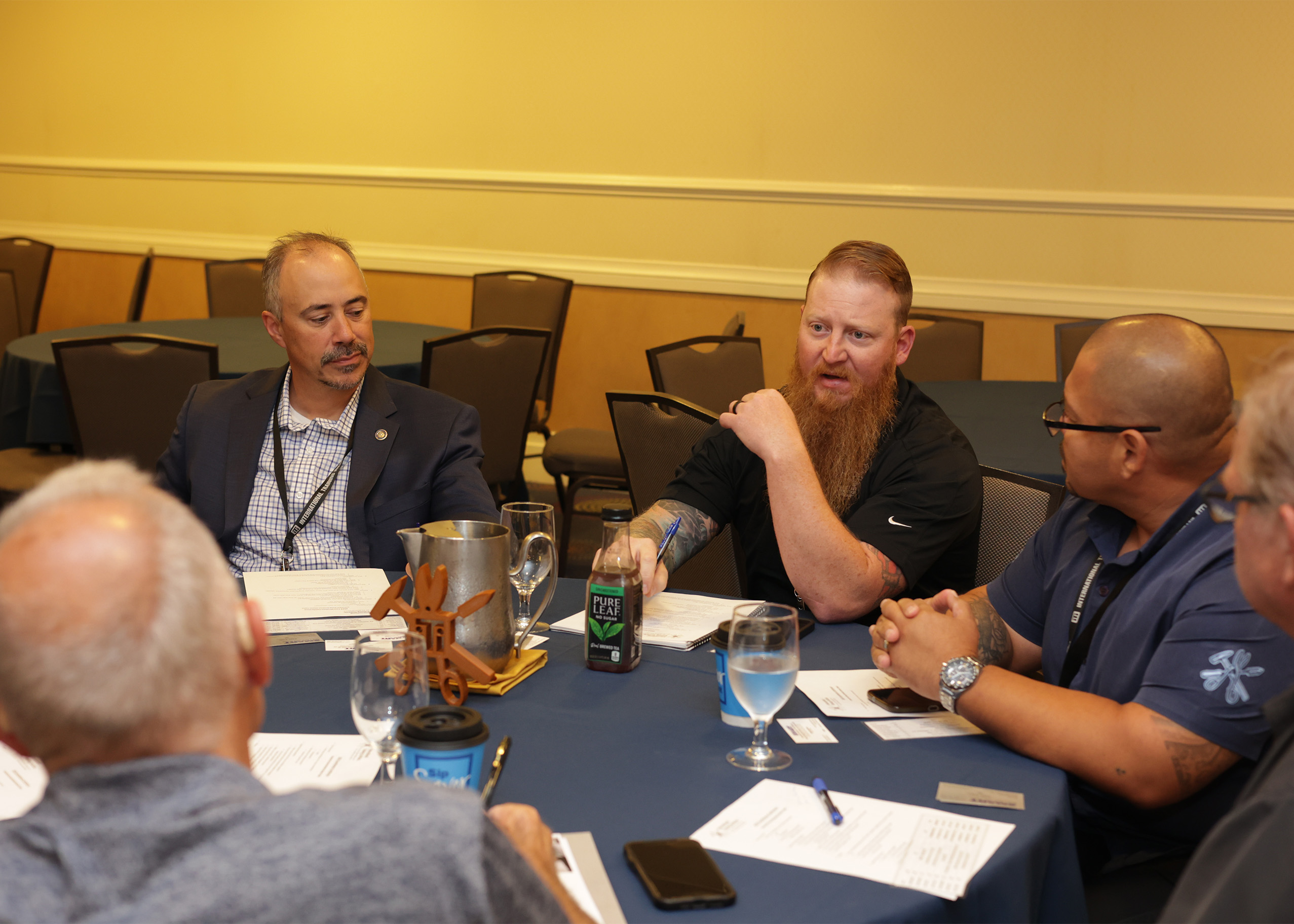
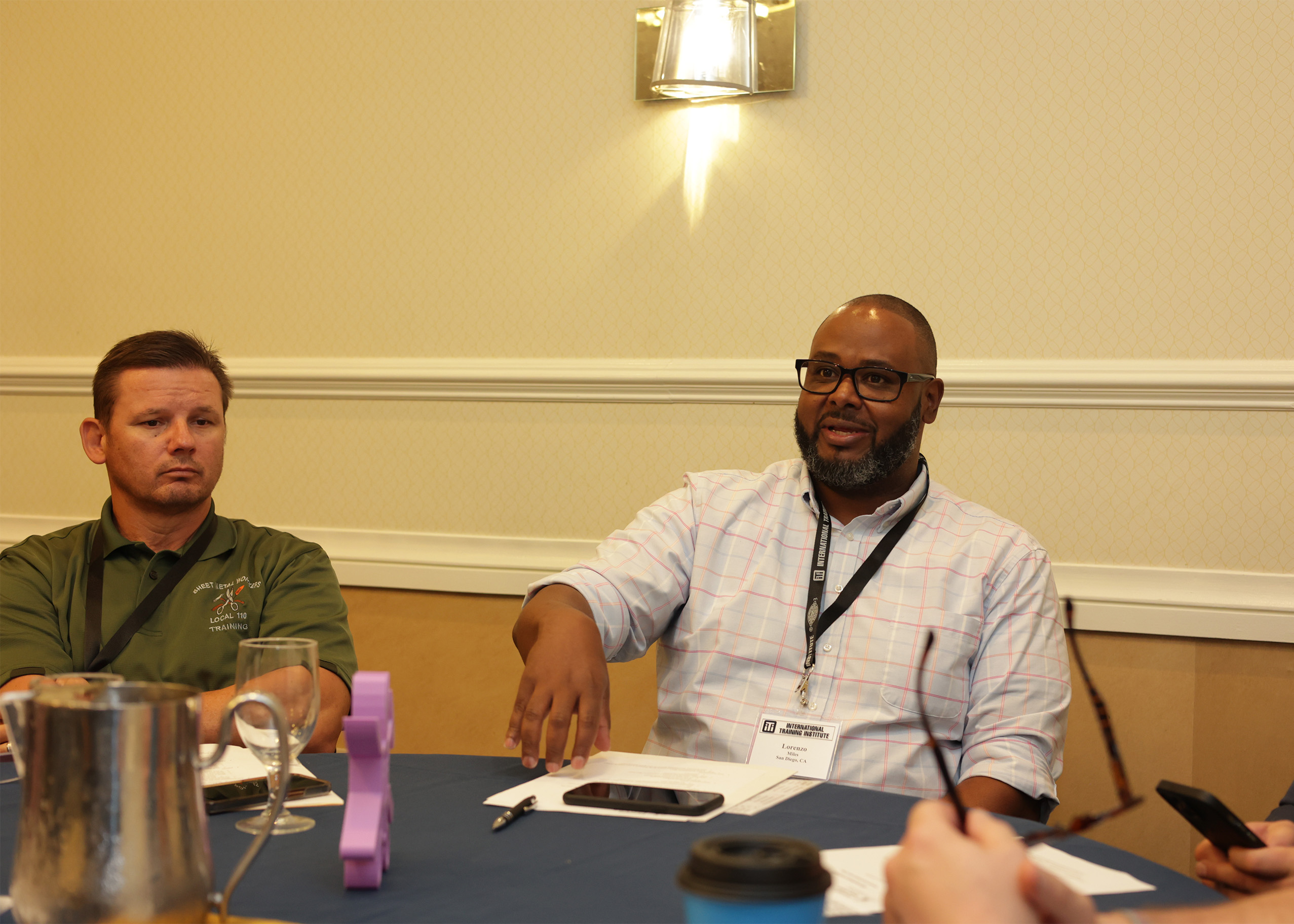
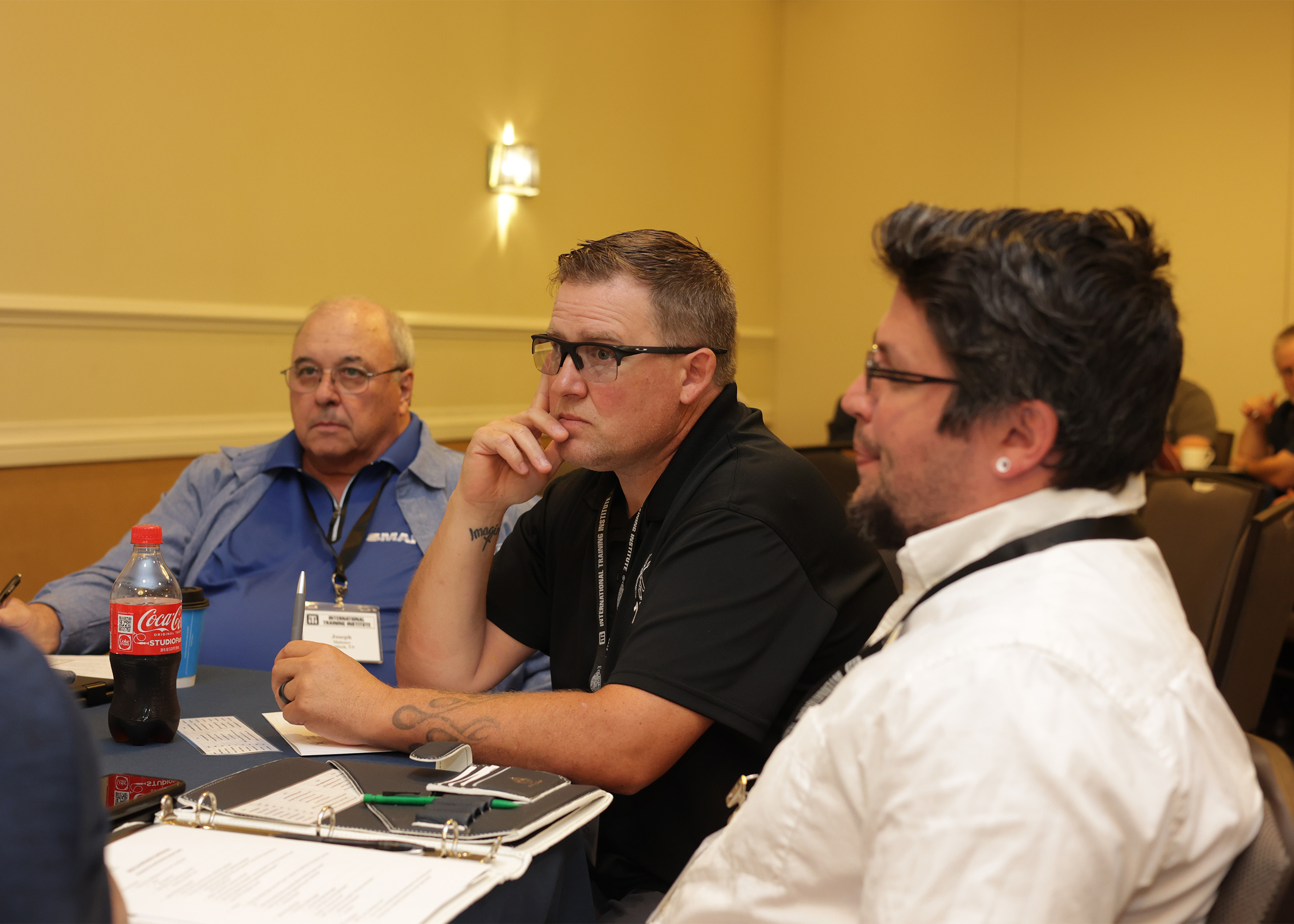
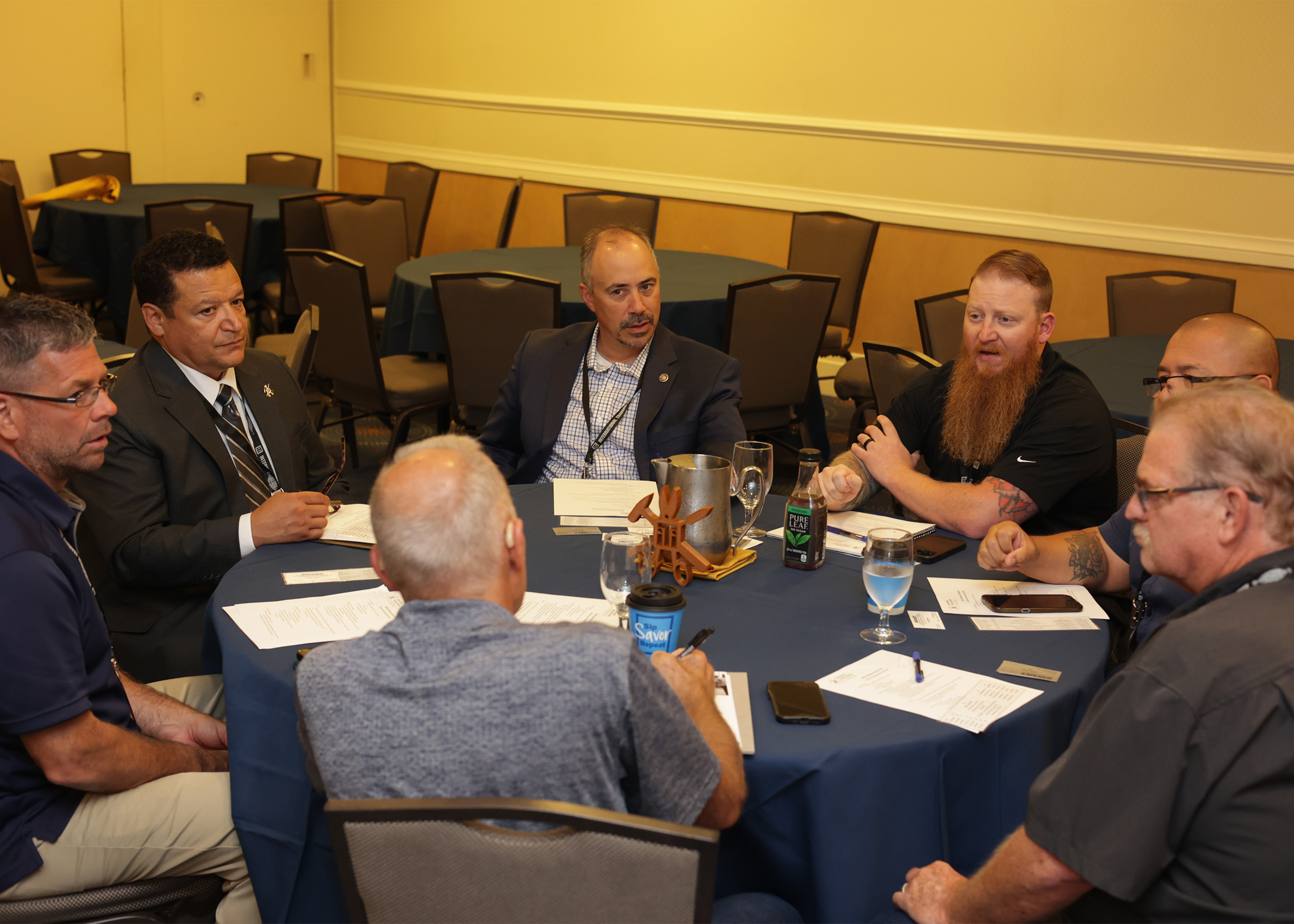
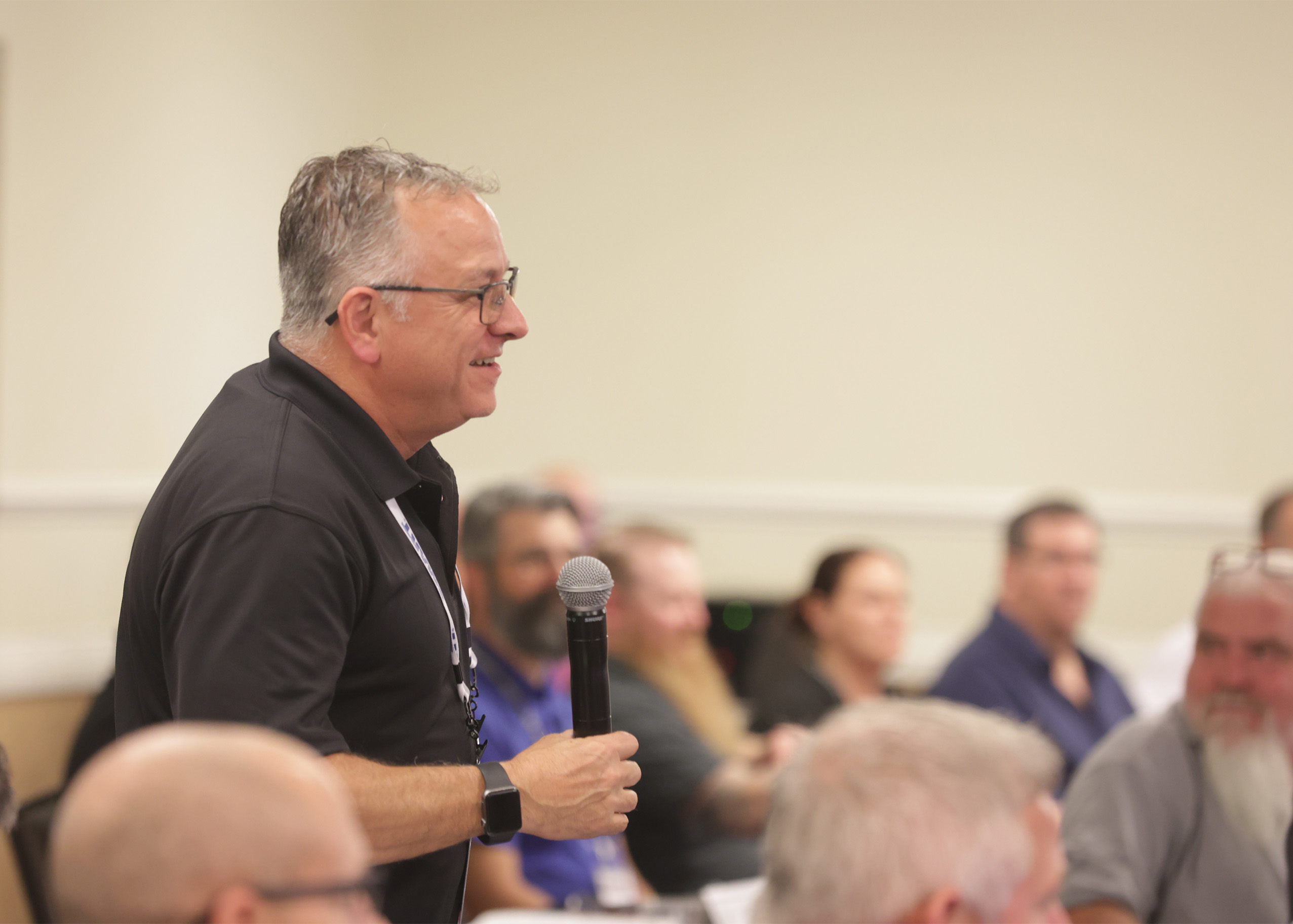
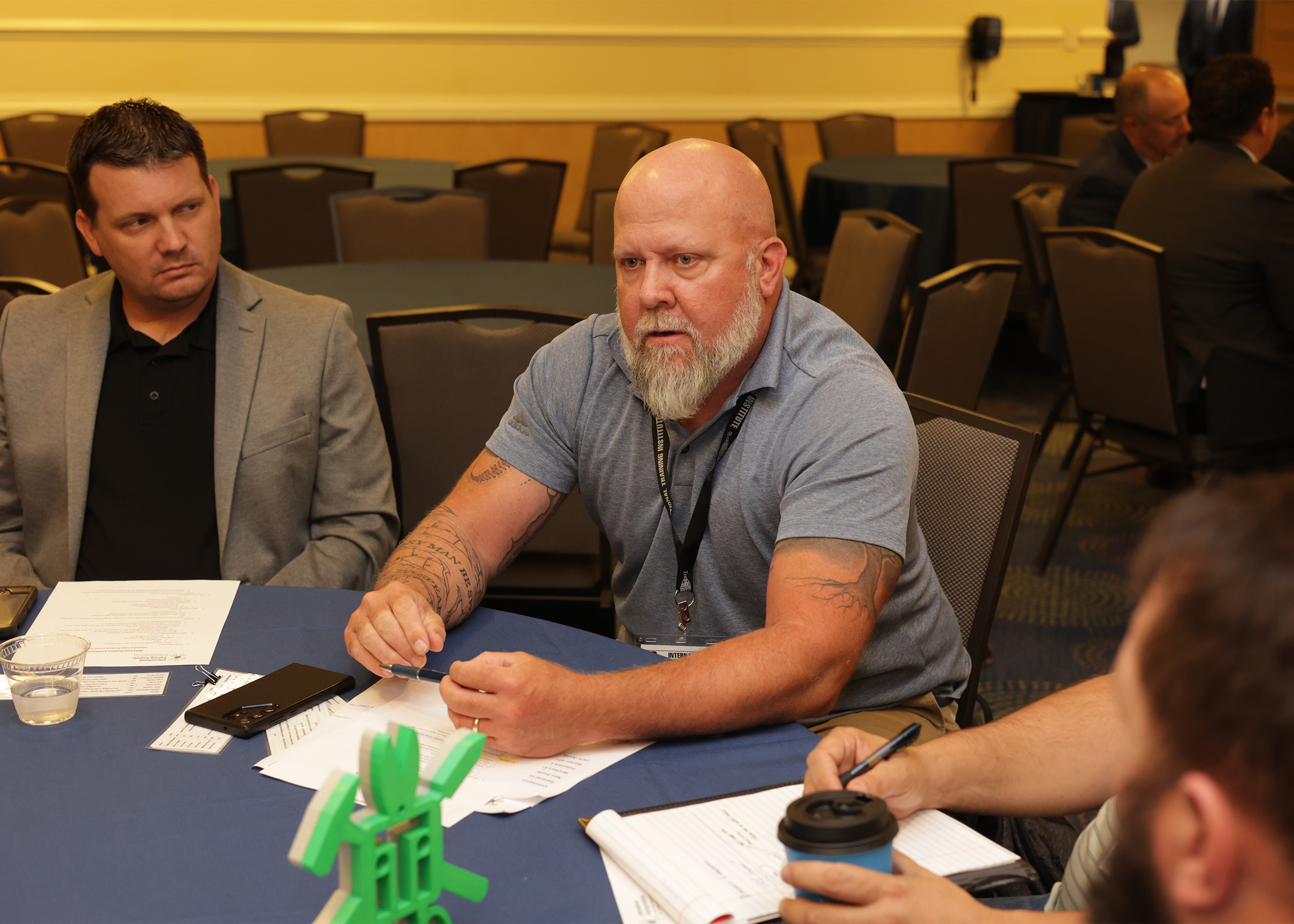
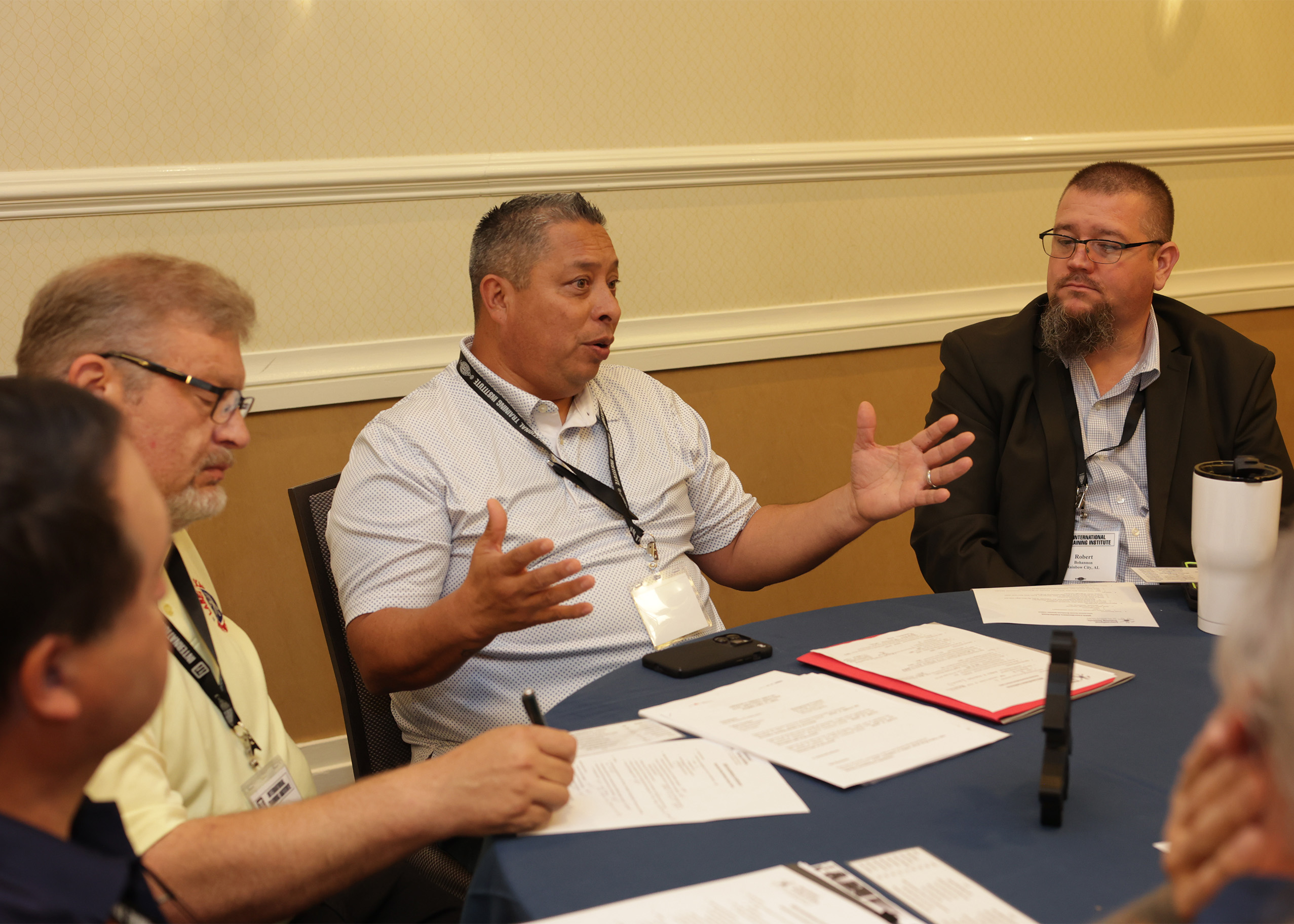
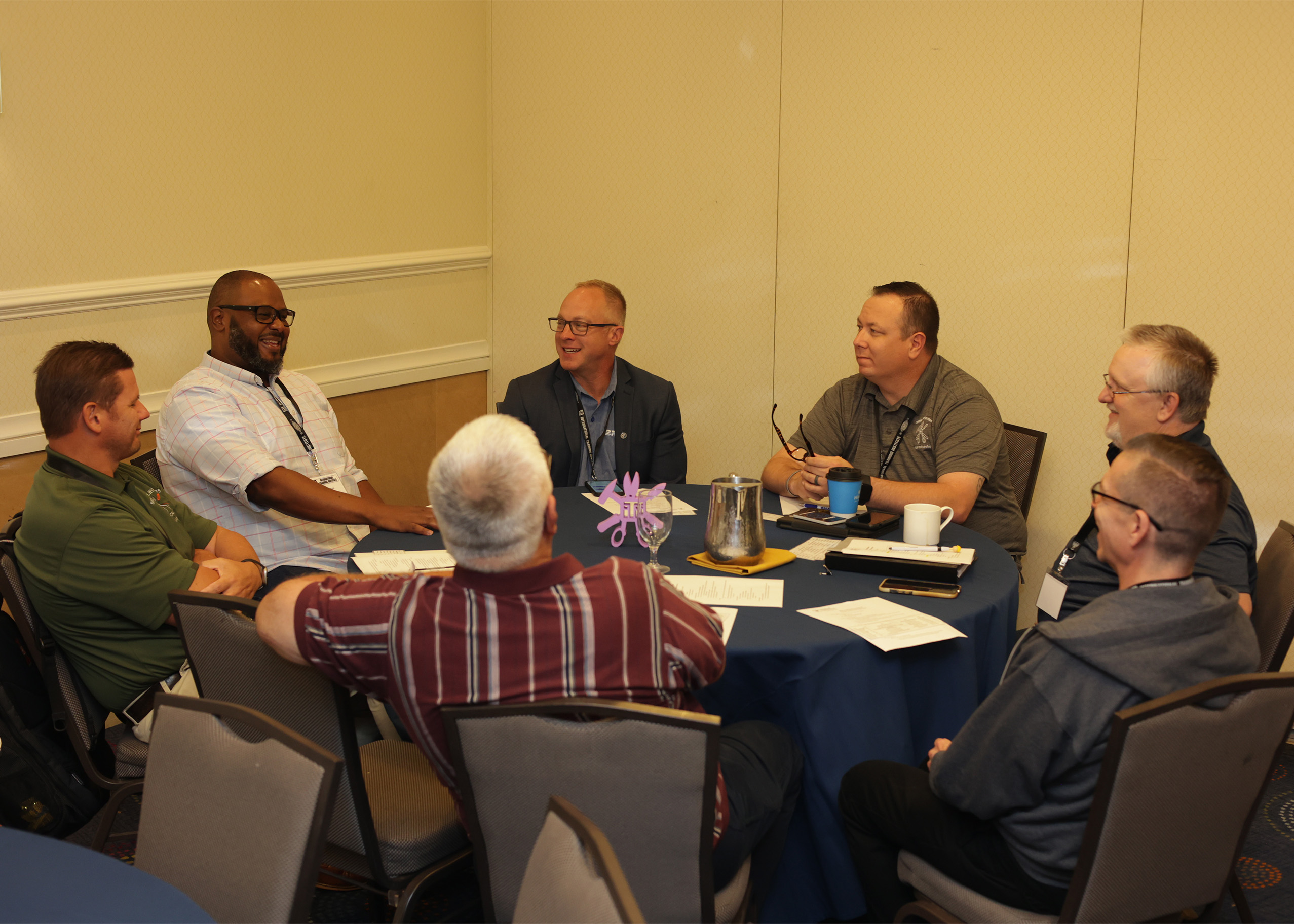
Overwhelmingly, one of the best parts of any Coordinators Conference is the camaraderie that happens during breaks, at meals and after the day is finished. To try and capture that energy, the ITI created breakout sessions where coordinators from all over the country could discuss topics, challenges and solutions and report back to the group at large.
From recruitment to expansion to advice for brand new coordinators, the common denominator was that participants all placed their apprentices first.
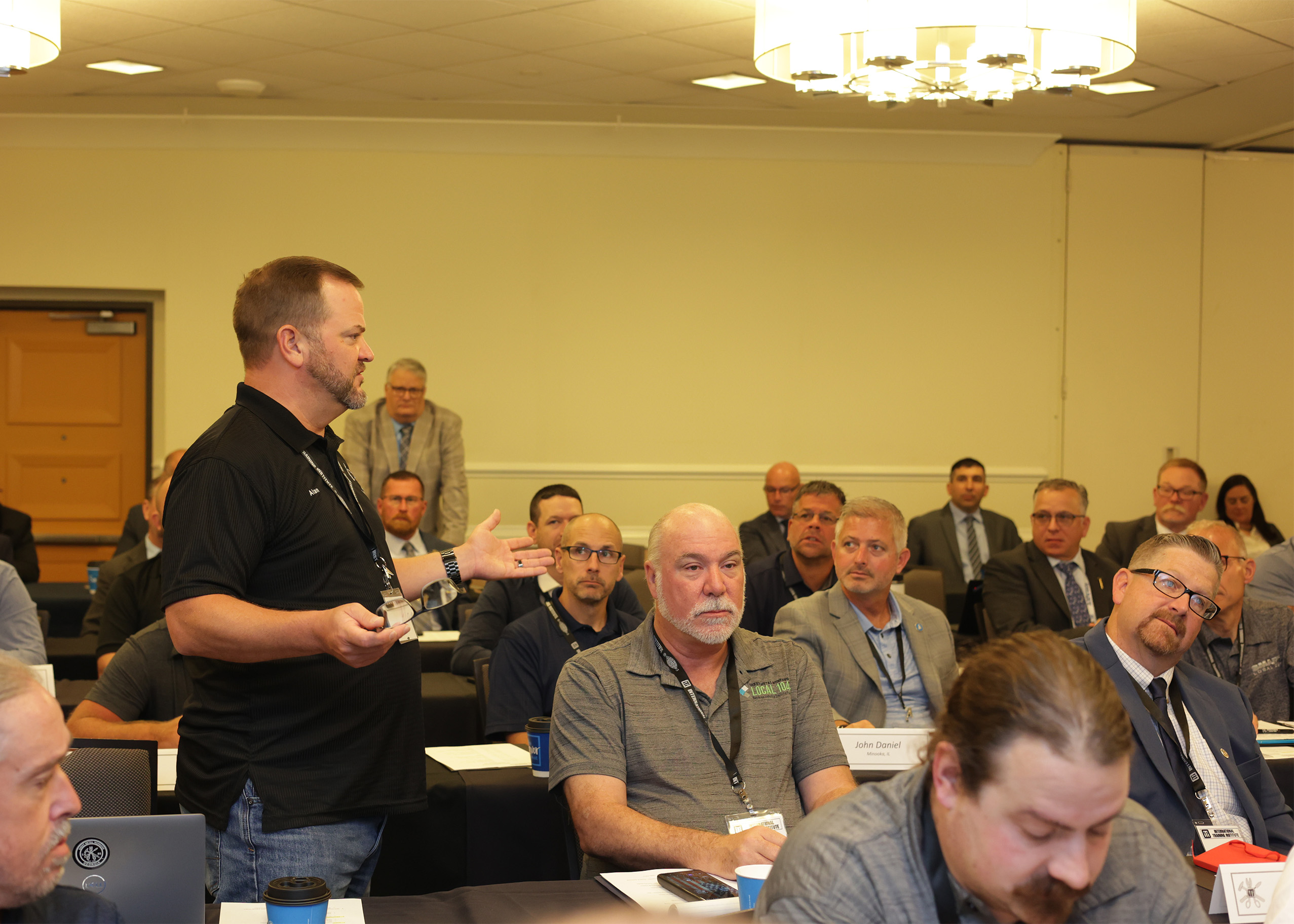
Although Lincoln Fritts had 13 years in the trade, he had only held the coordinator position at SMART Local 5 in Tennessee for a week at the time of the conference. Advice was plentiful in a room of coordinators who’d had their jobs anywhere from one year to almost 30.
“It was like drinking from a fire hose. A lot to take in,” Fritts said. “Everyone was really great. They all told me, ‘Don’t hesitate to call.’ I have five pages of notes and questions to ask my board, my predecessor. I gained so much information from the networking during this two-day conference.”
Out of the 77 coordinators in attendance, a lot of them had only been on the job as training coordinator for less than five years. One thing the ITI staff is working on to help those who are new to the job is the Coordinators Handbook, which includes customizable parts and clickable links. It will be housed in TotalTrack, so it can be updated and remain a living document.
The document can include trust documents and apprenticeship standards, as well as legal, bank, accountant/auditor and insurance policy information each coordinator can make specific to their local. It can also include veterans in each program; an explanation of the Funds; regional/national maps with ITI representatives; hyperlinks to websites; screenshots of website pages with instructions on how to access login information; and a working calendar of daily, weekly, monthly and annual duties that need to be repeated.
“This, in no way, takes the place of a new coordinator workshop. This is for people to have at their fingertips. Guidance for new coordinators. A reference for any coordinator,” said Len Leibert, ITI program administrator. “The idea is when you hand [the training coordinator position] off to someone, you give it better than you found it.”
Coleman’s message
General President Mike Coleman reiterated the message the ITI staff delivered throughout the two-day conference — times are changing and the industry needs to adapt. Training is on the front lines of the change, and the apprenticeship standards are the first step, he said.
The industry three-legged stool is crucial, he added — without contractors, the union and training, progress cannot be made.
“It is vitally important we get it done. I promise you I will be there to help you get done whatever you need to get done, because we’re not going to fail,” Coleman said. “Our calling is to lift people up and give them a good, middle-class job with benefits. I know it is for all of you, or you wouldn’t be here.”
From recruitment and retention and grants to curriculum, standards and handbooks, the conference offered coordinators various ways to meet the demand in their parts of the country and make the apprenticeship a welcoming place.
“It’s a pay-it-forward industry we’re in,” added Al Blanco, coordinator for SMART Local 359 in Phoenix. “If it’ll make you better, that’s what we want to do.”