According to the Occupational Safety and Health Administration (OSHA), the construction industry lags behind other industries when it comes to diversity. As of 2021, the Bureau of Labor Statistics reports that 87.9% of the construction workforce is white and 89% male; and while that remaining 11% is female, women only make up 3.7% of construction labor. This lack of diversity can create a hostile work environment.
Mike Harris, ITI administrator, wants this to change: “At our training centers, we want every apprentice to know they are valued, and that we want them to become lifelong SMART members,” he said.
SMART has implemented plans to broadening the diversity of its apprentice ranks, including the removal of barriers to the programs, so the union and its signatory contractors can attract more women and people of color.
“We know a more diverse workforce lends itself to a more inclusive workforce,” said Tammy Meyen, ITI recruitment and retention specialist. “We also know we can attract more people into our apprentice pool if we make our programs more accessible. Research shows that 86% of the generation entering the workforce care about supporting diversity.”
The industry faces an aging workforce just as new investment in infrastructure has created a construction boom. Meyen said these recruitment challenges are not insurmountable.
“We must focus on the culture within as well as addressing the need to recruit a diverse new workforce,” she said. “SMART has made great strides in accomplishing this through its BE4ALL [Belonging and Excellence for All] program and ITI’s Bias and Belonging Train-the-Trainer course, but there is still work to be done.”
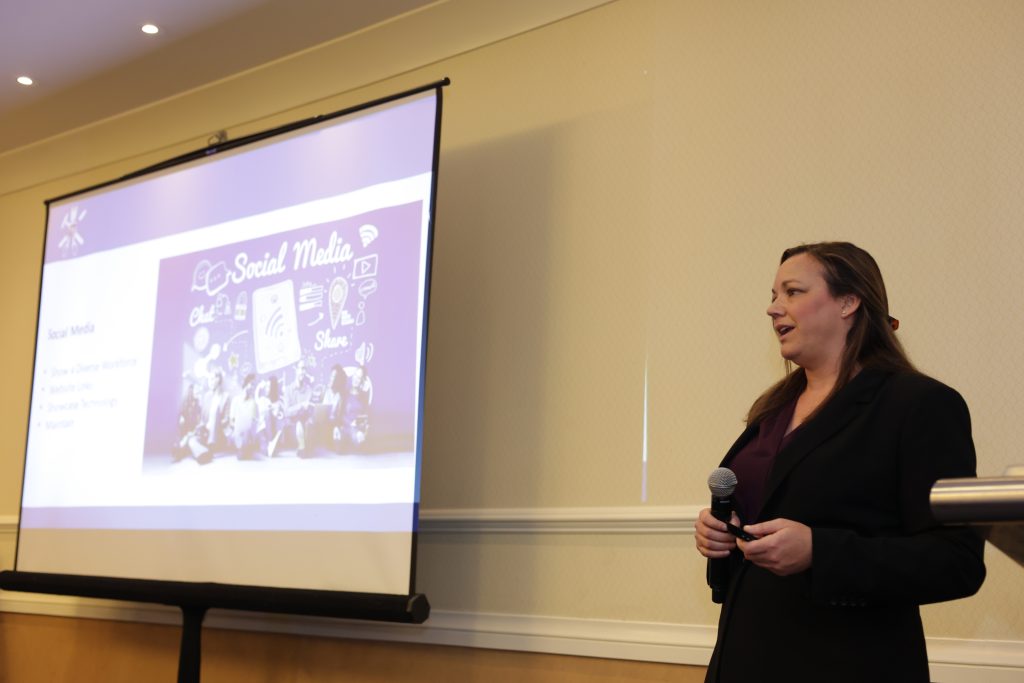
Meyen’s research shows that the new generation of apprentices are extremely tech savvy — the first thing a potential apprentice will do is search out a training center’s online presence. Training coordinators and instructors are busy, but time is well spent making sure the program’s website and social media, as well as any media advertising, really shows the diversity of their apprenticeship.
A key challenge in recruiting young people is also negative perceptions about careers in the trades. Locals can partner with schools, churches, community groups and state agencies to help spread the positive aspects of trade apprenticeship. Forging relationships with high school guidance counselors and becoming familiar with apprenticeship readiness programs (ARPs) can also help, as can bringing apprentices to recruiting events.
“Prospective students want to see other students that look like them,” Meyen said. “If a young woman or a person of color sees someone that looks like them, they’ll be encouraged and more likely to gravitate towards your program.”
A 2021 report by the Institute for Women’s Policy Research, “A Future Worth Building: What Tradeswomen Say about the Change They Need in the Construction Industry,” examined a survey of 2,635 tradeswomen and nonbinary tradespeople.
“Job training programs, high school counselors, and American Job Centers generally failed to alert respondents to opportunities in the trades,” the report stated. “Just 6% of respondents said that their high school counselor ever told them that the trades might be an option for them.”
The Heavy Metal Summer Experience (HMSE), co-founded by Angie Simon, past president of SMACNA, teaches high school students about a career in the sheet metal industry. The six-week career camp first started in 2021 at Western Allied Mechanical in California, and the Hermanson Company in Washington. The HMSE has already grown to 13 states hosting more than 20 camp sessions in 2023.
Now a nonprofit organization, the HMSE offers JATCs and contractors across the country the opportunity to put on their own camp. Those interested should contact HMSE to receive a copy of the HMSE Playbook and for help in promotion and sponsorship ideas. HMSE reports a goal of more than 50 camps in place by summer 2024.
As far as retaining members, several successful programs have shown results. A structured mentoring program can make new members feel connected. Similar to mentoring, sponsoring new members is a relationship where a senior member advocates for more junior persons and places them in key roles. This could be inviting them to a present at a union meeting or to join a committee, or it might be on the job site, where a sponsor advocates for a newer worker to take on more challenging roles.
Recruiting and retaining members is an ongoing process. Every local needs to implement a plan and track its progress. For additional information on how your training program can increase recruitment and retention, reach out to Tammy Meyen at tmeyen@sheetmetal-iti.org.